2024년 6월 고3 전국연합 영어 모의고사
28문제 · 제한시간 48분
이 시험 한눈에 — 2024년 6월 고3 전국연합 영어 모의고사
18~45번 28문항을 유형별로 보면 목적 1 · 심경/분위기 1 · 주장 1 · 함축의미추론 1 · 요지/주장 1 · 주제 1 · 제목 1 · 도표 1 · 내용일치 1 · 실용문 1 · 어법 2 · 어휘 1 · 빈칸추론2 1 · 빈칸추론3 1 · 빈칸추론4 1 · 빈칸추론5 1 · 무관한문장 1 · 순서배열1 1 · 순서배열2 1 · 문장삽입1 1 · 문장삽입2 1 · 요약문완성 1 · 장문 5. 아래 지문으로 변형문제·단어장·정답표를 바로 만들 수 있습니다.
20번주장As the world seems to be increasingly affected by the ever-expanding influence of machine…
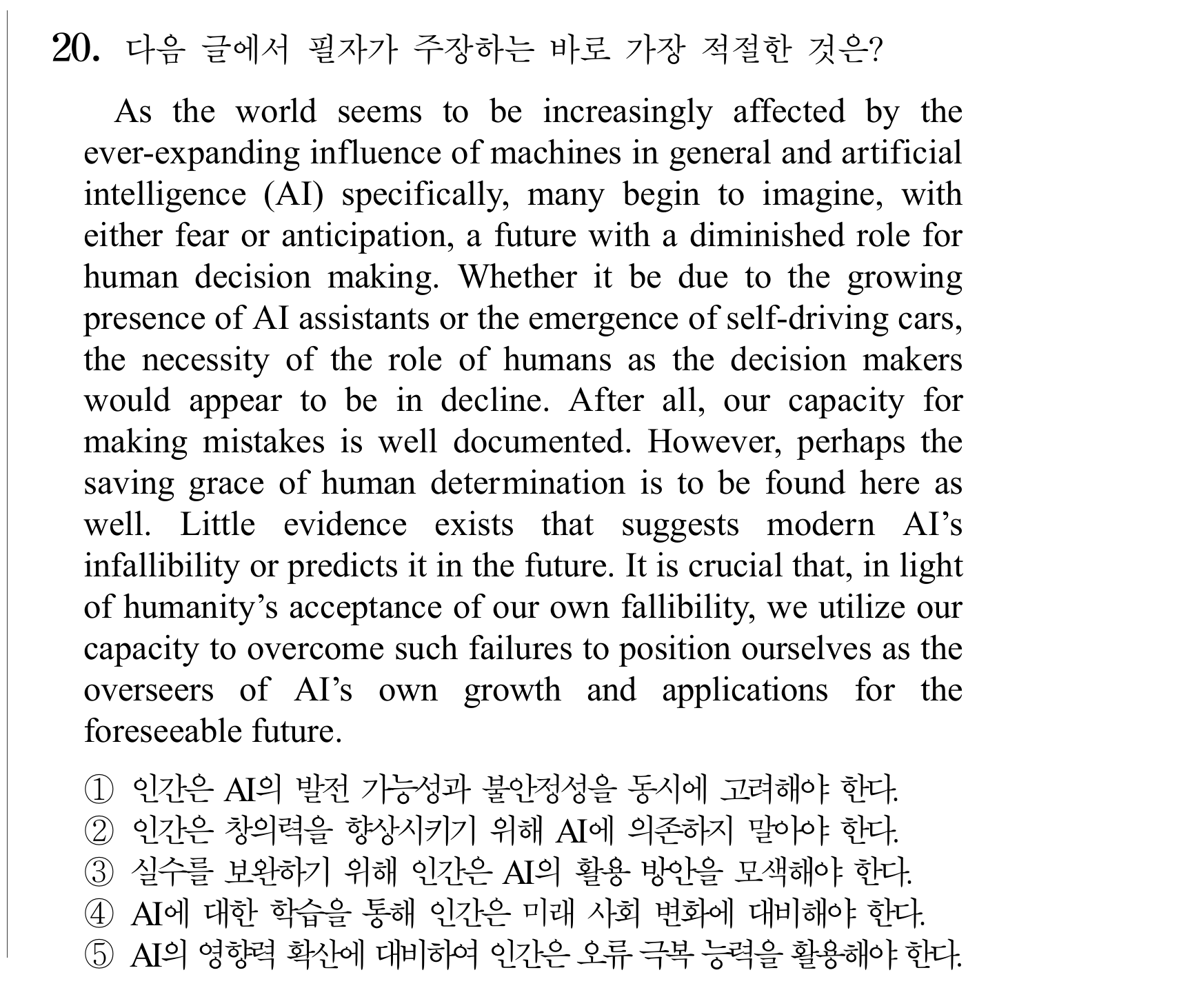
As the world seems to be increasingly affected by the ever-expanding influence of machines in general and artificial intelligence (AI) specifically, many begin to imagine, with either fear or anticipation, a future with a diminished role for human decision making. Whether it be due to the growing presence of AI assistants or the emergence of self-driving cars, the necessity of the role of humans as the decision makers would appear to be in decline. After all, our capacity for making mistakes is well documented. However, perhaps the saving grace of human determination is to be found here as well. Little evidence exists that suggests modern AI’s infallibility or predicts it in the future. It is crucial that, in light of humanity’s acceptance of our own fallibility, we utilize our capacity to overcome such failures to position ourselves as the overseers of AI’s own growth and applications for the foreseeable future.
21번함축의미추론To balance the need for breadth (everyone feels a bit burned out) and depth (some are so…
To balance the need for breadth (everyone feels a bit burned out) and depth (some are so burned out, they can no longer do their jobs), we ought to think of burnout not as a state but as a spectrum. In most public discussion of burnout, we talk about workers who “are burned out,” as if that status were black and white. A black-and-white view cannot account for the variety of burnout experience, though. If there is a clear line between burned out and not, as there is with a lightbulb, then we have no good way to categorize people who say they are burned out but still manage to do their work competently. Thinking about burnout as a spectrum solves this problem; those who claim burnout but are not debilitated by it are simply dealing with a partial or less-severe form of it. They are experiencing burnout without being burned out. Burnout hasn’t had the last word.
22번요지/주장In both the ancient hunter-gatherer band and our intimate speech communities today, the d…
In both the ancient hunter-gatherer band and our intimate speech communities today, the diffusion of speech shaped values. The fact that everyone was going to be able to speak and listen had to be accommodated ethically, and it was via a rough egalitarianism. In terms of communications, people were equal and therefore it was believed they should be equal, or at least relatively so. By this code, ancient Big Men were not allowed to act controllingly and modern office managers are not allowed to silence anyone at will. Moreover, equal access to speech and hearing promoted the notion that property should be held in common, that goods and food in particular should be shared, and that everyone had a duty to take care of everyone else. This was probably more true among hunter-gatherers than it is in the modern family, circle of friends, or workplace. But even in these cases we believe that sharing and mutual aid are right and proper. Remember, if you bring something, you should bring enough for everyone.
23번주제While many city shoppers were clearly drawn to the notion of buying and eating foods asso…
While many city shoppers were clearly drawn to the notion of buying and eating foods associated with nature, the nature claimed by the ads was no longer the nature that created the foods. Indeed, the nature claimed by many ads was associated with food products only by the ads’ attachment. This is clearly a case of what French sociologist Henri Lefebvre has called “the decline of the referentials,” or the tendency of words under the influence of capitalism to become separated from meaningful associations. Increasingly, food ads helped shoppers become accustomed to new definitions of words such as “fresh” and “natural,” definitions that could well be considered opposite of their traditional meanings. The new definitions better served the needs of the emerging industrial food system, which could not supply foods that matched customary meanings and expectations. And they better met shoppers’ desires, although with pretense.
24번제목As far back as 32,000 years ago, prehistoric cave artists skillfully used modeling shadow…
As far back as 32,000 years ago, prehistoric cave artists skillfully used modeling shadows to give their horses and bison volume. A few thousand years ago ancient Egyptian and then ancient Greek art presented human forms in shadow-style silhouette. But cast shadows do not appear in Western art until about 400 BCE in Athens. It was only after shadows had become an established, if controversial, part of representation that classical writers claimed that art itself had begun with the tracing of a human shadow. Greeks and Romans were the first to make the transition from modeling shadows to cast shadows, a practice that implied a consistent light source, a fixed point of view, and an understanding of geometric projection. In fact, what we might now call “shadow studies” — the exploration of shadows in their various artistic representations — has its roots in ancient Athens. Ever since, the practice of portraying shadows has evolved along with critical analysis of them, as artists and theoreticians have engaged in an ongoing debate about the significance of shadow representation.
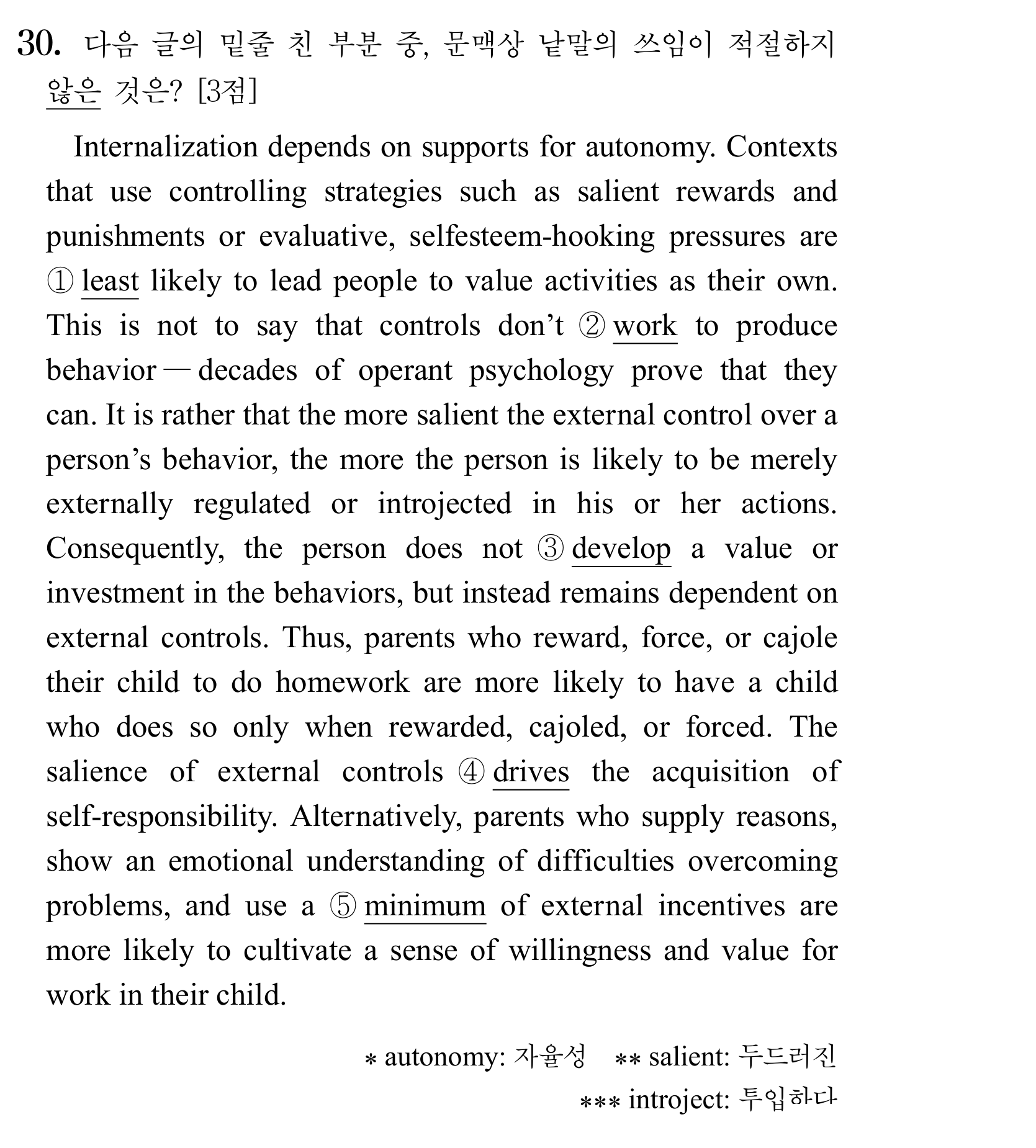
29번어법What makes practicing retrieval so much better than review?
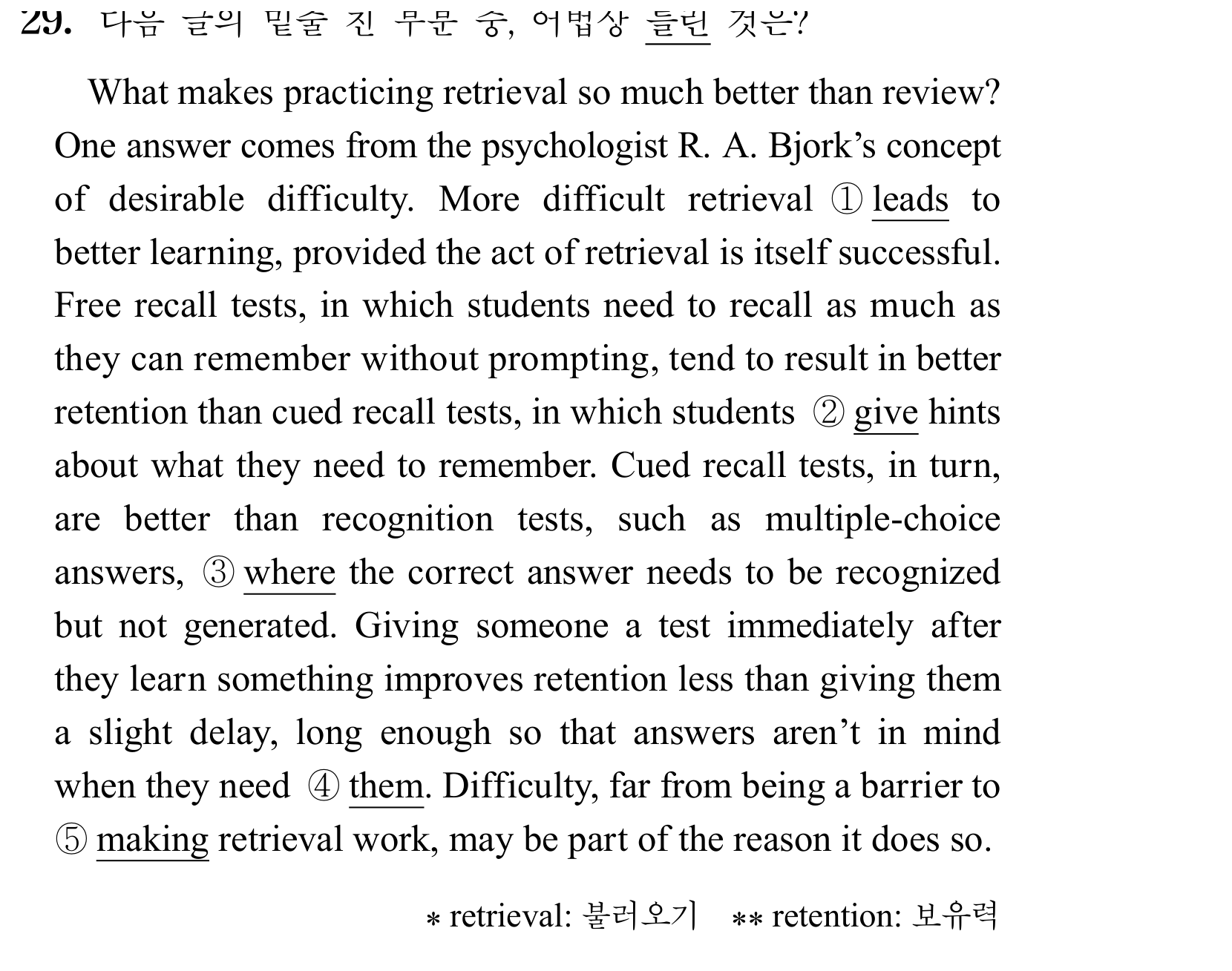
What makes practicing retrieval so much better than review? One answer comes from the psychologist R. A. Bjork’s concept of desirable difficulty. More difficult retrieval leads to better learning, provided the act of retrieval is itself successful. Free recall tests, in which students need to recall as much they can remember without prompting, tend to result in better retention than cued recall tests, in which students receive hints about what they need to remember. Cued recall tests, in turn, are better than recognition tests, such as multiple-choice answers, where the correct answer needs to be recognized but not generated. Giving someone a test immediately after they learn something improves retention less than giving them a slight delay, long enough so that answers aren't in mind when they need them. Difficulty, far from being a barrier to making retrieval work, may be part of the reason it does so.
31번빈칸추론2When trying to establish what is meant by digital preservation, the first question that m…
When trying to establish what is meant by digital preservation, the first question that must be addressed is: what are you actually trying to preserve? This is clear in the analog environment where the information content is inextricably fixed to the physical medium. In the digital environment, the medium is not part of the message. A bit stream looks the same to a computer regardless of the media it is read from. A physical carrier is necessary, but as long as the source media can be read, bit-perfect copies can be made cheaply and easily on other devices, making the preservation of the original carrier of diminishing importance. As the physical media that carry digital information are quite delicate relative to most analog media, it is expected that digital information will necessarily need to be migrated from one physical carrier to another as part of the ongoing preservation process. It is not the media itself but the information on the media that needs to be preserved.
32번빈칸추론3Creativity is commonly defined as the production of ideas that are both novel (original,…
Creativity is commonly defined as the production of ideas that are both novel (original, new) and useful (appropriate, feasible). Ideas that are original but not useful are irrelevant, and ideas that are useful but not original are unremarkable. While this definition is widely used in research, an important aspect of creativity is often ignored: Generating creative ideas rarely is the final goal. Rather, to successfully solve problems or innovate requires one or a few good ideas that really work, and work better than previous approaches. This requires that people evaluate the products of their own or each other’s imagination, and choose those ideas that seem promising enough to develop further, and abandon those that are unlikely to be successful. Thus, being creative does not stop with idea generation. In fact, the ability to generate creative ideas is essentially useless if these ideas subsequently die a silent death.
34번빈칸추론5Any attempt to model musical behavior or perception in a general way is filled with diffi…
Any attempt to model musical behavior or perception in a general way is filled with difficulties. With regard to models of perception, the question arises of whose perception we are trying to model — even if we confine ourselves to a particular culture and historical environment. Surely the perception of music varies greatly between listeners of different levels of training; indeed, a large part of music education is devoted to developing and enriching (and therefore likely changing) these listening processes. While this may be true, I am concerned here with fairly basic aspects of perception — particularly meter and key — which I believe are relatively consistent across listeners. Anecdotal evidence suggests, for example, that most people are able to “find the beat” in a typical folk song or classical piece. This is not to say that there is complete uniformity in this regard — there may be occasional disagreements, even among experts, as to how we hear the tonality or meter of a piece. But I believe the commonalities between us far outweigh the differences.
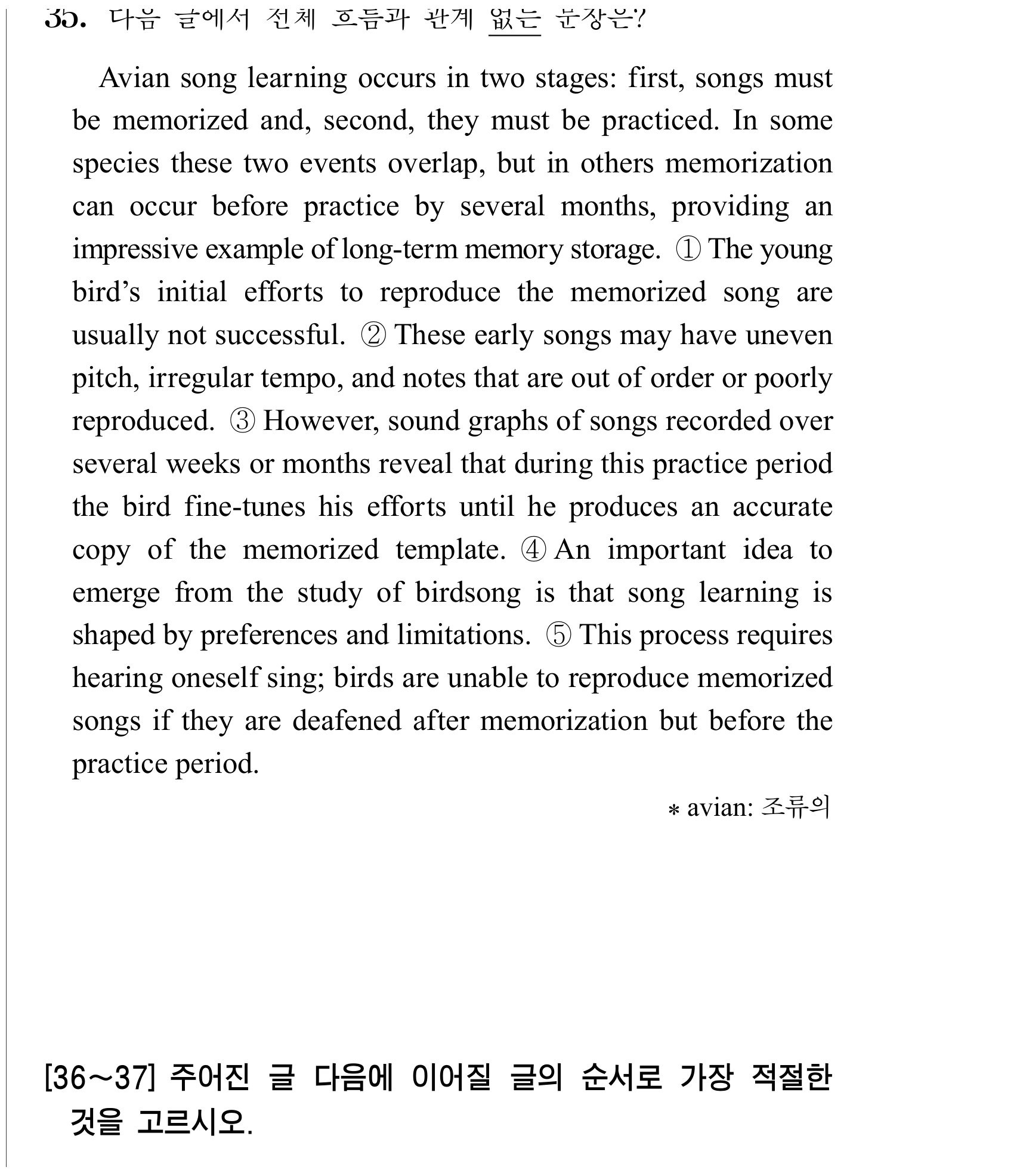
35번무관한문장Avian song learning occurs in two stages: first, songs must be memorized and, second, the…
Avian song learning occurs in two stages: first, songs must be memorized and, second, they must be practiced. In some species these two events overlap, but in others memorization can occur before practice by several months, providing an impressive example of long-term memory storage. The young bird’s initial efforts to reproduce the memorized song are usually not successful. These early songs may have uneven pitch, irregular tempo, and notes that are out of order or poorly reproduced. However, sound graphs of songs recorded over several weeks or months reveal that during this practice period the bird fine-tunes his efforts until he produces an accurate copy of the memorized template. This process requires hearing oneself sing; birds are unable to reproduce memorized songs if they are deafened after memorization but before the practice period.
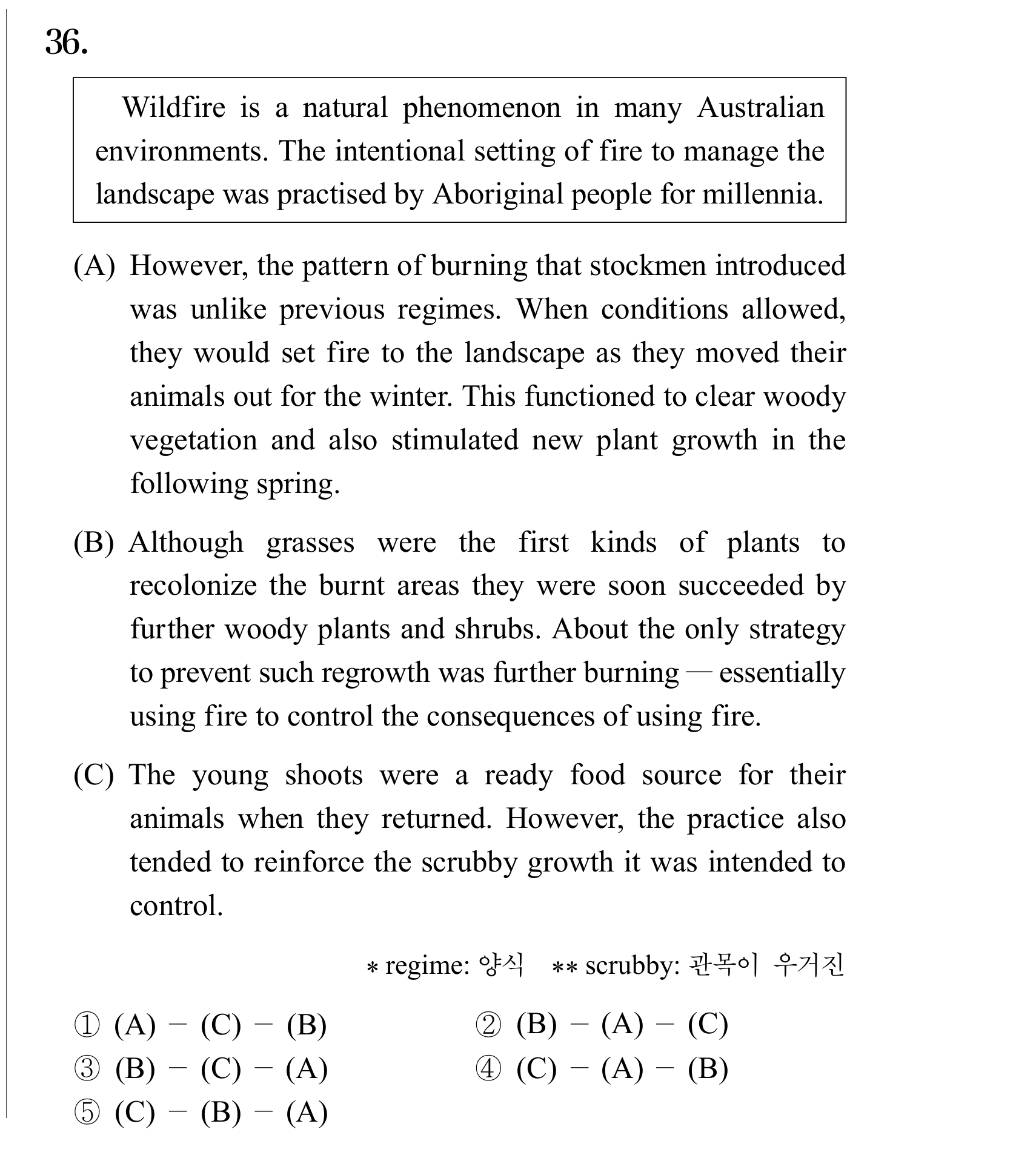
36번순서배열1Wildfire is a natural phenomenon in many Australian environments.
Wildfire is a natural phenomenon in many Australian environments. The intentional setting of fire to manage the landscape was practised by Aboriginal people for millennia. However, the pattern of burning that stockmen introduced was unlike previous regimes. When conditions allowed, they would set fire to the landscape as they moved their animals out for the winter. This functioned to clear woody vegetation and also stimulated new plant growth in the following spring. The young shoots were a ready food source for their animals when they returned. However, the practice also tended to reinforce the scrubby growth it was intended to control. Although grasses were the first kinds of plants to recolonize the burnt areas they were soon succeeded by further woody plants and shrubs. About the only strategy to prevent such regrowth was further burning — essentially using fire to control the consequences of using fire.
37번순서배열2There are a number of human resource management practices that are necessary to support o…
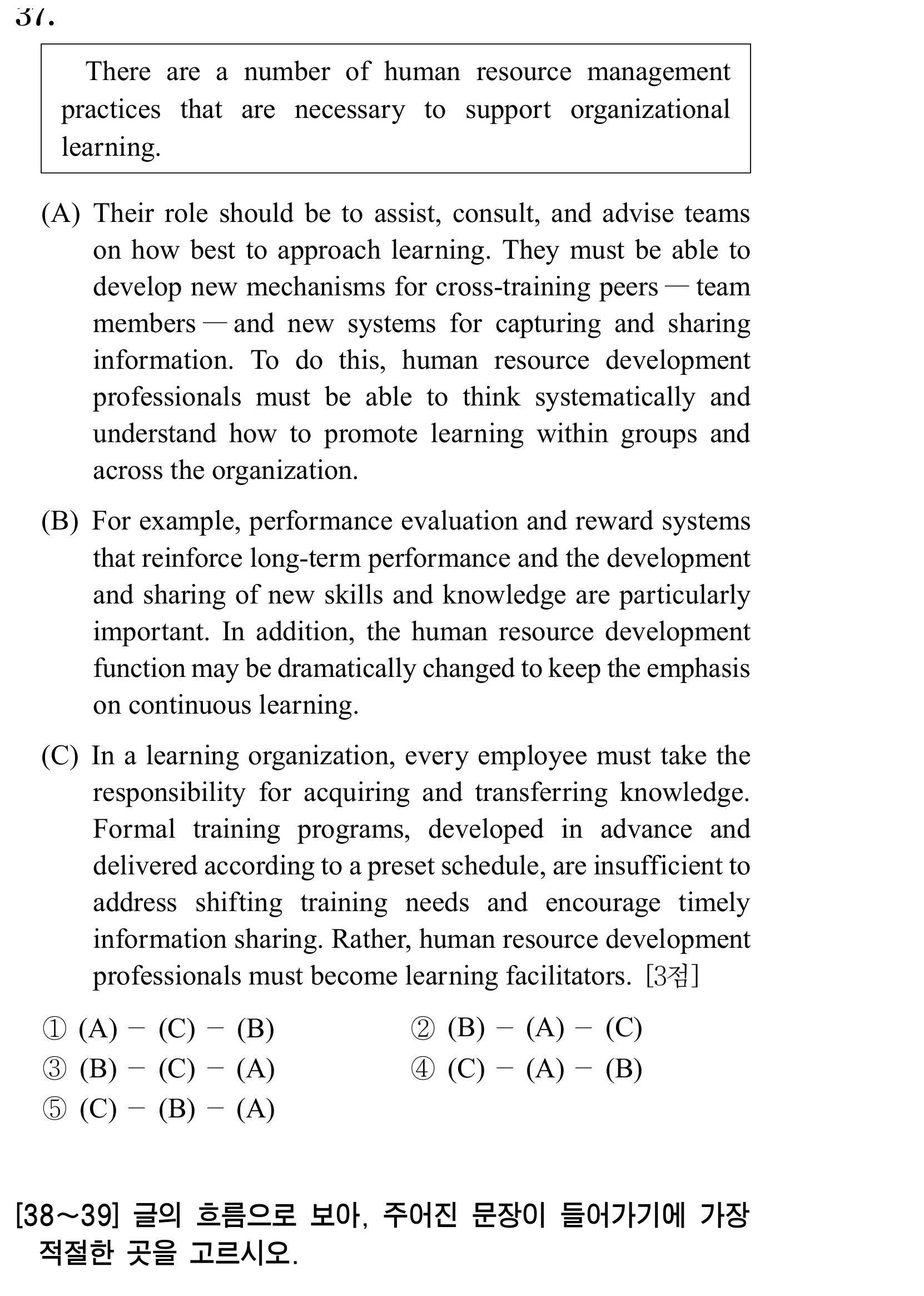
There are a number of human resource management practices that are necessary to support organizational learning. For example, performance evaluation and reward systems that reinforce long-term performance and the development and sharing of new skills and knowledge are particularly important. In addition, the human resource development function may be dramatically changed to keep the emphasis on continuous learning. In a learning organization, every employee must take the responsibility for acquiring and transferring knowledge. Formal training programs, developed in advance and delivered according to a preset schedule, are insufficient to address shifting training needs and encourage timely information sharing. Rather, human resource development professionals must become learning facilitators. Their role should be to assist, consult, and advise teams on how best to approach learning. They must be able to develop new mechanisms for cross-training peers — team members — and new systems for capturing and sharing information. To do this, human resource development professionals must be able to think systematically and understand how to promote learning within groups and across the organization.
38번문장삽입1Continuous emissions measurement can be costly, particularly where there are many separat…
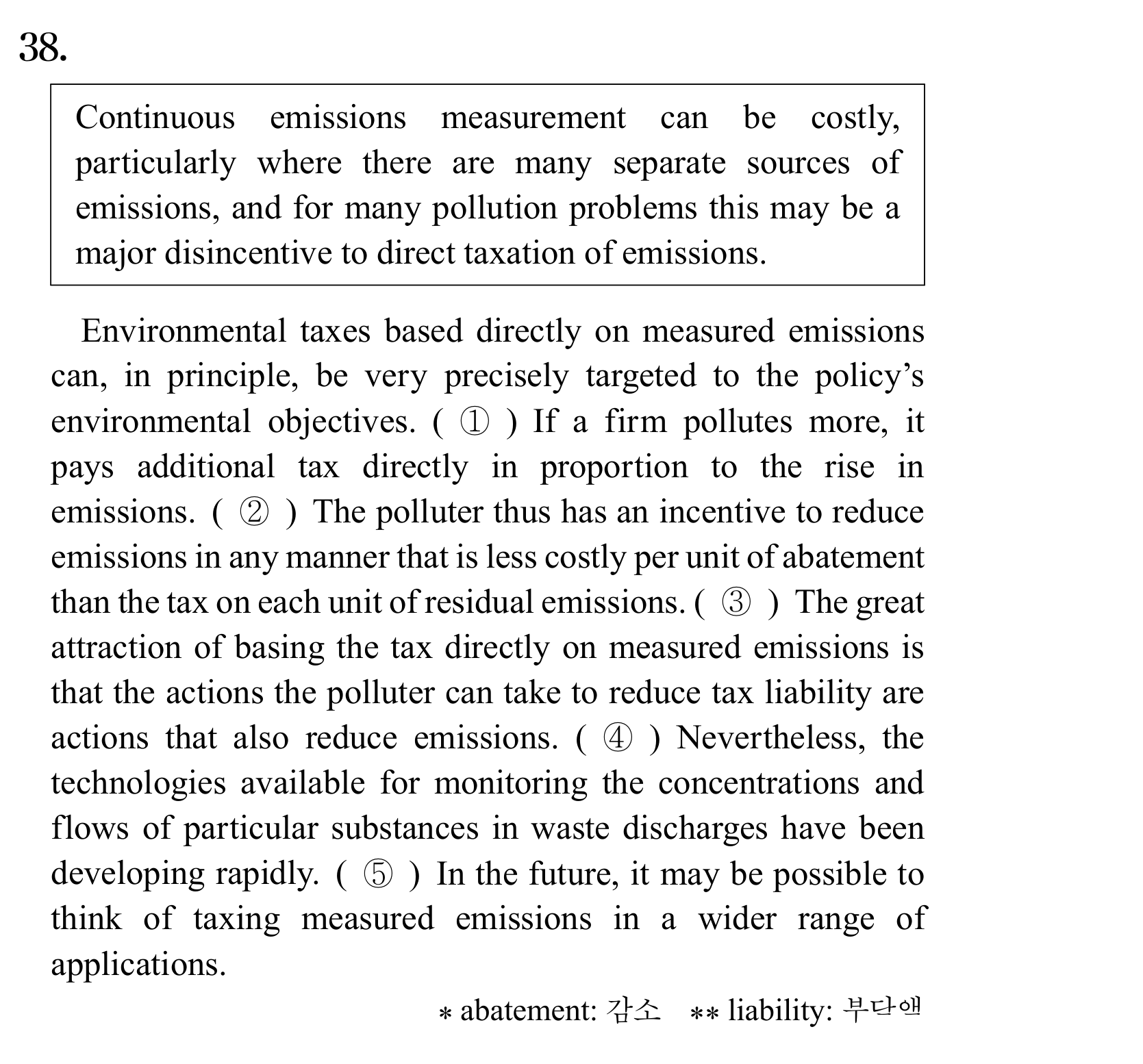
Continuous emissions measurement can be costly, particularly where there are many separate sources of emissions, and for many pollution problems this may be a major disincentive to direct taxation of emissions. Environmental taxes based directly on measured emissions can, in principle, be very precisely targeted to the policy’s environmental objectives. If a firm pollutes more, it pays additional tax directly in proportion to the rise in emissions. The polluter thus has an incentive to reduce emissions in any manner that is less costly per unit of abatement than the tax on each unit of residual emissions. The great attraction of basing the tax directly on measured emissions is that the actions the polluter can take to reduce tax liability are actions that also reduce emissions. Nevertheless, the technologies available for monitoring the concentrations and flows of particular substances in waste discharges have been developing rapidly. In the future, it may be possible to think of taxing measured emissions in a wider range of applications.
39번문장삽입2There are interesting trade-offs in the relative importance of subject matter (i.e., figu…
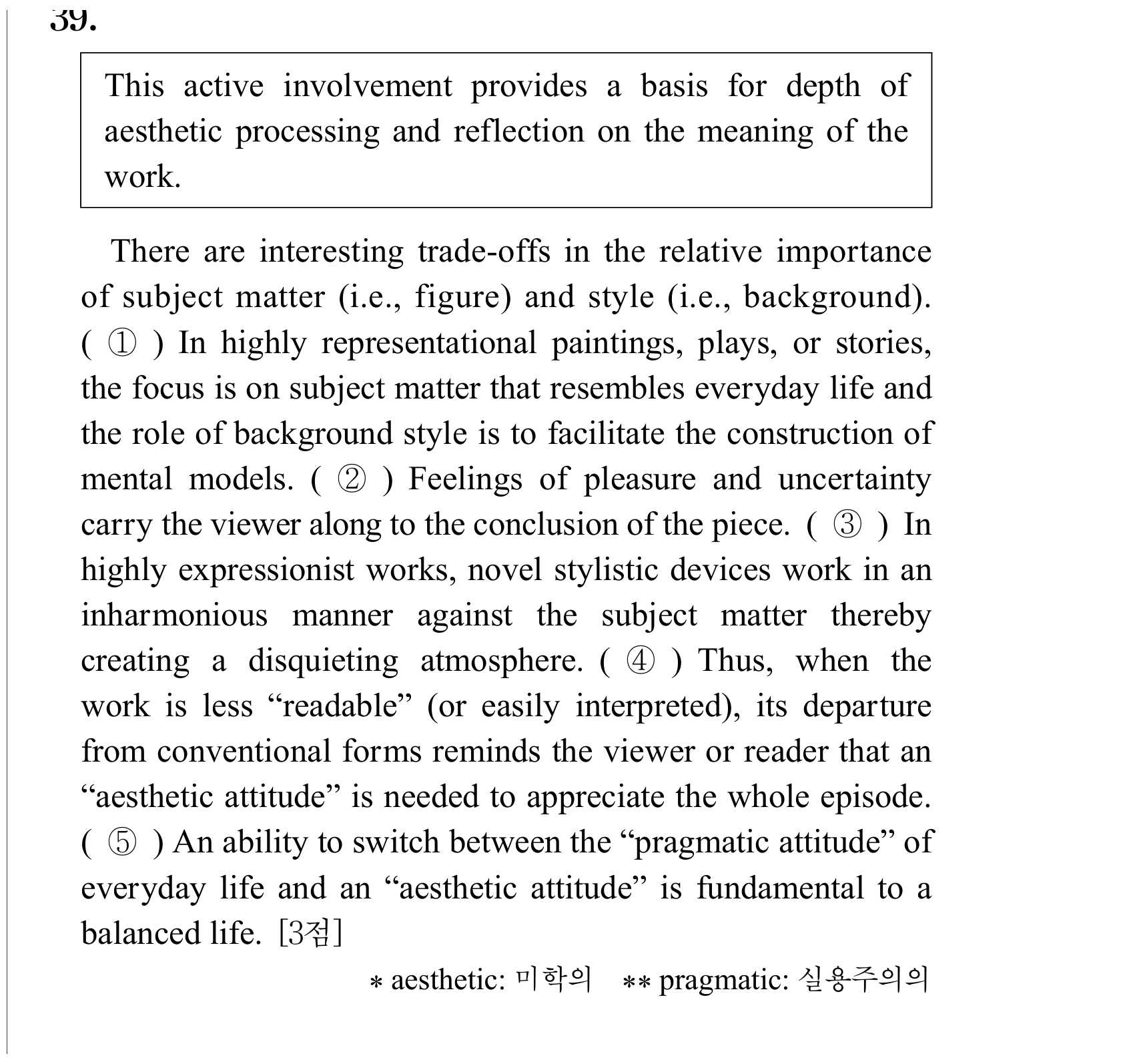
There are interesting trade-offs in the relative importance of subject matter (i.e., figure) and style (i.e., background). In highly representational paintings, plays, or stories, the focus is on subject matter that resembles everyday life and the role of background style is to facilitate the construction of mental models. Feelings of pleasure and uncertainty carry the viewer along to the conclusion of the piece. In highly expressionist works, novel stylistic devices work in an inharmonious manner against the subject matter thereby creating a disquieting atmosphere. This active involvement provides a basis for depth of aesthetic processing and reflection on the meaning of the work. Thus, when the work is less “readable” (or easily interpreted), its departure from conventional forms reminds the viewer or reader that an “aesthetic attitude” is needed to appreciate the whole episode. An ability to switch between the “pragmatic attitude” of everyday life and an “aesthetic attitude” is fundamental to a balanced life.
40번요약문완성There is a tendency, once the dust of an emergency has settled down, to seek the reductio…
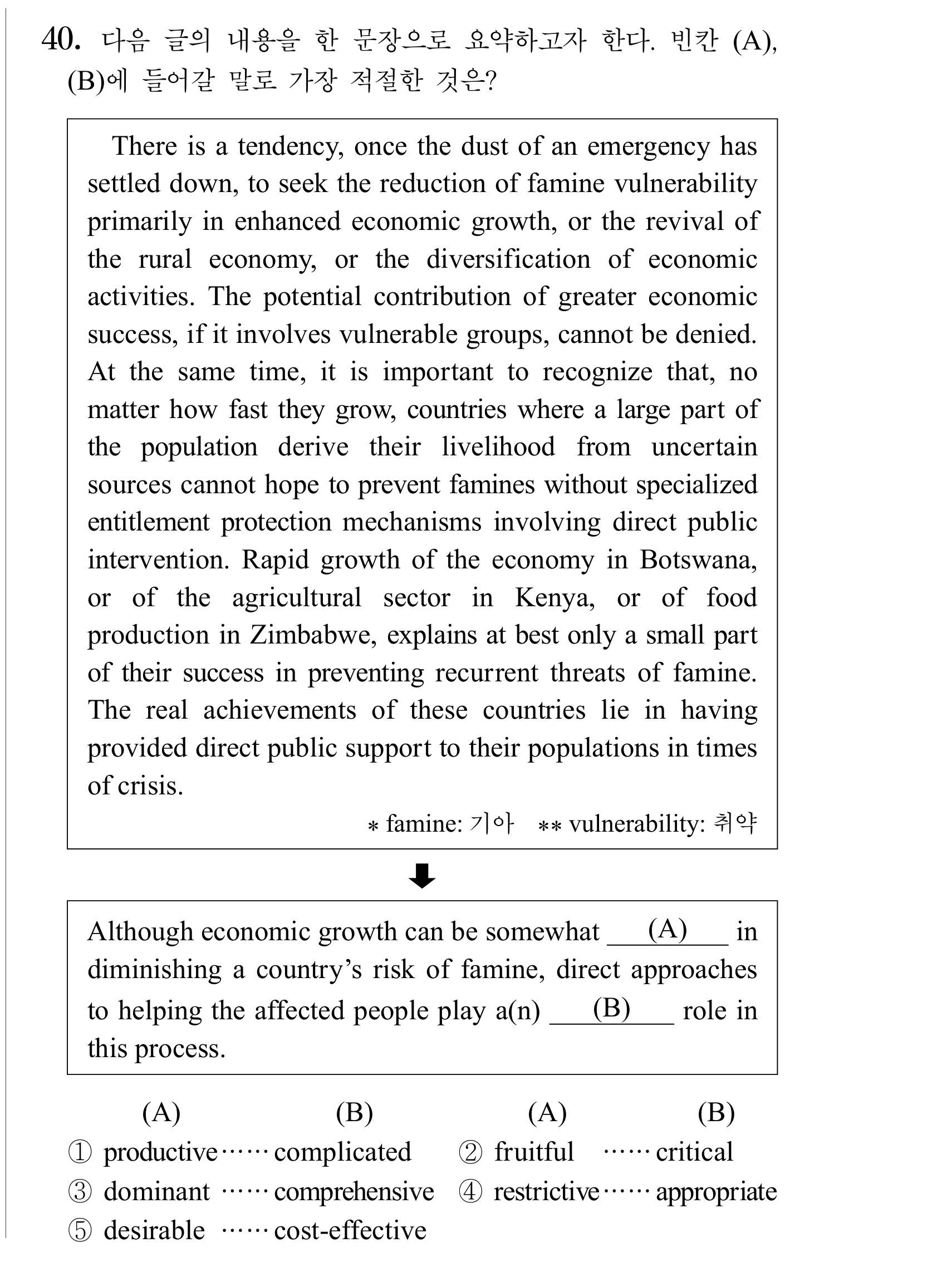
There is a tendency, once the dust of an emergency has settled down, to seek the reduction of famine vulnerability primarily in enhanced economic growth, or the revival of the rural economy, or the diversification of economic activities. The potential contribution of greater economic success, if it involves vulnerable groups, cannot be denied. At the same time, it is important to recognize that, no matter how fast they grow, countries where a large part of the population derive their livelihood from uncertain sources cannot hope to prevent famines without specialized entitlement protection mechanisms involving direct public intervention. Rapid growth of the economy in Botswana, or of the agricultural sector in Kenya, or of food production in Zimbabwe, explains at best only a small part of their success in preventing recurrent threats of famine. The real achievements of these countries lie in having provided direct public support to their populations in times of crisis.
41번장문_제목If we understand critical thinking as: ‘the identification and evaluation of evidence to…
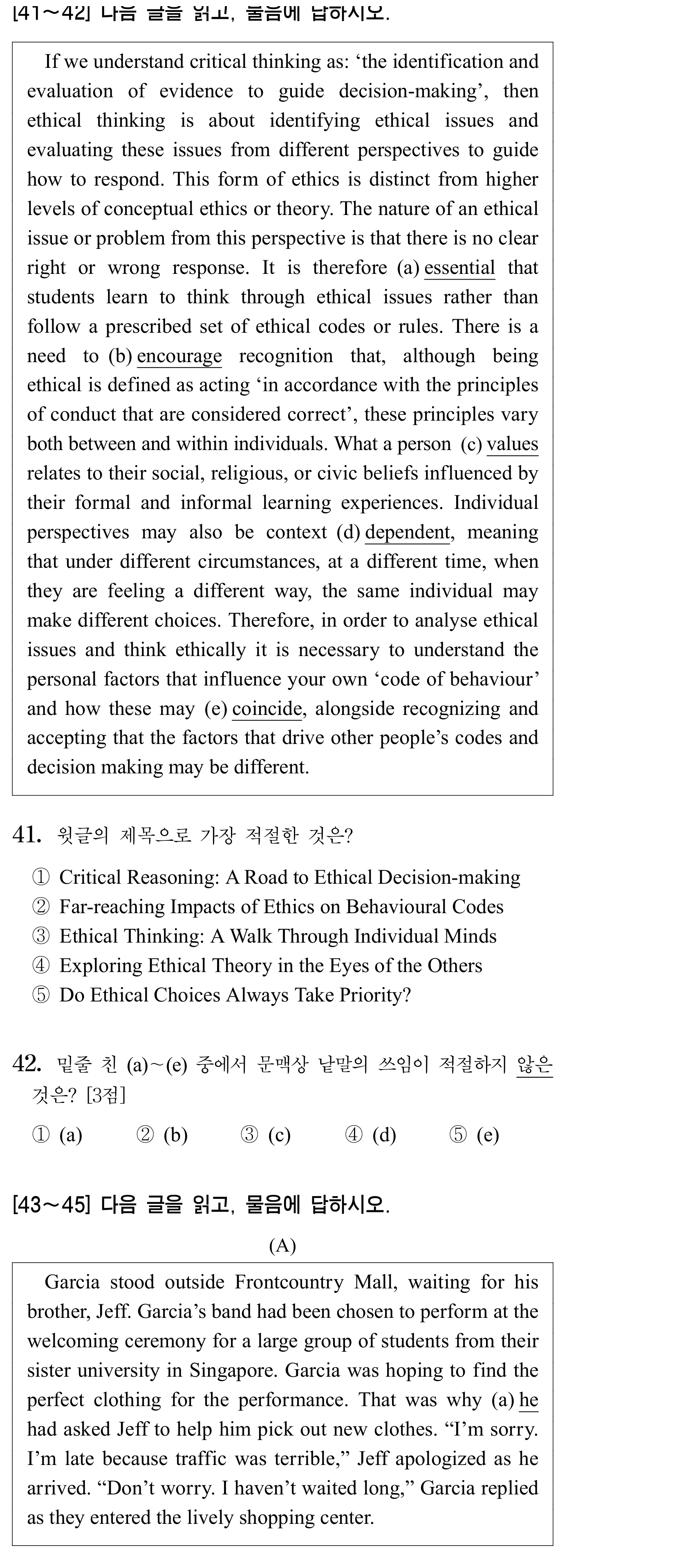
If we understand critical thinking as: ‘the identification and evaluation of evidence to guide decision-making’, then ethical thinking is about identifying ethical issues and evaluating these issues from different perspectives to guide how to respond. This form of ethics is distinct from higher levels of conceptual ethics or theory. The nature of an ethical issue or problem from this perspective is that there is no clear right or wrong response. It is therefore (a) essential that students learn to think through ethical issues rather than follow a prescribed set of ethical codes or rules. There is a need to (b) encourage recognition that, although being ethical is defined as acting ‘in accordance with the principles of conduct that are considered correct’, these principles vary both between and within individuals. What a person (c) values relates to their social, religious, or civic beliefs influenced by their formal and informal learning experiences. Individual perspectives may also be context (d) dependent, meaning that under different circumstances, at a different time, when they are feeling a different way, the same individual may make different choices. Therefore, in order to analyse ethical issues and think ethically it is necessary to understand the personal factors that influence your own ‘code of behaviour’ and how these may (e) coincide, alongside recognizing and accepting that the factors that drive other people’s codes and decision making may be different.
Garcia stood outside Frontcountry Mall, waiting for his brother, Jeff. Garcia’s band had been chosen to perform at the welcoming ceremony for a large group of students from their sister university in Singapore. Garcia was hoping to find the perfect clothing for the performance. That was why (a) he had asked Jeff to help him pick out new clothes. “I’m sorry I’m late because traffic was terrible,” Jeff apologized as he arrived. “Don’t worry. I haven’t waited long,” Garcia replied as they entered the lively shopping center.
43번장문_순서(B) The band performance was the first event of the ceremony.
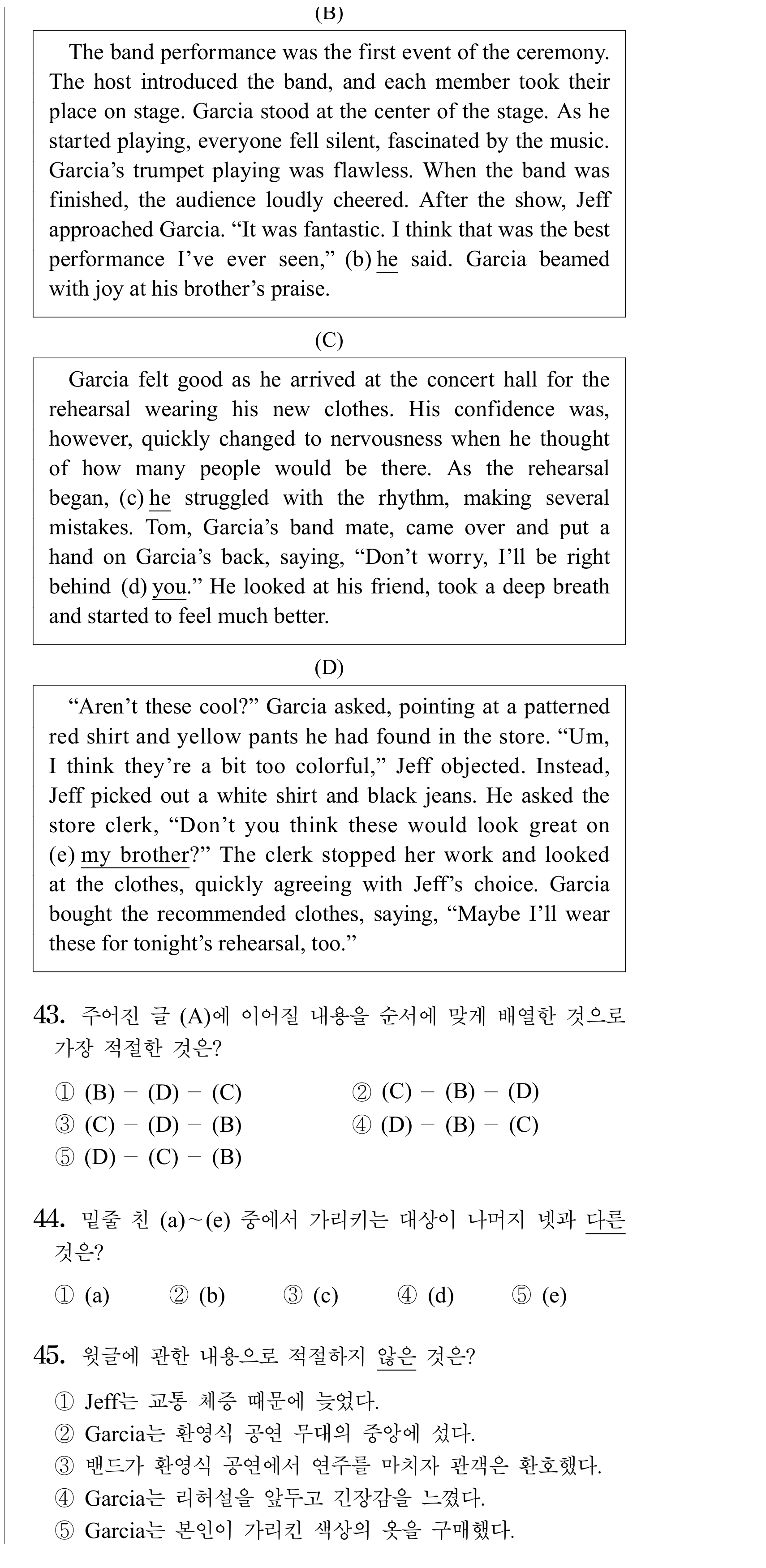
(B) The band performance was the first event of the ceremony. The host introduced the band, and each member took their place on stage. Garcia stood at the center of the stage. As he started playing, everyone fell silent, fascinated by the music. Garcia’s trumpet playing was flawless. When the band was finished, the audience loudly cheered. After the show, Jeff approached Garcia. “It was fantastic. I think that was the best performance I’ve ever seen,” he said. Garcia beamed with joy at his brother’s praise.
(C) Garcia felt good as he arrived at the concert hall for the rehearsal wearing his new clothes. His confidence was, however, quickly changed to nervousness when he thought of how many people would be there. As the rehearsal began, he struggled with the rhythm, making several mistakes. Tom, Garcia’s band mate, came over and put a hand on Garcia’s back, saying, “Don’t worry, I’ll be right behind you.” He looked at his friend, took a deep breath and started to feel much better.
(D) “Aren’t these cool?” Garcia asked, pointing at a patterned red shirt and yellow pants he had found in the store. “Um, I think they’re a bit too colorful,” Jeff objected. Instead, Jeff picked out a white shirt and black jeans. He asked the store clerk, “Don’t you think these would look great on my brother?” The clerk stopped her work and looked at the clothes, quickly agreeing with Jeff’s choice. Garcia bought the recommended clothes, saying, “Maybe I’ll wear these for tonight’s rehearsal, too.”
2024년 6월 고3 전국연합 영어 모의고사 변형문제 맛보기
이 시험 지문으로 실제로 만든 변형문제 3문항입니다. 같은 지문으로 유형을 바꿔 더 만들 수 있습니다.
21번 지문 · 어법 변형
다음 글의 밑줄 친 부분 중, 어법상 틀린 것은 모두 몇 개인가?
To balance the need for breadth (everyone feels a bit burned out) and depth (some are so burned out, they can no longer do their jobs), ①we ought to think of burnout not as a state but as a spectrum. In most public discussion of burnout, we talk about workers ②who “are burned out,” ③as if that status were black and white. A black-and-white view cannot ④account for the variety of burnout experience, though. If there is a clear line between burned out and not, as there is with a lightbulb, then we have no good way to categorize ⑤people who say they are burned out but ⑥still manage to do their work competently. Thinking about burnout as a spectrum solves this problem; those who claim burnout but ⑦are not debilitating by it are simply dealing with a partial or less-severe form of it. They are experiencing burnout ⑧without to be burned out. Burnout hasn’t had the last word.- ①1개
- ②2개
- ③3개
- ④4개
- ⑤5개
22번 지문 · 빈칸추론 변형
다음 빈칸에 들어갈 말로 가장 적절한 것은?
In both the ancient hunter-gatherer band and our intimate speech communities today, the diffusion of speech shaped values. The fact that everyone was going to be able to speak and listen had to be accommodated ethically, and it was via a rough egalitarianism. In terms of communications, people were equal and therefore it was believed they should be equal, or at least relatively so. By this code, ancient Big Men were not allowed to act controllingly and modern office managers are not allowed to silence anyone at will. Moreover, equal access to speech and hearing promoted the notion that ________________, that goods and food in particular should be shared, and that everyone had a duty to take care of everyone else. This was probably more true among hunter-gatherers than it is in the modern family, circle of friends, or workplace. But even in these cases we believe that sharing and mutual aid are right and proper. Remember, if you bring something, you should bring enough for everyone.- ①possessions ought to be collectively owned
- ②resources ought to be allocated by individual merit
- ③ownership ought to be safeguarded through formal agreements
- ④wealth ought to be redistributed by a central authority
- ⑤authority ought to be vested in the most experienced members
24번 지문 · 주제 변형
다음 글의 주제로 가장 적절한 것은?
As far back as 32,000 years ago, prehistoric cave artists skillfully used modeling shadows to give their horses and bison volume. A few thousand years ago ancient Egyptian and then ancient Greek art presented human forms in shadow-style silhouette. But cast shadows do not appear in Western art until about 400 BCE in Athens. It was only after shadows had become an established, if controversial, part of representation that classical writers claimed that art itself had begun with the tracing of a human shadow. Greeks and Romans were the first to make the transition from modeling shadows to cast shadows, a practice that implied a consistent light source, a fixed point of view, and an understanding of geometric projection. In fact, what we might now call “shadow studies” — the exploration of shadows in their various artistic representations — has its roots in ancient Athens. Ever since, the practice of portraying shadows has evolved along with critical analysis of them, as artists and theoreticians have engaged in an ongoing debate about the significance of shadow representation.- ①how prehistoric painters conveyed the three-dimensional bulk of animals through tonal gradation
- ②the emergence of shadow depiction in Western antiquity and its continuing interplay with theoretical reflection
- ③the geometric and optical knowledge that enabled Greek and Roman artists to render projected shadows convincingly
- ④the legendary link between the outlining of a human shadow and the birth of artistic creation
- ⑤the gradual refinement of artistic realism as a product of accumulated technical innovation across civilizations
남은 시간
48:00





아직 28문제를 풀지 않았어요 (0/28)