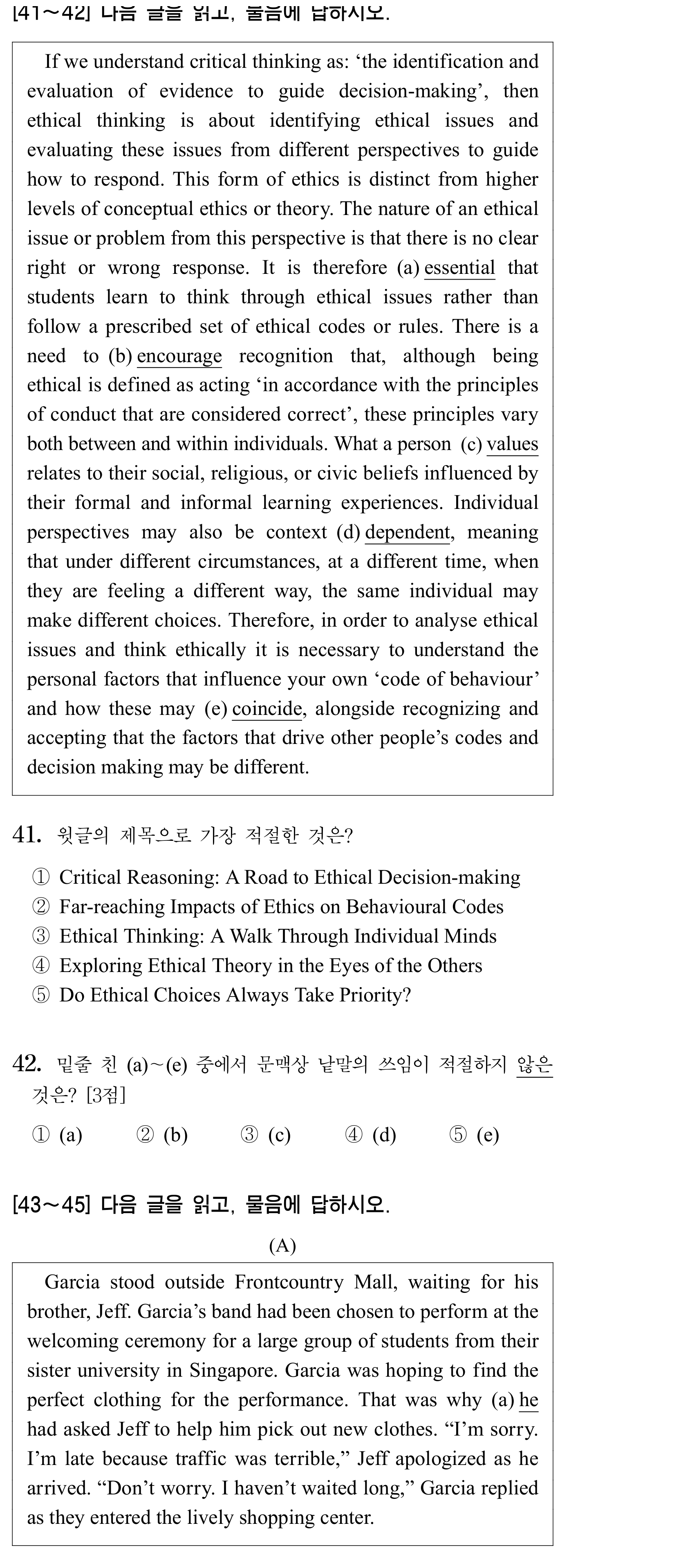
If we understand critical thinking as — 2024년 6월 고3 41번 해석 및 풀이
후니쌤2026년 8월 25일조회 76

2024-06-29
핵심 문제유형: 41번 장문 독해 — 윤리적 사고의 본질과 개인적 요인
이 지문, 뼈대만 먼저
주제The nature of ethical thinking and personal factors윤리적 사고의 본질과 이에 영향을 미치는 개인적 요인
흐름definition → lack of clear answers → personal & contextual factors윤리적 사고 정의 → 명확한 정답 없음 → 개인적·상황적 요인의 영향
주장Students must learn to think through ethical issues.학생들은 정해진 규칙을 따르기보다 스스로 생각하는 법을 배워야 한다.
근거Ethical principles vary between individuals and depend on context.윤리적 원칙은 개인마다 다르고 처한 상황과 기분에 따라 달라진다.
결론We must understand our own factors and accept others' differences.자신의 행동 강령에 영향을 주는 요인을 이해하고 타인의 다름을 인정해야 한다.
많은 학생이 장문 독해를 마주하면 지문이 길다는 이유만으로 지레 겁을 먹곤 합니다. 하지만 사실 긴 지문일수록 논리의 이음새가 명확하게 드러나기 마련이에요. 특히 41번 문항은 문맥상 어색한 어휘를 고르는 유형인데, 여기서 흔히 빠지는 함정은 단어의 사전적 의미만 생각하고 문장의 전체적인 맥락을 놓치는 것입니다. 문장 안에서 특정 단어가 왜 '필수적인지' 혹은 '왜 다른 방향이어야 하는지' 그 근거를 찾아가는 과정을 함께 따라와 보세요.
지문 구조 분석
도입
3형식 SVO
부사절If we understand critical thinking as: ‘the identification and evaluation of evidence to guide decision-making’M,
then ethical thinkingS
isV
about identifying ethical issues and evaluating these issues from different perspectives to guide how to respondSC.
만약 우리가 비판적 사고를 ‘의사결정을 안내하기 위한 증거의 식별과 평가’로 이해한다면,M 윤리적 사고는S 윤리적 문제를 식별하고 어떻게 대응할지 안내하기 위해 다양한 관점에서 이러한 문제를 평가하는 것에 관한 것입니다SC.
동의어 perspective ≒ viewpoint, outlook, standpoint
2형식 SVC
This form of ethicsS
isV
distinct from higher levels of conceptual ethics or theorySC.
이러한 형태의 윤리는S 더 높은 수준의 개념적 윤리나 이론과는 구별됩니다SC.
전환
2형식 SVC
The nature of an ethical issue or problem from this perspectiveS
isV
명사절that there is no clear right or wrong responseSC.
이러한 관점에서 윤리적 이슈나 문제의 본질은S 명확한 옳고 그름의 반응이 없다는 것입니다SC.
주제문
ItM
isV
thereforeM
(a) essentialSC
진주어(that절)that students learn to think through ethical issues rather than follow a prescribed set of ethical codes or rulesS.
따라서 필수적입니다SC 학생들이 규정된 일련의 윤리 강령이나 규칙을 따르기보다는 윤리적 문제를 깊이 생각하는 법을 배우는 것이S.
동의어 essential ≒ crucial, vital, indispensable · prescribed ≒ set, established, ordained
근거
3형식 SVO
ThereS
isV
a needS
to (b) encourage recognition thatM,
부사절although being ethical is defined as acting ‘in accordance with the principles of conduct that are considered correct’M,
these principlesS
varyV
both between and within individualsM.
인식하도록 장려할 필요가 있습니다S 윤리적이라는 것이 올바르다고 여겨지는 행동 원칙에 따라 행동하는 것으로 정의되기는 하지만, 이러한 원칙은 개인 간에도, 개인 내부에서도 다양하다는 것을M.
동의어 encourage ≒ promote, foster, stimulate · vary ≒ differ, fluctuate, alter
3형식 SVO
What a person (c) valuesS
relates toV
their social, religious, or civic beliefs influenced by their formal and informal learning experiencesO.
한 사람이 무엇을 가치 있게 여기는지는S 그들의 공식적, 비공식적 학습 경험에 의해 영향을 받은 사회적, 종교적, 또는 시민적 신념과 관련이 있습니다O.
2형식 SVC
Individual perspectivesS
mayV
alsoM
be context (d) dependentSC,
meaning that under different circumstances, at a different time, when they are feeling a different way, the same individual may make different choicesM.
개인의 관점은 또한 상황에 의존적일 수 있는데,S 이는 다른 상황에서, 다른 시간에, 다른 기분일 때, 동일한 개인이 다른 선택을 할 수도 있다는 것을 의미합니다M.
동의어 dependent ≒ reliant, contingent · circumstances ≒ situations, conditions, environments
결론
3형식 SVO
Therefore, in order to analyse ethical issues and think ethicallyM
itS
isV
necessarySC
to understand the personal factors that influence your own ‘code of behaviour’ and how these may (e) coincide, alongside recognizing and accepting that the factors that drive other people’s codes and decision making may be differentS.
따라서 윤리적 이슈를 분석하고 윤리적으로 생각하기 위해서는M 필요하며,SC 자신의 ‘행동 강령’에 영향을 미치는 개인적 요인들과 이것들이 어떻게 다른지(일치하지 않는지)를 이해하는 것이, 동시에 다른 사람들의 강령과 의사결정을 이끄는 요인들은 다를 수 있음을 인정하고 받아들여야 합니다S.
동의어 coincide ≒ concur, agree, match · accept ≒ embrace, acknowledge, admit
가주어 it — 진주어 to부정사 구문
It + be동사 + 형용사(보어) + to V(진주어)
주어가 너무 길어지면 문장 균형을 위해 it을 가주어로 쓰고 진주어를 뒤로 보냅니다. necessary, essential, important와 같은 형용사가 2형식 보어로 쓰일 때 자주 등장해요.
명사절 that절 (진주어 역할)
It is essential + [that + S + V ~ (완전한 문장)]
접속사 that이 이끄는 명사절이 가주어 it의 진짜 주어로 쓰였습니다. 명사절 내부 문장은 빠진 성분이 없는 완전한 구조를 취합니다.
출제 포인트 — 가주어-진주어 구조와 어휘 반의어 파악
- It is essential that... 구조에서 가주어 it과 진주어 that절의 호응을 파악해야 합니다.
- 글의 핵심 맥락(개인마다 윤리적 원칙이 다르고 상황에 의존적임)에 비추어 볼 때, 자신의 요인과 타인의 요인이 coincide(일치하다)한다는 표현은 문맥상 정반대이므로 differ / vary 등으로 고쳐야 합니다.
어휘 정리
identification 식별
≒ recognition, detection, discernment
prescribed 규정된
≒ set, established, specified
coincide 일치하다
≒ concur, correspond, match
circumstances 상황/환경
≒ situations, conditions, states
essential 필수적인
≒ crucial, vital, indispensable
encourage 장려하다
≒ promote, foster, advocate
dependent 의존적인
≒ reliant, contingent, conditional
perspective 관점
≒ viewpoint, outlook, angle
vary 다르다
≒ differ, fluctuate, diverge
accept 받아들이다
≒ embrace, acknowledge, approve
풀이 전략 및 정답
이 글은 윤리적 사고가 고정된 규칙을 따르는 것이 아니라, 개인의 경험과 상황에 따라 달라질 수 있음을 강조합니다. 마지막 문장에서 다른 사람들의 기준이 다를 수 있다는 점을 '인정하고 받아들여야 한다'고 했으므로, 자신의 요인과 타인의 요인이 반드시 '일치(coincide)'해야 한다는 논리는 어색합니다. 오히려 그 다름을 이해하고 수용해야 한다는 맥락이므로, (e)의 'coincide'는 'differ'나 'vary' 같은 맥락의 단어가 적절합니다.
정답은 3번 (e) coincide 입니다.
미국에서는 교실에서 흔히 'Ethics'를 다룰 때 정답을 도출하기보다, 왜 그런 선택을 했는지 '이유(rationale)'를 설명하는 과정을 훨씬 중요하게 생각합니다. 한국과 다르게 거기선 정해진 답이 없다는 걸 인정하는 게 학습의 출발점인 셈이죠. 앞으로 비슷한 유형을 만난다면, 문맥 전체를 관통하는 핵심 주장과 정반대 방향을 가리키는 단어가 무엇인지 먼저 찾아보세요.
- 윤리적 사고의 가변성
- 개인적 요인의 영향력
- 문맥적 단서 파악하기
- 정반대 어휘 찾기 전략