2026년 10월 고2 전국연합 영어 모의고사
28문제 · 제한시간 48분
이 시험 한눈에 — 2026년 10월 고2 전국연합 영어 모의고사
18~45번 28문항을 유형별로 보면 목적 1 · 심경/분위기 1 · 주장 1 · 함축의미추론 1 · 요지/주장 1 · 주제 1 · 제목 1 · 도표 1 · 내용일치 1 · 실용문 2 · 어법 1 · 어휘 1 · 빈칸추론1 1 · 빈칸추론2 1 · 빈칸추론3 1 · 빈칸추론4 1 · 무관한문장 1 · 순서배열1 1 · 순서배열2 1 · 문장삽입1 1 · 문장삽입2 1 · 요약문완성 1 · 장문 5. 아래 지문으로 변형문제·단어장·정답표를 바로 만들 수 있습니다.
18번목적Dear Principal, I am writing as the head student because many students have expressed the…
Dear Principal, I am writing as the head student because many students have expressed their concerns about the recent security incidents at nearby schools. We propose a few measures to increase students' privacy and safety. First, planting trees around the school would prevent outsiders from watching students, which helps protect students' privacy and reduces their exposure to external risks. Additionally, more CCTV cameras and security guards could be added near the entrances to detect unauthorized access and respond quickly to any incidents. On behalf of the students, I hope that you will kindly consider these suggestions. Thank you. Sincerely, David Miller
19번심경/분위기Beryl was standing on stage for her singing performance at the school festival.
Beryl was standing on stage for her singing performance at the school festival. The opening melody began to play, a soft tune that Beryl had practiced over and over. She knew the lyrics by heart, but now that she was here, everything seemed to have faded from her mind. She almost froze. What if I forgot the words? What if I sounded awful? But then she remembered her best friend Naomi's words. “You're doing something brave by just getting up there.” When the moment came, Beryl took a deep breath and began to sing. Her voice, shaky at first, soon found its rhythm as she focused. The weight on her shoulders slowly lifted, and the words began to flow more easily. As she continued singing, each note rang out without hesitation. She realized that this was her moment.
20번주장Life is full of possibilities.
Life is full of possibilities. If we, like gardeners, provide a suitable environment and let children grow at their own pace, they will spontaneously explore the world, developing curiosity, creativity, and independence. Such children love life, dare to challenge, and possess initiative. But if we, like carpenters, always try to “shape” children into our ideal image, they will gradually lose autonomy, becoming accustomed to following others’ instructions. Such children quickly lose their sense of direction as they grow, because they are used to being arranged for, rather than actively choosing their path. As parents, our role should be that of gardeners, providing sunlight, rain, and fertile soil, allowing children to grow naturally at their own pace. It should not be that of carpenters, trying to carve out a “perfect” piece according to our will. The core of education starts with understanding life and helping children find their own “map” to find their direction in a complex world.
21번함축의미추론To see how borrowing and lending changes a person's worldview, consider what the rate of…
To see how borrowing and lending changes a person's worldview, consider what the rate of interest does to people's perception of time. Imagine you are lending to somebody at an interest rate of 10 percent per year for five years. This rate tells us that the money lent has a cost that reflects the risk of you not being repaid and the opportunity cost of not spending that money yourself. The longer the term of the loan, the higher the chance you won't be paid back because it is further into the future — which by definition is unknowable — and the longer you will have to wait before spending the money yourself. In order to make this worthwhile for the lender, money has to have a price — a cost to the borrower and income to the lender. This price factors in the value of time. To put it another way, a bird in the hand is worth two in the bush.
22번요지/주장Social and environmental responsibility has become an increasingly important ethical cons…
Social and environmental responsibility has become an increasingly important ethical consideration for content creators. As global awareness of social, environmental, and sustainability issues grows, many content creators are being called upon to consider the broader impact of their work. This includes addressing topics such as climate change, social justice, and ethical consumerism in their content. Content creators have a platform that can influence their audience’s attitudes and behaviors, and they have a responsibility to use that platform for positive change. For example, promoting environmentally sustainable products or supporting causes related to equality and justice can help raise awareness and drive meaningful social impact. Ethical content creators not only focus on promoting their products or services but also consider the values and causes they support, ensuring that their content aligns with their social and environmental principles.
23번주제Research on cephalopod neurobiology suggests that an octopus possesses roughly five hundr…
Research on cephalopod neurobiology suggests that an octopus possesses roughly five hundred million neurons. What makes this system unusual is where many of those neurons are located. More than half are distributed throughout the arms rather than concentrated entirely in the central brain. Each arm contains networks of nerve cells capable of controlling complex movements and responding to sensory input locally. This means that many actions do not require detailed instructions from the brain itself. Instead, the arms function as highly capable extensions of the nervous system that interact with the environment directly. The suckers lining each arm play an important role in this process. These structures provide strong grip but also detect chemical signals on surfaces they contact. Marine biologists studying octopus behavior have shown that this allows the animal to gather chemical information through touch. In practical terms, an octopus can effectively taste what it touches.
24번제목Consistent though he may be, some of Aristotle’s ideas meet us today as strange.
Consistent though he may be, some of Aristotle’s ideas meet us today as strange. He had no difficulty justifying slavery, for example, and in his era, philosophers enjoyed positions of high privilege and influence. Because of their practice of contemplation for the highest human good, philosophers were considered worthy to have all the best things in life. Somehow that assertion seems oddly self-serving. It serves us to remember that every great thinker is of her own time and speaks to a particular audience, and certainly Aristotle is no exception. Human flourishing as he understood it probably would not be nearly as inclusive as we would want it to be today. How he understood right and good is best taken to be an indicator of how the privileged elite of ancient Greek society tended to understand right and good. As a result, for all it does well, it is also deeply flawed.
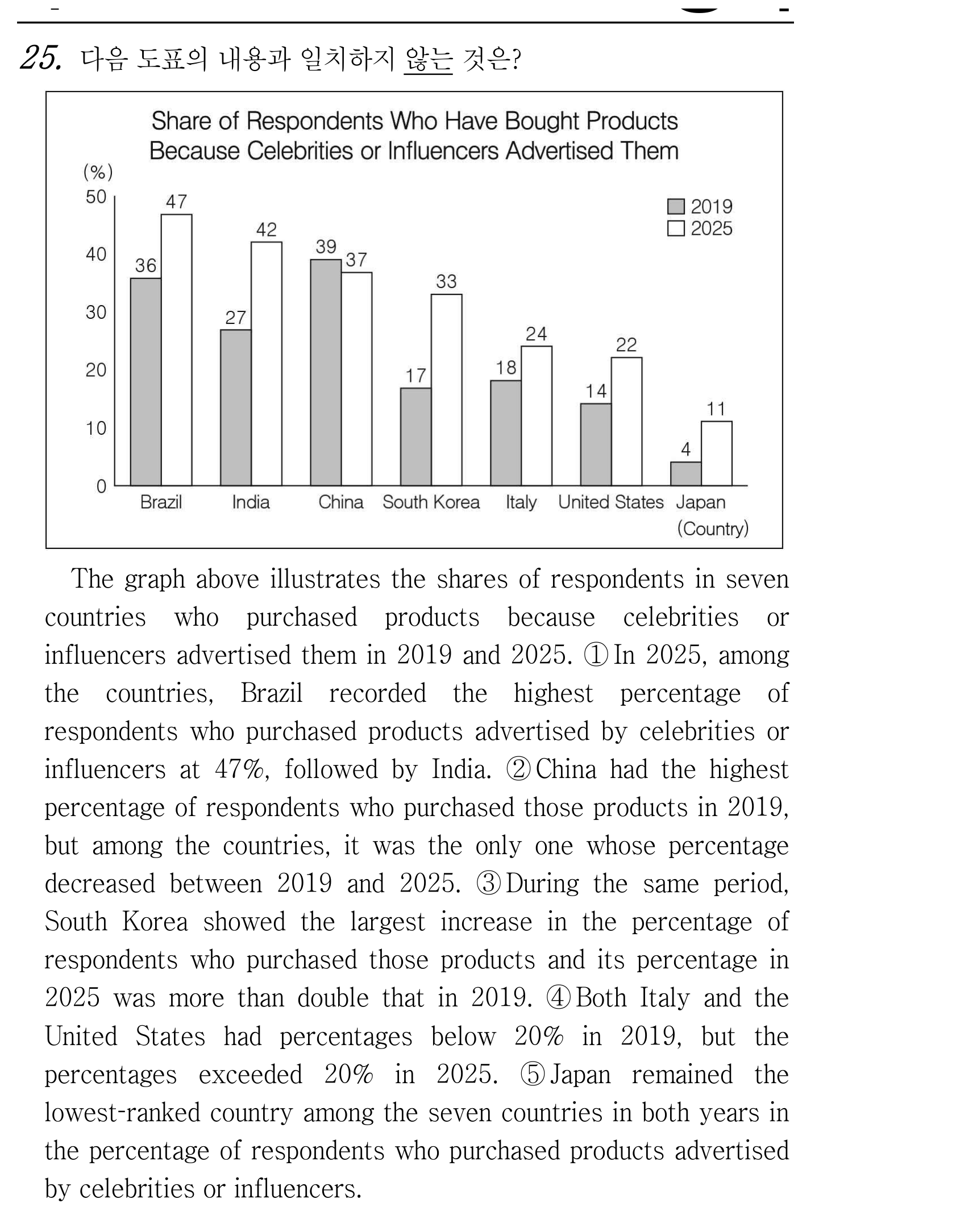
25번도표The graph above illustrates the shares of respondents in seven countries who purchased pr…
The graph above illustrates the shares of respondents in seven countries who purchased products because celebrities or influencers advertised them in 2019 and 2025. ① In 2025, among the countries, Brazil recorded the highest percentage of respondents who purchased products advertised by celebrities or influencers at 47%, followed by India. ② China had the highest percentage of respondents who purchased those products in 2019, but among the countries, it was the only one whose percentage decreased between 2019 and 2025. ③ During the same period, South Korea showed the largest increase in the percentage of respondents who purchased those products and its percentage in 2025 was more than double that in 2019. ④ Both Italy and the United States had percentages below 20% in 2019, but the percentages exceeded 20% in 2025. ⑤ Japan remained the lowest-ranked country among the seven countries in both years in the percentage of respondents who purchased products advertised by celebrities or influencers.
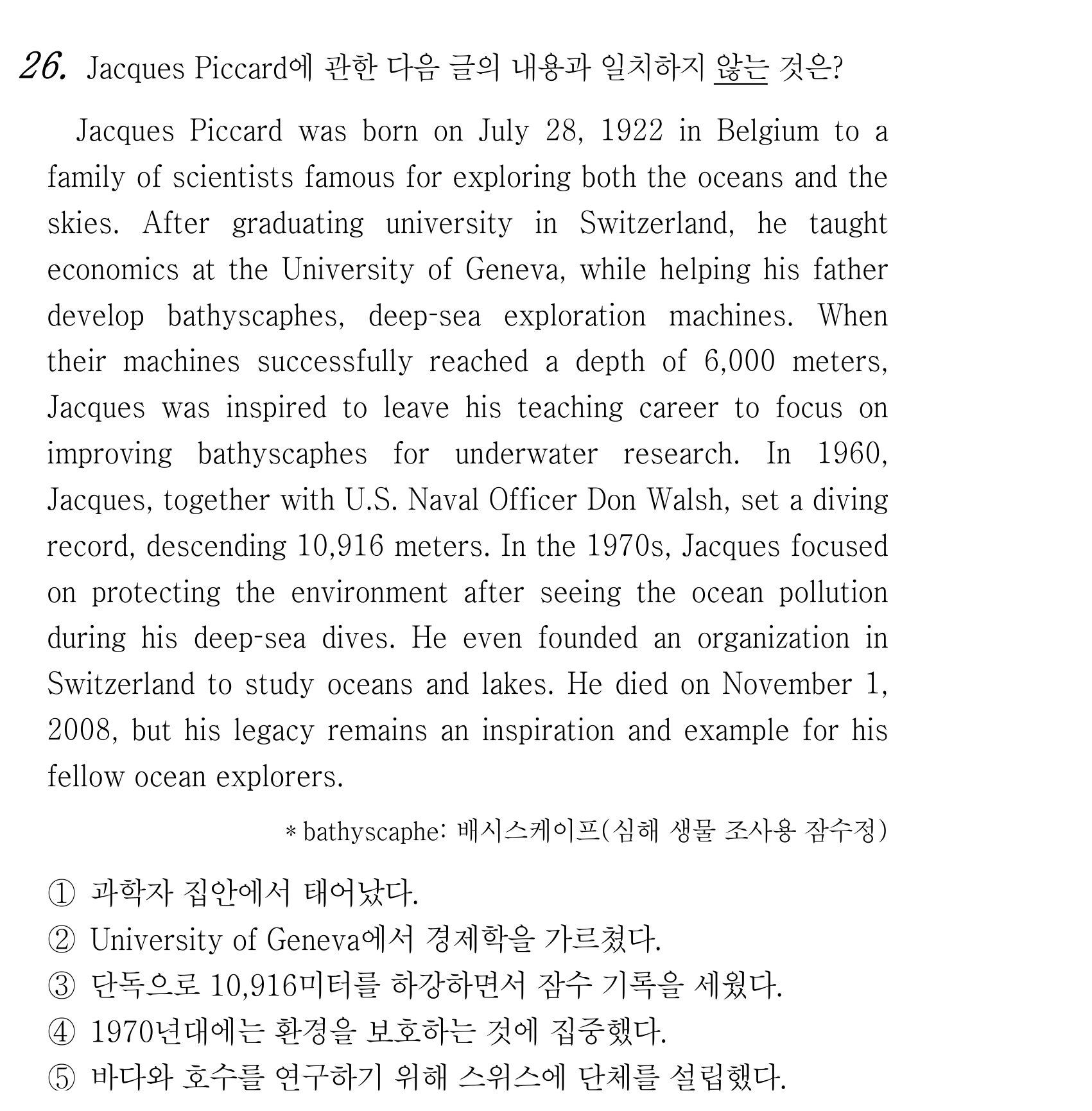
26번내용일치Jacques Piccard was born on July 28, 1922 in Belgium to a family of scientists famous for…
Jacques Piccard was born on July 28, 1922 in Belgium to a family of scientists famous for exploring both the oceans and the skies. After graduating university in Switzerland, he taught economics at the University of Geneva, while helping his father develop bathyscaphes, deep-sea exploration machines. When their machines successfully reached a depth of 6,000 meters, Jacques was inspired to leave his teaching career to focus on improving bathyscaphes for underwater research. In 1960, Jacques, together with U.S. Naval Officer Don Walsh, set a diving record, descending 10,916 meters. In the 1970s, Jacques focused on protecting the environment after seeing the ocean pollution during his deep-sea dives. He even founded an organization in Switzerland to study oceans and lakes. He died on November 1, 2008, but his legacy remains an inspiration and example for his fellow ocean explorers.
27번실용문Skydale High School’s 3D Printing Workshop에 관한 다음 안내문의 Skydale High School’s 3D Printing…
Skydale High School’s 3D Printing Workshop에 관한 다음 안내문의 Skydale High School’s 3D Printing Workshop Discover the exciting world of 3D printing! Make your own 3D products easily with your teachers.
Date: November 14, 2026 Place: Einstein Hall Participation Fee: $20 per person (Cost for materials is included.) Participants: Skydale High School students of any grade Schedule 9 a.m. - 10 a.m. | Learning how to use 3D printing software 10 a.m. - 11 a.m. | Designing your own 3D product 11 a.m. - 12 p.m. | Printing the 3D product you designed Notes · Registration is only available on our school website (www.skydalehigh.edu). · Your 3D-printed products will be displayed at the lobby. For more information, visit our school website.
28번실용문2026 Korean Cultural Heritage Festival Join us for the annual Korean Cultural Heritage Fe…
2026 Korean Cultural Heritage Festival
Join us for the annual Korean Cultural Heritage Festival held by Lindenveil Korean Association and experience the beauty of Korean culture!
Date and Time: October 23 – 25, 10 a.m. – 4 p.m. Location: Lindenveil Park (opposite of Lindenveil City Hall) Details: You can ... · Try on Hanbok and take photos. · Write your name in Korean characters, Hangeul. · Enjoy various traditional Korean games. Notes · All visitors will receive traditional Korean snacks. · If it rains, the festival will be rescheduled.
For more information, please visit www.lindenveilKA.org.
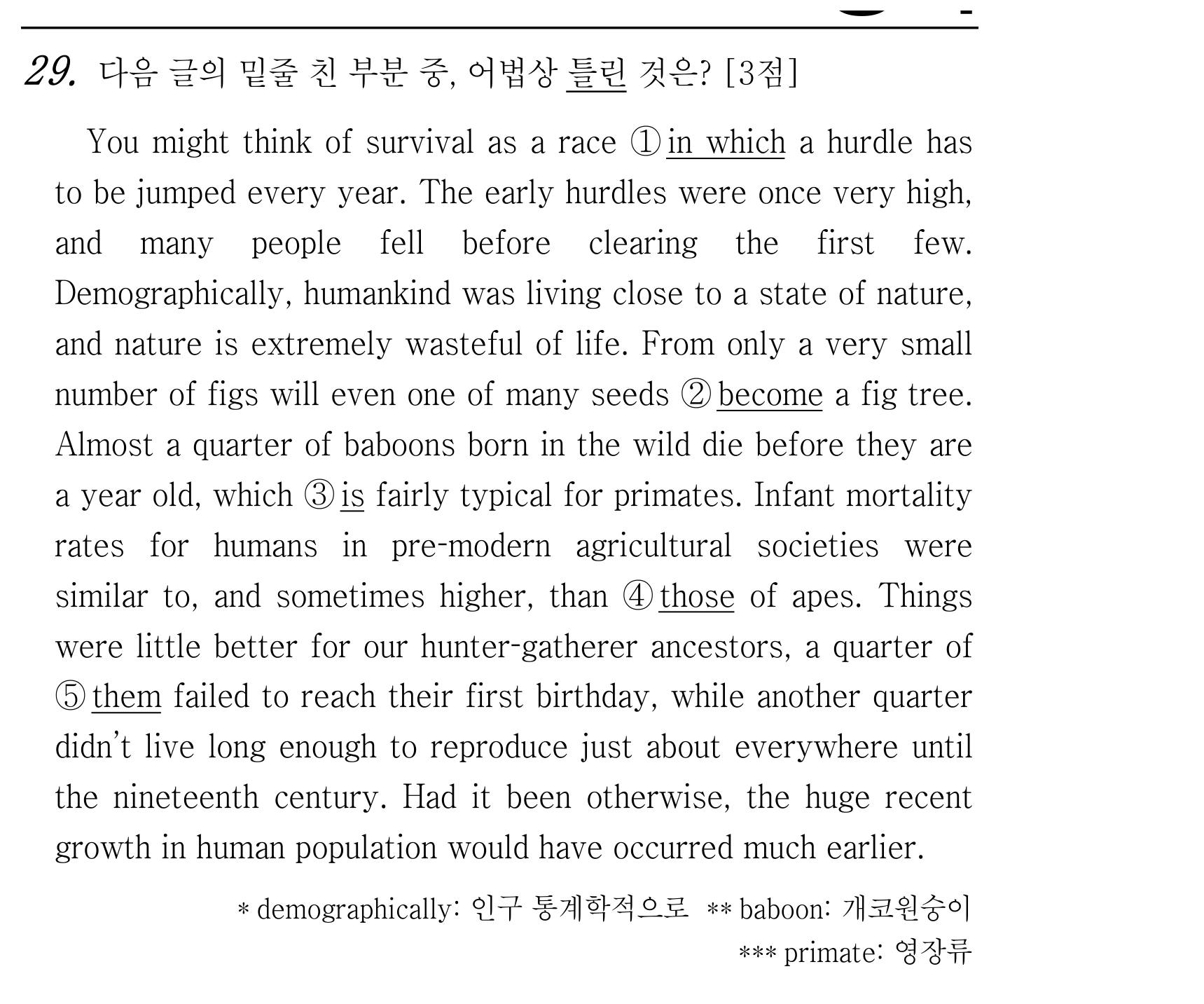
29번어법You might think of survival as a race in which a hurdle has to be jumped every year.
You might think of survival as a race in which a hurdle has to be jumped every year. The early hurdles were once very high, and many people fell before clearing the first few. Demographically, humankind was living close to a state of nature, and nature is extremely wasteful of life. From only a very small number of figs will even one of many seeds become a fig tree. Almost a quarter of baboons born in the wild die before they are a year old, which is fairly typical for primates. Infant mortality rates for humans in pre-modern agricultural societies were similar to, and sometimes higher, than those of apes. Things were little better for our hunter-gatherer ancestors, a quarter of whom failed to reach their first birthday, while another quarter didn't live long enough to reproduce just about everywhere until the nineteenth century. Had it been otherwise, the huge recent growth in human population would have occurred much earlier.
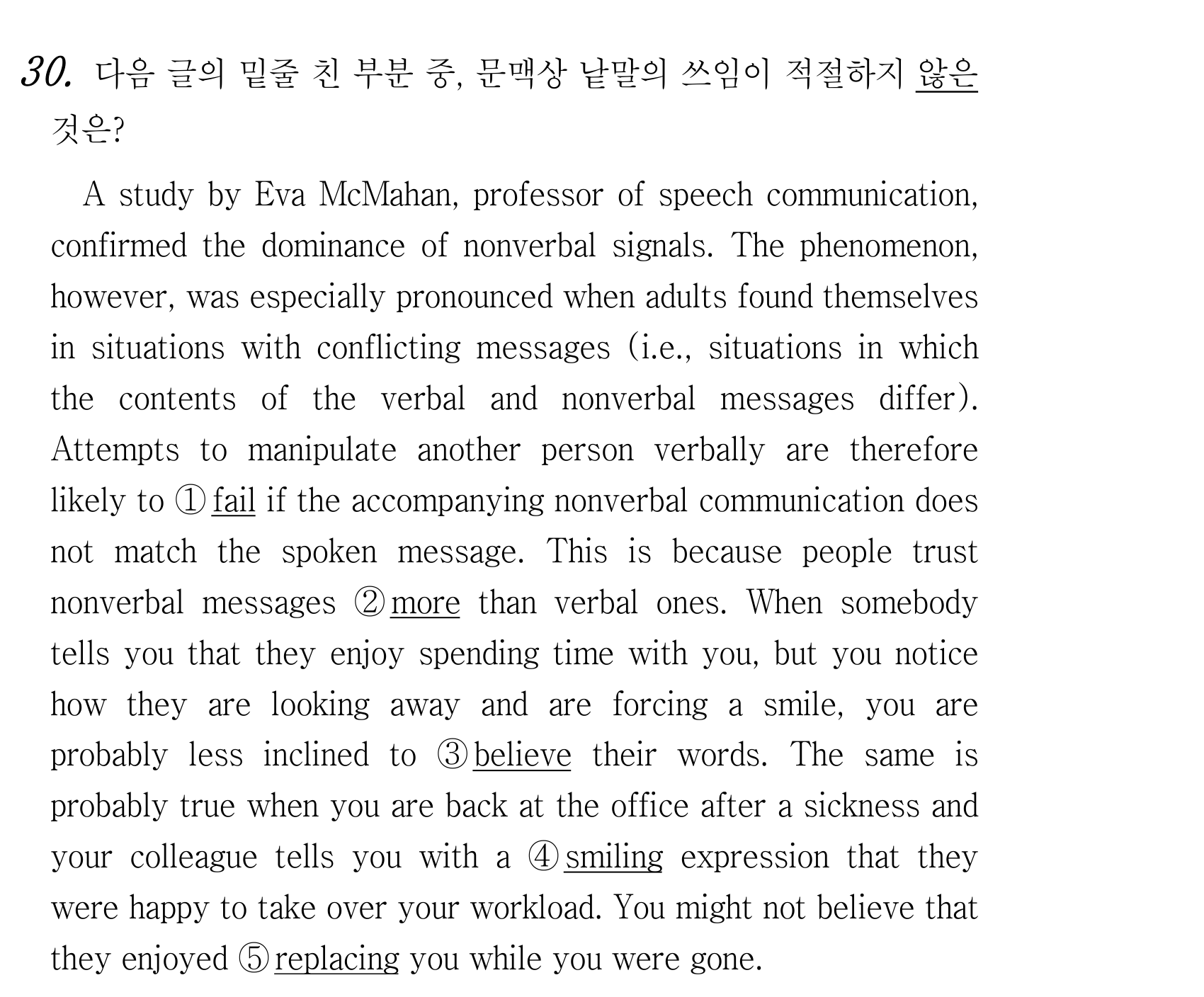
30번어휘A study by Eva McMahan, professor of speech communication, confirmed the dominance of non…
A study by Eva McMahan, professor of speech communication, confirmed the dominance of nonverbal signals. The phenomenon, however, was especially pronounced when adults found themselves in situations with conflicting messages (i.e., situations in which the contents of the verbal and nonverbal messages differ). Attempts to manipulate another person verbally are therefore likely to fail if the accompanying nonverbal communication does not match the spoken message. This is because people trust nonverbal messages more than verbal ones. When somebody tells you that they enjoy spending time with you, but you notice how they are looking away and are forcing a smile, you are probably less inclined to believe their words. The same is probably true when you are back at the office after a sickness and your colleague tells you with a frowning expression that they were happy to take over your workload. You might not believe that they enjoyed replacing you while you were gone.
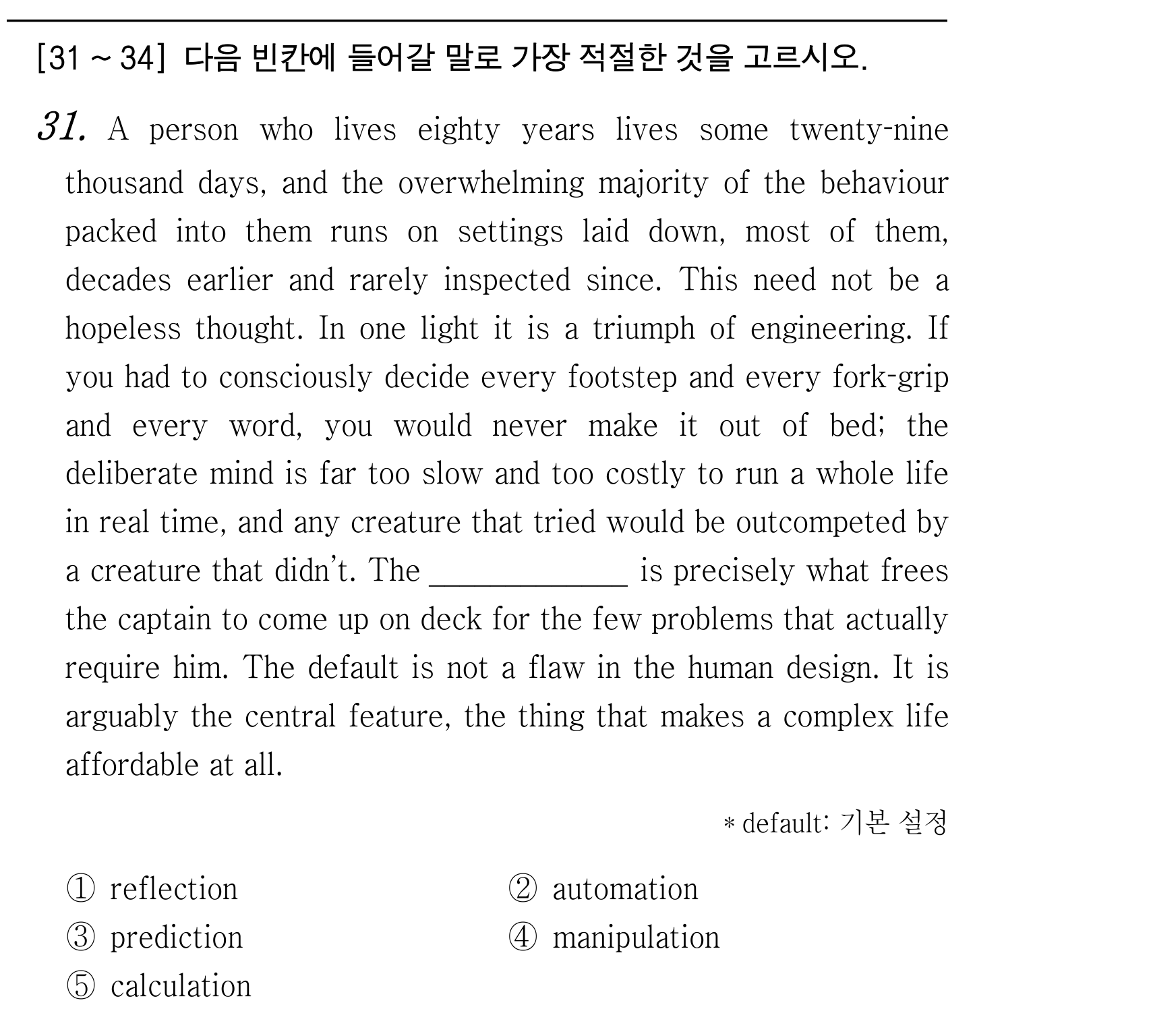
31번빈칸추론1A person who lives eighty years lives some twenty-nine thousand days, and the overwhelmin…
A person who lives eighty years lives some twenty-nine thousand days, and the overwhelming majority of the behaviour packed into them runs on settings laid down, most of them, decades earlier and rarely inspected since. This need not be a hopeless thought. In one light it is a triumph of engineering. If you had to consciously decide every footstep and every fork-grip and every word, you would never make it out of bed; the deliberate mind is far too slow and too costly to run a whole life in real time, and any creature that tried would be outcompeted by a creature that didn't. The ________ is precisely what frees the captain to come up on deck for the few problems that actually require him. The default is not a flaw in the human design. It is arguably the central feature, the thing that makes a complex life affordable at all.
32번빈칸추론2If we understand mass culture as a weakening factor of the cultural ties that unite peopl…
If we understand mass culture as a weakening factor of the cultural ties that unite people to their traditions, mass culture weakens the intermediary institutions in society (e.g. the family or the school), diminishing their role and overlapping these institutions. For example, courts are traditional social institutions and important for the normal and harmonious functioning of collective life. However, when people turn to social networks to put pressure on judicial decisions in certain mediated and politicized processes, this practice is popularized and becomes a habitual form of culture, which is harmful. Justice must not be done in the public square, which today is converted into a virtual dimension, the social networks. In a democratic state of law, the appropriate place to judge and make justice is the court and in a way that is ____________________.
33번빈칸추론3Human development is now increasingly understood as an ongoing, flexible, and evolving pr…
Human development is now increasingly understood as an ongoing, flexible, and evolving process rather than a fixed sequence of stages. At the core of this perspective lies the concept of plasticity. Plasticity refers to the human capacity to change, adapt, and reorganize cognitive, emotional, and behavioural patterns in response to life experiences, environmental demands, and biological changes. It highlights that individuals are not merely passive recipients of development but active agents capable of growth throughout their lives. In earlier views, development was believed to occur mainly during childhood, with adulthood seen as a period of stability and old age as a phase of decline. The concept of plasticity challenges this rigid outlook by emphasizing that development continues across the entire lifespan. Although the extent of change may vary at different stages, every phase of life ________________________.
34번빈칸추론4Social media has altered business, politics, and friendships, making going viral a househ…
Social media has altered business, politics, and friendships, making going viral a household term. The global financial industry links every bank and countless households in every country, making us vulnerable to human error taking place on the other side of the world. As Columbia University strategy professor Rita McGrath explains, years ago most of our institutions were separate and thereby buffered from the effects of errors outside their walls. That is no longer the case. The digitization of massive amounts of information has continued to grow enormously as the cost of computing power has decreased. The development of smart systems that communicate autonomously gave rise to an infinite variety of potential breakdowns. This interdependence is a breeding ground for complex failure. As Rita puts it, when “things that used to be kept separate bump up against each other, it becomes far more difficult to predict what’s going to happen next.” Information technology creates new vulnerabilities because ____________________.
35번무관한문장Scientific developments and technologies in medical practice have brought us enormous pro…
Scientific developments and technologies in medical practice have brought us enormous progress in the treatment and prevention of infectious diseases. ① The discovery of penicillin in 1928 by Alexander Fleming, for which he later received the Nobel Prize, was one of the biggest breakthroughs in the battle against infectious diseases. ② Edward Jenner discovered around 1796 that humans were protected against the deadly smallpox virus after exposure to the cowpox virus, which is harmless to humans. ③ A human's average life expectancy has increased, but relying too much on medicine damages our body system. ④ Vaccines developed in laboratories have contributed enormously to the reduction of the burden of bacterial and viral diseases and have even led to the elimination of poxvirus. ⑤ For other infectious diseases (for example cholera and malaria), control and hygiene management measures have reduced their burden, while for others treatment therapies turned viral diseases that were deadly into chronic manageable diseases.
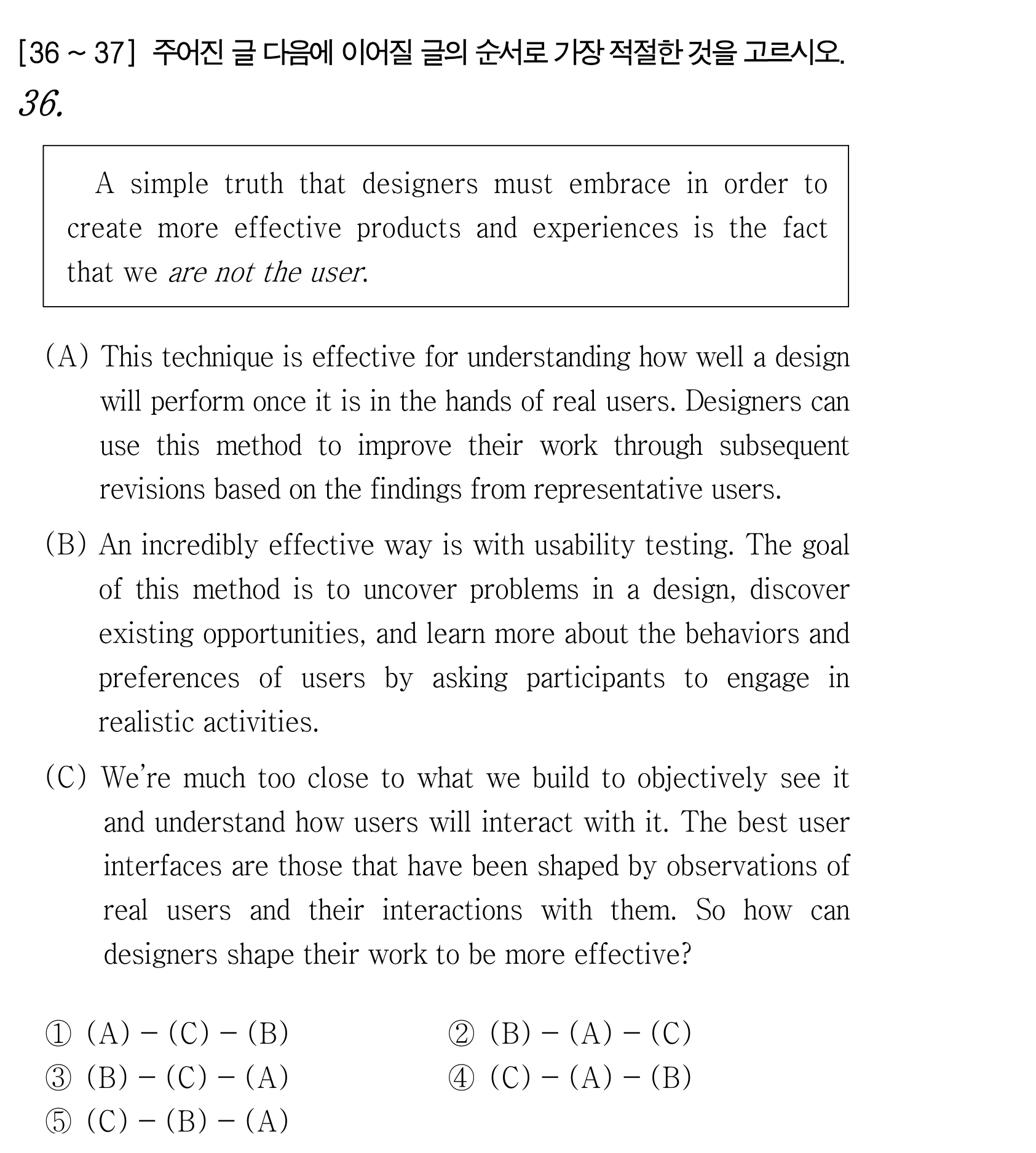
36번순서배열1A simple truth that designers must embrace in order to create more effective products and…
A simple truth that designers must embrace in order to create more effective products and experiences is the fact that we are not the user. (A) This technique is effective for understanding how well a design will perform once it is in the hands of real users. Designers can use this method to improve their work through subsequent revisions based on the findings from representative users. (B) An incredibly effective way is with usability testing. The goal of this method is to uncover problems in a design, discover existing opportunities, and learn more about the behaviors and preferences of users by asking participants to engage in realistic activities. (C) We’re much too close to what we build to objectively see it and understand how users will interact with it. The best user interfaces are those that have been shaped by observations of real users and their interactions with them. So how can designers shape their work to be more effective?
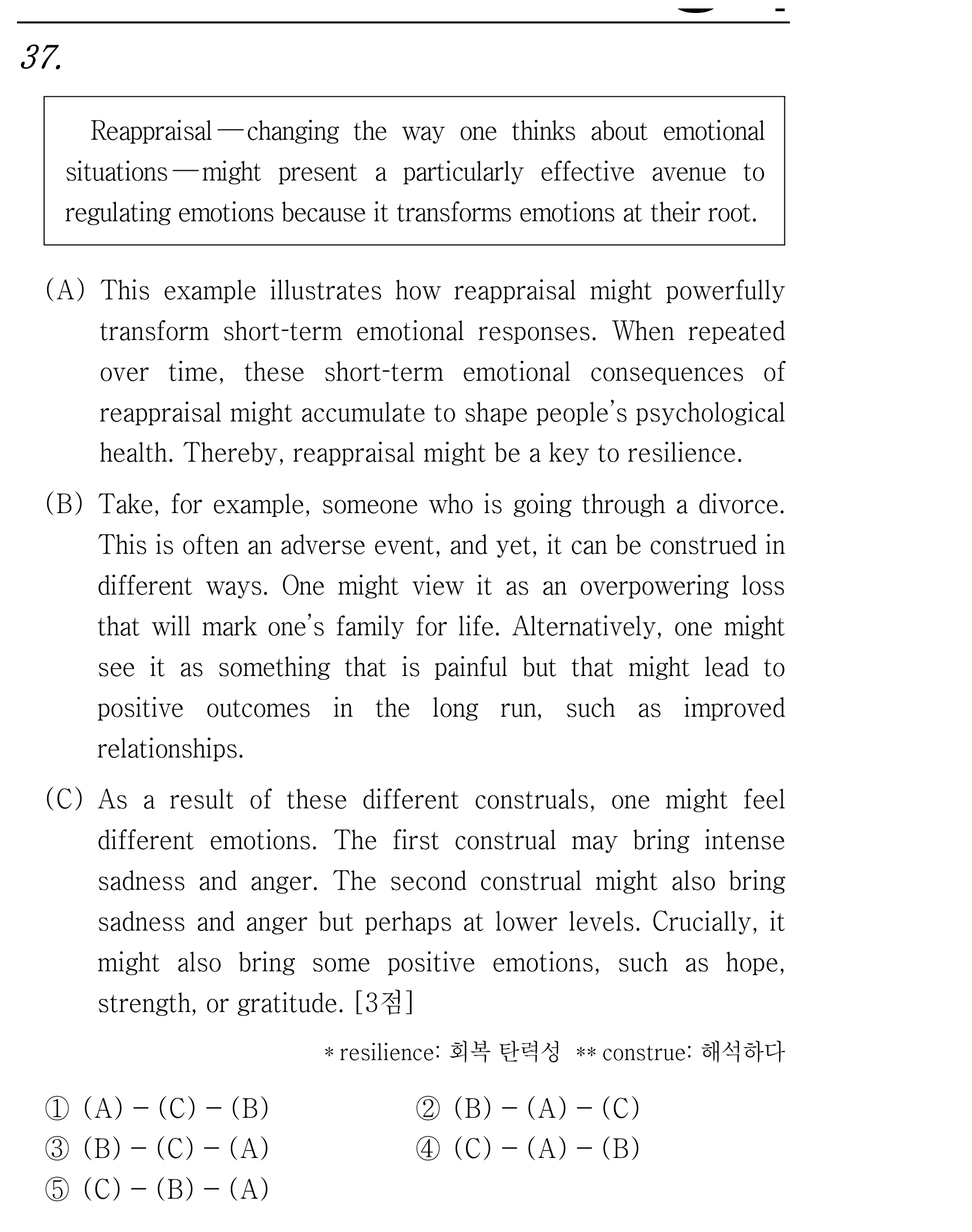
37번순서배열2Reappraisal — changing the way one thinks about emotional situations — might present a pa…
Reappraisal — changing the way one thinks about emotional situations — might present a particularly effective avenue to regulating emotions because it transforms emotions at their root.
(A) This example illustrates how reappraisal might powerfully transform short-term emotional responses. When repeated over time, these short-term emotional consequences of reappraisal might accumulate to shape people's psychological health. Thereby, reappraisal might be a key to resilience.
(B) Take, for example, someone who is going through a divorce. This is often an adverse event, and yet, it can be construed in different ways. One might view it as an overpowering loss that will mark one's family for life. Alternatively, one might see it as something that is painful but that might lead to positive outcomes in the long run, such as improved relationships.
(C) As a result of these different construals, one might feel different emotions. The first construal may bring intense sadness and anger. The second construal might also bring sadness and anger but perhaps at lower levels. Crucially, it might also bring some positive emotions, such as hope, strength, or gratitude.
38번문장삽입1We can't utilize the same “one size fits all” rule for everyone because we use water for…
We can't utilize the same “one size fits all” rule for everyone because we use water for so many diverse things.
When we say that water is “clean,” we don't just mean that it looks like a glass of water. ( ① ) Water quality is about following a certain set of criteria, or “benchmarks.” ( ② ) These guidelines inform us exactly how much physical, chemical, or biological stuff can be in the water. ( ③ ) These rules ensure the water is safe for anything we want to do with it, whether that's drinking it at home, watering crops on a farm, or running it through a huge industrial boiler. ( ④ ) For instance, the water that cools down a huge power plant generator doesn't need to be as clean as the water you drink from the kitchen tap. ( ⑤ ) This is why groups set different “safety limits” for the water dependent on how it will be utilized.
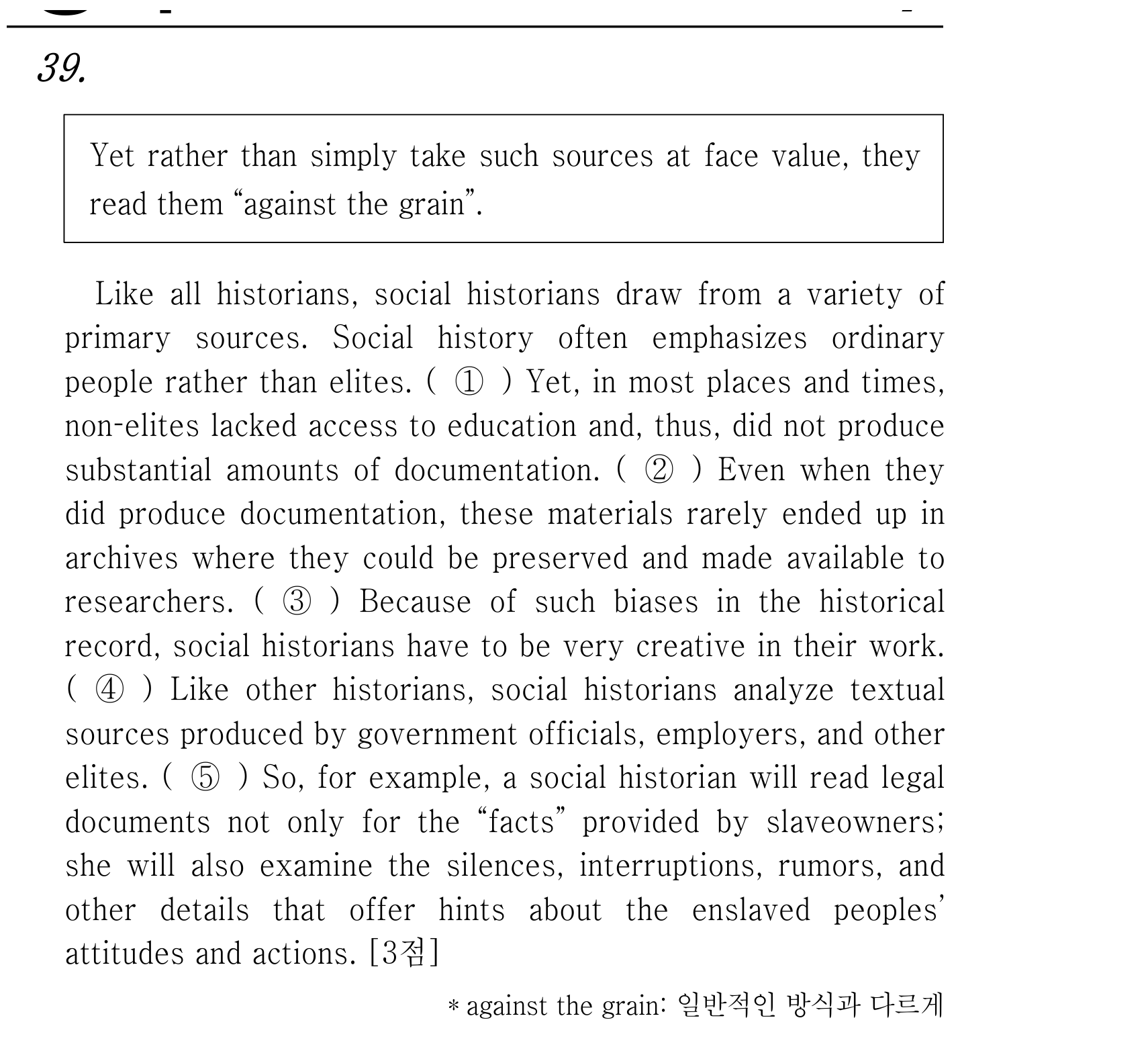
39번문장삽입2Yet rather than simply take such sources at face value, they read them “against the grain…
Yet rather than simply take such sources at face value, they read them “against the grain”.
Like all historians, social historians draw from a variety of primary sources. Social history often emphasizes ordinary people rather than elites. ( ① ) Yet, in most places and times, non-elites lacked access to education and, thus, did not produce substantial amounts of documentation. ( ② ) Even when they did produce documentation, these materials rarely ended up in archives where they could be preserved and made available to researchers. ( ③ ) Because of such biases in the historical record, social historians have to be very creative in their work. ( ④ ) Like other historians, social historians analyze textual sources produced by government officials, employers, and other elites. ( ⑤ ) So, for example, a social historian will read legal documents not only for the “facts” provided by slaveowners; she will also examine the silences, interruptions, rumors, and other details that offer hints about the enslaved peoples’ attitudes and actions.
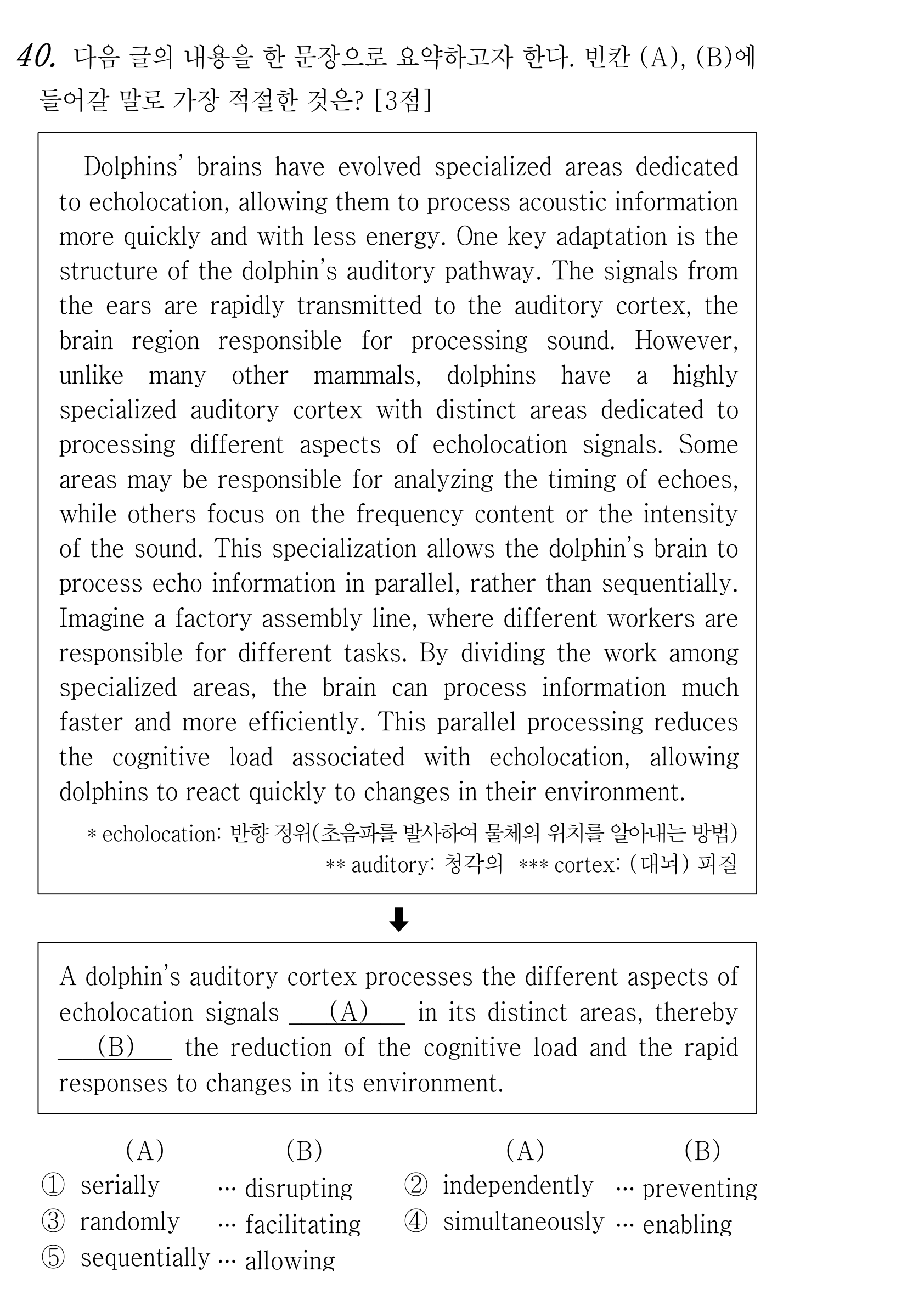
40번요약문완성Dolphins’ brains have evolved specialized areas dedicated to echolocation, allowing them…
Dolphins’ brains have evolved specialized areas dedicated to echolocation, allowing them to process acoustic information more quickly and with less energy. One key adaptation is the structure of the dolphin’s auditory pathway. The signals from the ears are rapidly transmitted to the auditory cortex, the brain region responsible for processing sound. However, unlike many other mammals, dolphins have a highly specialized auditory cortex with distinct areas dedicated to processing different aspects of echolocation signals. Some areas may be responsible for analyzing the timing of echoes, while others focus on the frequency content or the intensity of the sound. This specialization allows the dolphin’s brain to process echo information in parallel, rather than sequentially. Imagine a factory assembly line, where different workers are responsible for different tasks. By dividing the work among specialized areas, the brain can process information much faster and more efficiently. This parallel processing reduces the cognitive load associated with echolocation, allowing dolphins to react quickly to changes in their environment.
A dolphin’s auditory cortex processes the different aspects of echolocation signals (A) in its distinct areas, thereby (B) the reduction of the cognitive load and the rapid responses to changes in its environment.
41번장문_제목It is crucial to recognize that boredom can give rise to harmful emotions such as depress…
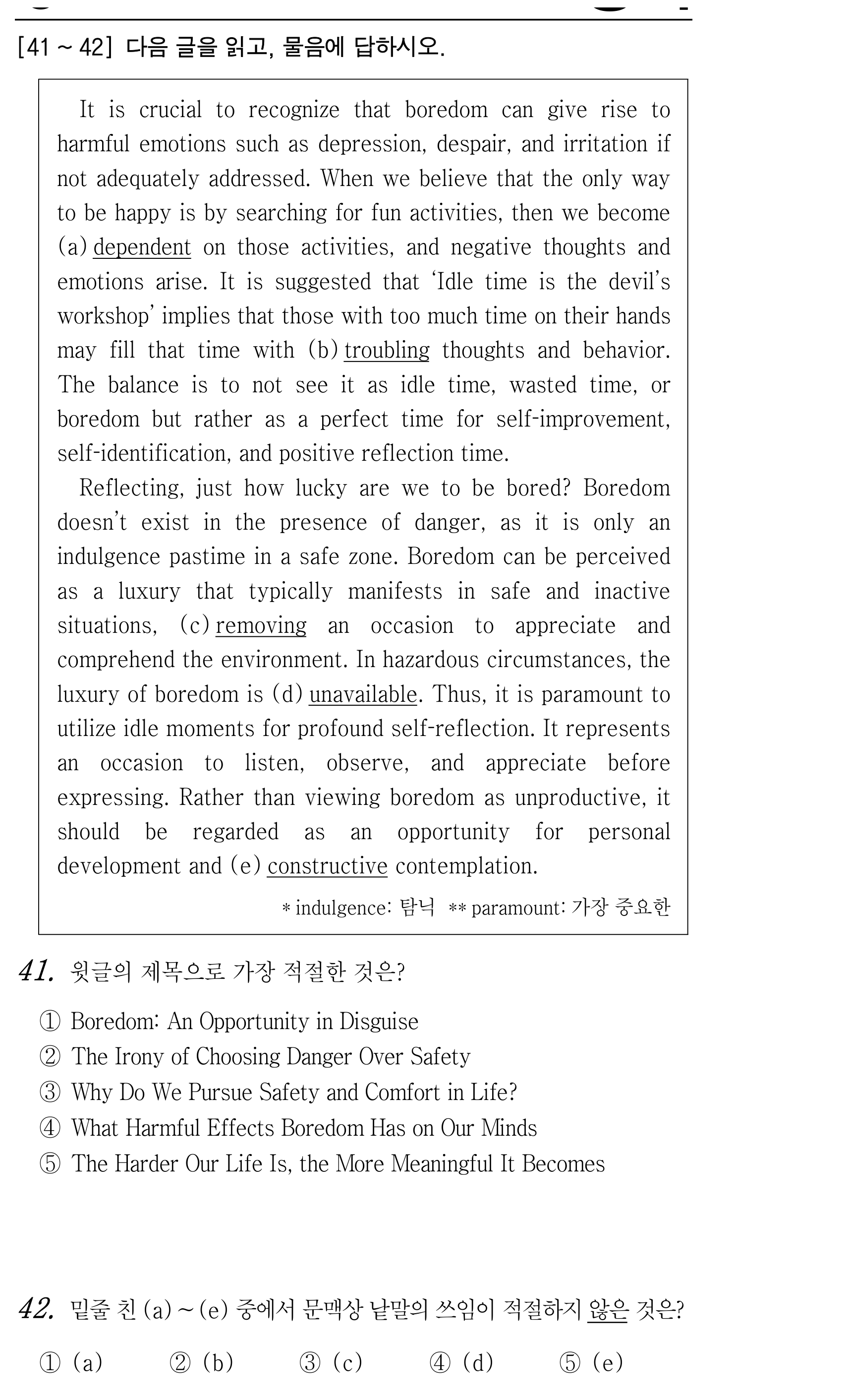
It is crucial to recognize that boredom can give rise to harmful emotions such as depression, despair, and irritation if not adequately addressed. When we believe that the only way to be happy is by searching for fun activities, then we become (a) dependent on those activities, and negative thoughts and emotions arise. It is suggested that ‘Idle time is the devil’s workshop’ implies that those with too much time on their hands may fill that time with (b) troubling thoughts and behavior. The balance is to not see it as idle time, wasted time, or boredom but rather as a perfect time for self-improvement, self-identification, and positive reflection time. Reflecting, just how lucky are we to be bored? Boredom doesn’t exist in the presence of danger, as it is only an indulgence pastime in a safe zone. Boredom can be perceived as a luxury that typically manifests in safe and inactive situations, (c) removing an occasion to appreciate and comprehend the environment. In hazardous circumstances, the luxury of boredom is (d) unavailable. Thus, it is paramount to utilize idle moments for profound self-reflection. It represents an occasion to listen, observe, and appreciate before expressing. Rather than viewing boredom as unproductive, it should be regarded as an opportunity for personal development and (e) constructive contemplation.
43번장문_순서(A) The violin had always been Ann’s thing since she was seven.
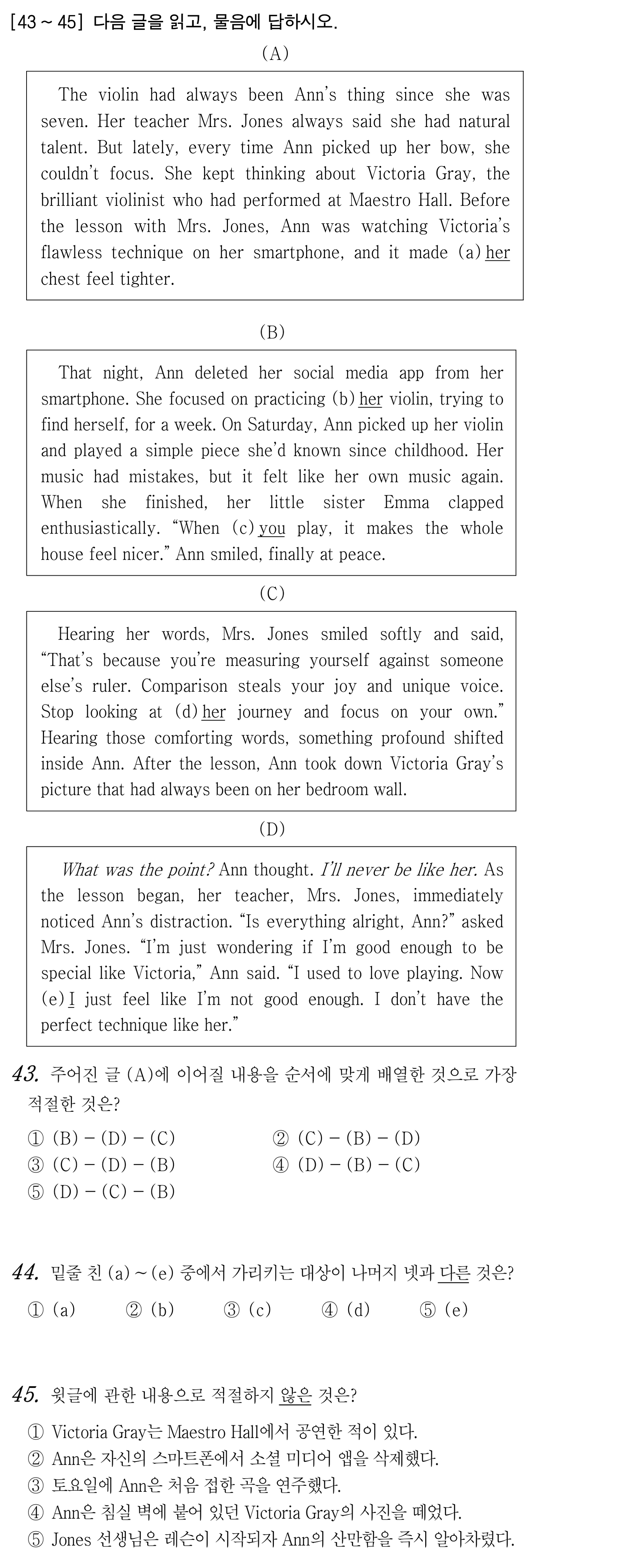
(A) The violin had always been Ann’s thing since she was seven. Her teacher Mrs. Jones always said she had natural talent. But lately, every time Ann picked up her bow, she couldn’t focus. She kept thinking about Victoria Gray, the brilliant violinist who had performed at Maestro Hall. Before the lesson with Mrs. Jones, Ann was watching Victoria’s flawless technique on her smartphone, and it made (a) her chest feel tighter.
(B) That night, Ann deleted her social media app from her smartphone. She focused on practicing (b) her violin, trying to find herself, for a week. On Saturday, Ann picked up her violin and played a simple piece she’d known since childhood. Her music had mistakes, but it felt like her own music again. When she finished, her little sister Emma clapped enthusiastically. “When (c) you play, it makes the whole house feel nicer.” Ann smiled, finally at peace.
(C) Hearing her words, Mrs. Jones smiled softly and said, “That’s because you’re measuring yourself against someone else’s ruler. Comparison steals your joy and unique voice. Stop looking at (d) her journey and focus on your own.” Hearing those comforting words, something profound shifted inside Ann. After the lesson, Ann took down Victoria Gray’s picture that had always been on her bedroom wall.
(D) What was the point? Ann thought. I’ll never be like her. As the lesson began, her teacher, Mrs. Jones, immediately noticed Ann’s distraction. “Is everything alright, Ann?” asked Mrs. Jones. “I’m just wondering if I’m good enough to be special like Victoria,” Ann said. “I used to love playing. Now (e) I just feel like I’m not good enough. I don’t have the perfect technique like her.”
2026년 10월 고2 전국연합 영어 모의고사 변형문제 맛보기
이 시험 지문으로 만든 변형문제가 아직 없습니다. 지문을 고르면 어법·빈칸·주제·어휘 등 유형별 변형문제를 바로 만들 수 있습니다.
이 시험으로 첫 변형문제 만들기 →남은 시간
48:00



아직 28문제를 풀지 않았어요 (0/28)