2026학년도 수능 영어
28문제 · 제한시간 48분
이 시험 한눈에 — 2026학년도 수능 영어
18~45번 28문항을 유형별로 보면 목적 1 · 심경/분위기 1 · 주장 1 · 함축의미추론 1 · 요지/주장 1 · 주제 1 · 제목 1 · 도표 1 · 내용일치 1 · 실용문 1 · 어법 2 · 어휘 1 · 빈칸추론2 1 · 빈칸추론3 1 · 빈칸추론4 1 · 빈칸추론5 1 · 무관한문장 1 · 순서배열1 1 · 순서배열2 1 · 문장삽입1 1 · 문장삽입2 1 · 요약문완성 1 · 장문 5. 아래 지문으로 변형문제·단어장·정답표를 바로 만들 수 있습니다.
20번주장The study of literature has repeatedly failed to recognize the influence of modern musica…
The study of literature has repeatedly failed to recognize the influence of modern musical lyricists and their contributions to the evolution of language. Unlike Shakespeare, who has been studied and celebrated for his development of the English language, particularly in vocabulary and grammatical structure, modern songwriters have experienced restraints on the acknowledgement of their contributions and largely been ignored. Over the past century, we have witnessed an explosion of incredible literary works by these artists, who, through their music, have used linguistic manipulation and storytelling to enrich our language and literature. Producing lyrics of distinct and complex imagery, songwriters have had an incredible literary impact on our language. Their remarkable works, including influences on modern language development, must be recognized in the field of modern literature.
21번함축의미추론Digital platforms have made a lot of work less sticky.
Digital platforms have made a lot of work less sticky. As work becomes ever more modularised, commoditised and standardised, and as markets for digital work are created, ties between service work and particular places can be disconnected. While the business process of outsourcing that emerged in the 1990s allowed large companies to take advantage of a ‘global reserve army’ by moving their call centres to cheap and distant labour markets, cloudwork changes the volume and granularity at which geographically non-proximate work can take place. A small business in New York can hire a freelance transcriber in Nairobi one day and New Delhi the next. No offices or factories need to be built, no local regulations are observed, and — in most cases — no local taxes are paid. The switch in the production network of work happens by simply sending some emails or clicking some buttons on a digital work platform. And, in this way, the employer leaves behind no material traces in the places where it was once an employer.
22번요지/주장A sport ecosystem exists based on the type and rate of coopetition existing.
A sport ecosystem exists based on the type and rate of coopetition existing. Coopetition is defined as “the simultaneous pursuit of cooperation and competition among firms to leverage strategically important resources for superior value creation purposes”. It is a useful way to understand the dynamic nature of sport businesses which need to collaborate for resource efficiency purposes but potentially compete with each other. This special relationship should be managed properly due to trust and confidence issues being paramount. It can be challenging to be collaborative and competitive in sport as they involve different forms of behaviour. This means a careful balancing act may be required in terms of the amount of emphasis placed on each activity. Often sport managers will try to be more competitive due to performance reasons and less collaborative. By necessity they may need to share information but do so in a cautious manner. This means it might be better to have plans in place about how to pursue both simultaneously. This will ensure one is not neglected at the expense of the other.
23번주제Emphasizing *speed* over *frequency* can make sense in contexts where everyone is expecte…
Emphasizing *speed* over *frequency* can make sense in contexts where everyone is expected to plan around the timetable, including peak-only commute services and very long trips with low demand. In all other contexts, though, it seems to be a common motorist’s error. Roads are there all the time, so their speed is the most important fact that distinguishes them. But transit is only there if it’s coming soon. If you have a car, you can use a road whenever you want and experience its speed. But transit has to exist when you need it (span), and it needs to be coming soon (frequency). Otherwise, waiting time will wipe out any time savings from a faster service. Unless you’re comfortable planning your life around a particular scheduled trip, speed is worthless without frequency, so a transit map that screams about speed and whispers about frequency may simply be planting confusion.
24번제목The economic benefit of culturtainment makes it attractive to politicians and policy make…
The economic benefit of culturtainment makes it attractive to politicians and policy makers alike. A potential increase in inbound visitor numbers coupled with their demand for related goods and services (travel, accommodation, retail) is an incentive for those within governments and authorities to work with cultural groups in order to develop celebrations and commemorations into larger and more high-profile events. However, such commercialization risks culturtainment becoming homogeneous and losing its original ‘message’ that could lead to a dilution of audiences. This could also lead to smaller non-commercial independent events being set up that would only serve to divide audiences further. This is something that planners and stakeholders will need to balance against potential financial gain. Changing political, social and religious landscapes will lead to the emergence of new cultures, and with them new culturtainment experiences. Overall this is a healthy growth sector of the entertainment industry, but one that by its very nature is delicate in the face of exploitation.
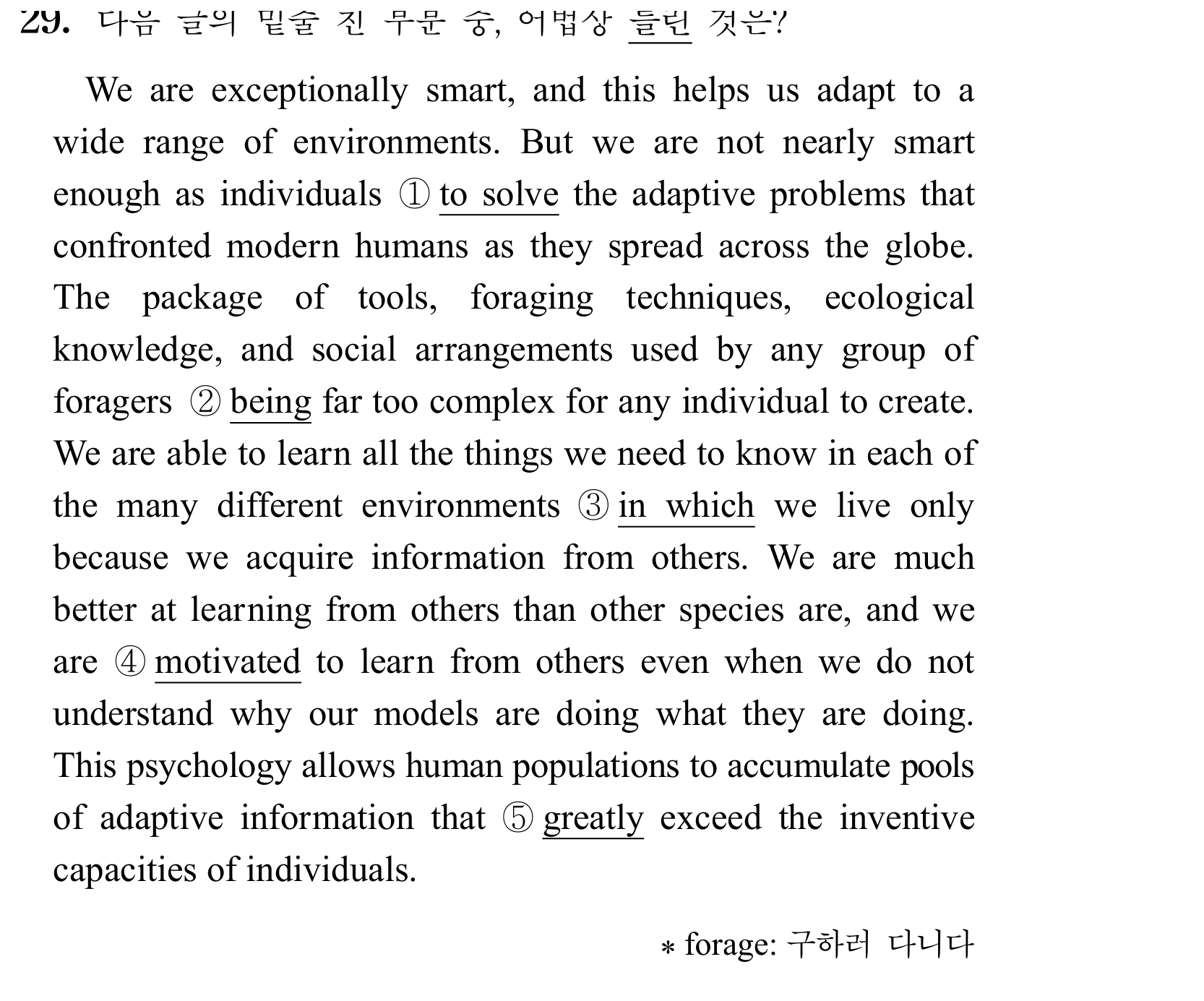
29번어법We are exceptionally smart, and this helps us adapt to a wide range of environments.
We are exceptionally smart, and this helps us adapt to a wide range of environments. But we are not nearly smart enough as individuals to solve the adaptive problems that confronted modern humans as they spread across the globe. The package of tools, foraging techniques, ecological knowledge, and social arrangements used by any group of foragers is far too complex for any individual to create. We are able to learn all the things we need to know in each of the many different environments in which we live only because we acquire information from others. We are much better at learning from others than other species are, and we are motivated to learn from others even when we do not understand why our models are doing what they are doing. This psychology allows human populations to accumulate pools of adaptive information that greatly exceed the inventive capacities of individuals.
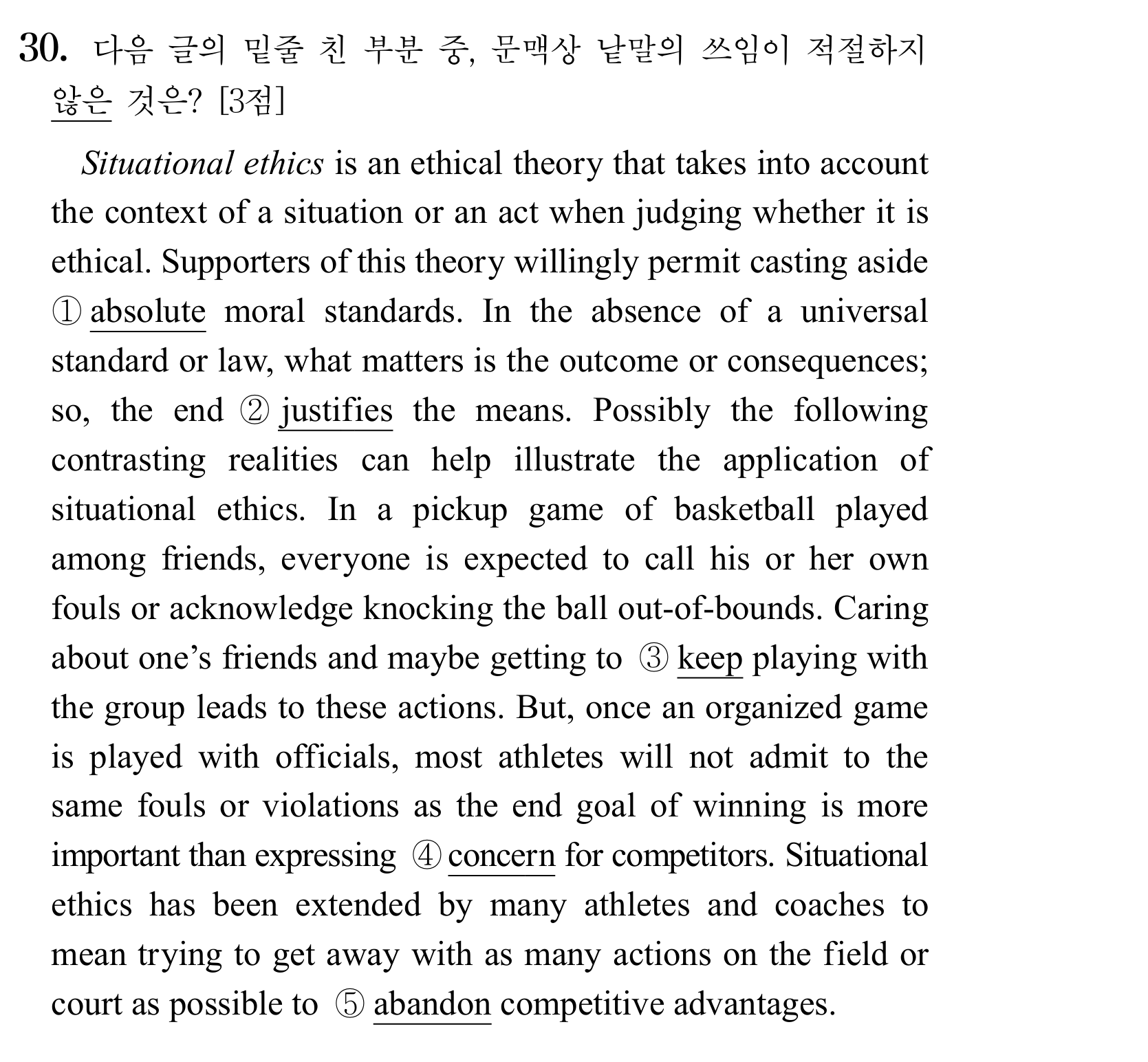
30번어휘Situational ethics is an ethical theory that takes into account the context of a situatio…
Situational ethics is an ethical theory that takes into account the context of a situation or an act when judging whether it is ethical. Supporters of this theory willingly permit casting aside standard or law, what matters is the outcome or consequences; so, the end justifies the means. Possibly the following contrasting realities can help illustrate the application of situational ethics. In a pickup game of basketball played among friends, everyone is expected to call his or her own fouls or acknowledge knocking the ball out-of-bounds. Caring about one’s friends and maybe getting to keep playing with the group leads to these actions. But, once an organized game is played with officials, most athletes will not admit to the same fouls or violations as the end goal of winning is more important than expressing concern for competitors. Situational ethics has been extended by many athletes and coaches to mean trying to get away with as many actions on the field or court as possible to gain competitive advantages.
31번빈칸추론2The early grain trade firms were active in both surplus-producing and food deficit region…
The early grain trade firms were active in both surplus-producing and food deficit regions, and these firms made it their business to know the state of supply and demand in both. Because this information was the key to their profitability, these firms worked in relative secrecy, frequently built on family ties, trust, and loyalty. In addition, these firms were able to benefit from the rise of commodity exchanges and commodities futures markets that emerged in the mid-1800s. Agricultural markets are naturally unstable, due to changes in harvest size that result from variable weather patterns and other factors. Locking-in prices by buying and selling grain for future delivery helped these firms to minimize such risks. It made sense for the grain trading companies to manage their risks within a single firm that was operating in more than one country, rather than operating as independent national companies trading with each other. Their access to information in multiple markets enabled them to easily cover the risks associated with agricultural commodity trade.
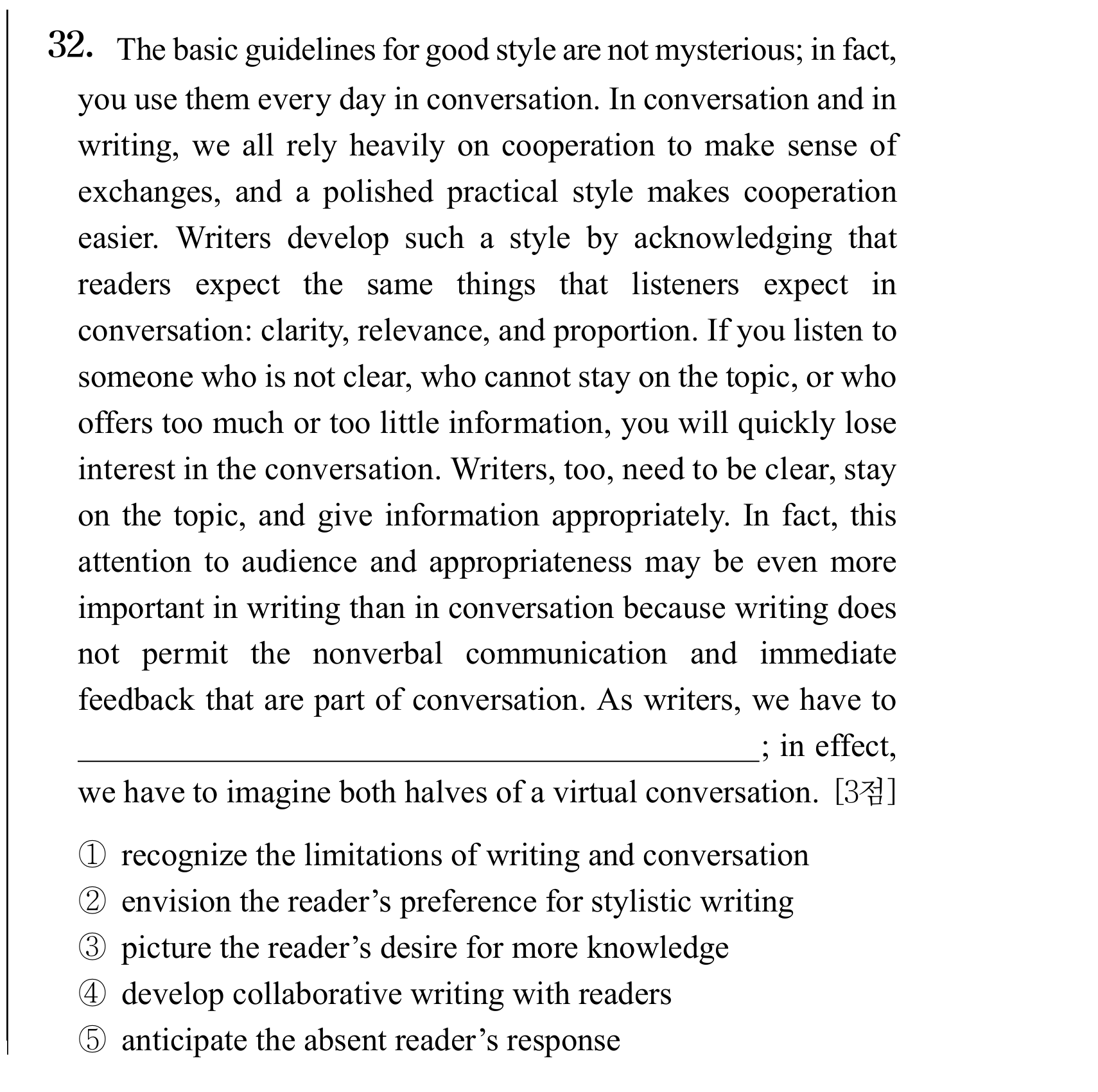
32번빈칸추론3The basic guidelines for good style are not mysterious; in fact, you use them every day i…
The basic guidelines for good style are not mysterious; in fact, you use them every day in conversation. In conversation and in writing, we all rely heavily on cooperation to make sense of exchanges, and a polished practical style makes cooperation easier. Writers develop such a style by acknowledging that readers expect the same things that listeners expect in conversation: clarity, relevance, and proportion. If you listen to someone who is not clear, who cannot stay on the topic, or who offers too much or too little information, you will quickly lose interest in the conversation. Writers, too, need to be clear, stay on the topic, and give information appropriately. In fact, this attention to audience and appropriateness may be even more important in writing than in conversation because writing does not permit the nonverbal communication and immediate feedback that are part of conversation. As writers, we have to anticipate the absent reader’s response; in effect, we have to imagine both halves of a virtual conversation.
33번빈칸추론4Giving clients sufficient opportunity to react to your designs while in progress is a key…
Giving clients sufficient opportunity to react to your designs while in progress is a key to professional success. Similarly, involving prospective building users as well as clients is even more valuable in the long run. Say your client is a large corporation, such as a health care provider. While the hospital administration may serve as your client, no doubt the perspectives of administration personnel will differ significantly from those of doctors, interns, residents, nurses, and other medical staff who use the building regularly. In addition, the experiences of patients and visitors who use the building irregularly, often as a result of life-threatening emergencies, are altogether different as well. Understanding how each type of user experiences the current medical environment as well as how each reacts to your prospective designs inevitably produces a better building. People are likely to be more satisfied with a new building or addition if they have been consulted in the design process. For a large institution, this can translate into increased productivity on the job, reduced absenteeism, less turnover, and lower costs.
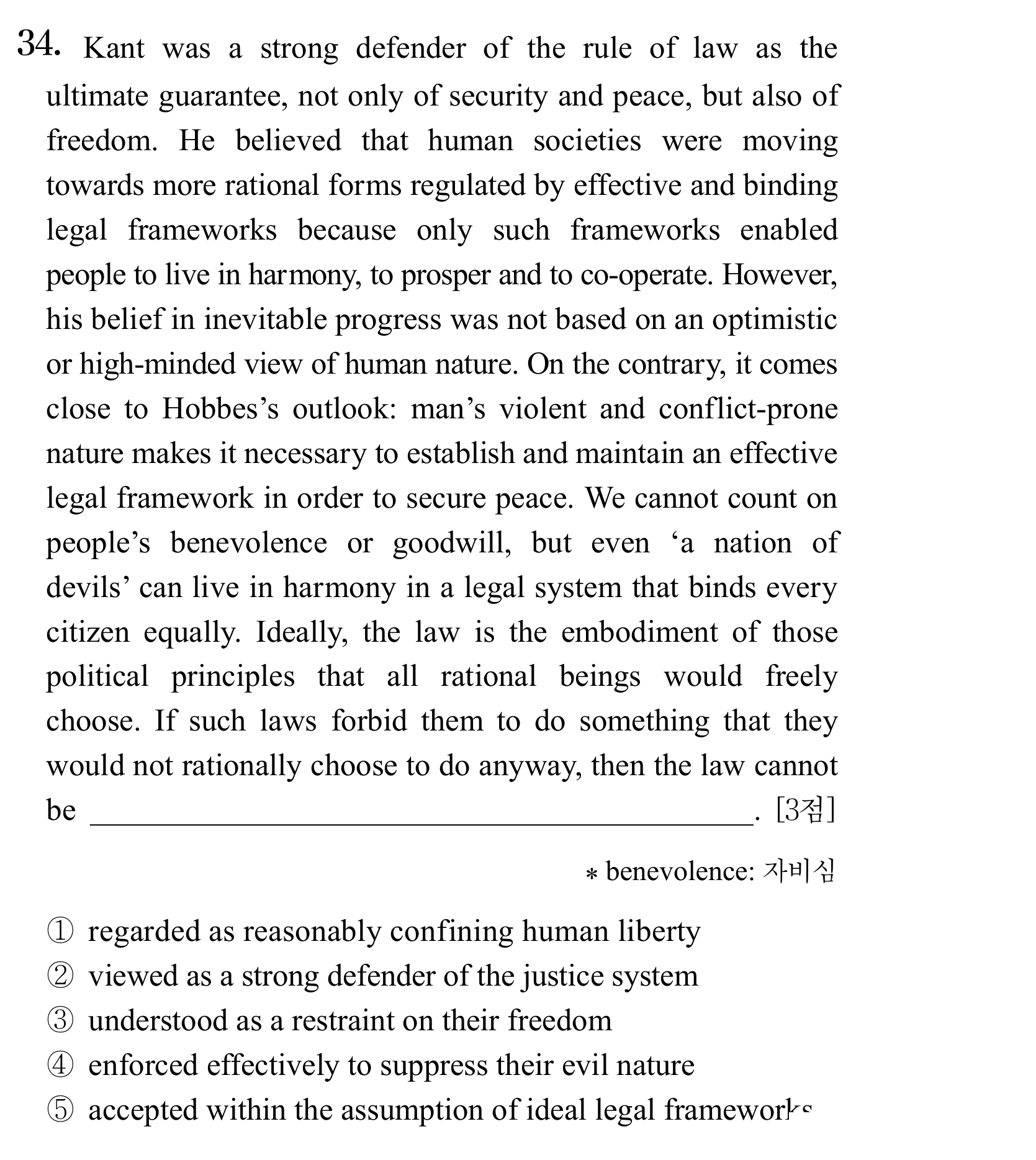
34번빈칸추론5Kant was a strong defender of the rule of law as the ultimate guarantee, not only of secu…
Kant was a strong defender of the rule of law as the ultimate guarantee, not only of security and peace, but also of freedom. He believed that human societies were moving towards more rational forms regulated by effective and binding legal frameworks because only such frameworks enabled people to live in harmony, to prosper and to co-operate. However, his belief in inevitable progress was not based on an optimistic or high-minded view of human nature. On the contrary, it comes close to Hobbes’s outlook: man’s violent and conflict-prone nature makes it necessary to establish and maintain an effective legal framework in order to secure peace. We cannot count on people’s benevolence or goodwill, but even ‘a nation of devils’ can live in harmony in a legal system that binds every citizen equally. Ideally, the law is the embodiment of those political principles that all rational beings would freely choose. If such laws forbid them to do something that they would not rationally choose to do anyway, then the law cannot be .
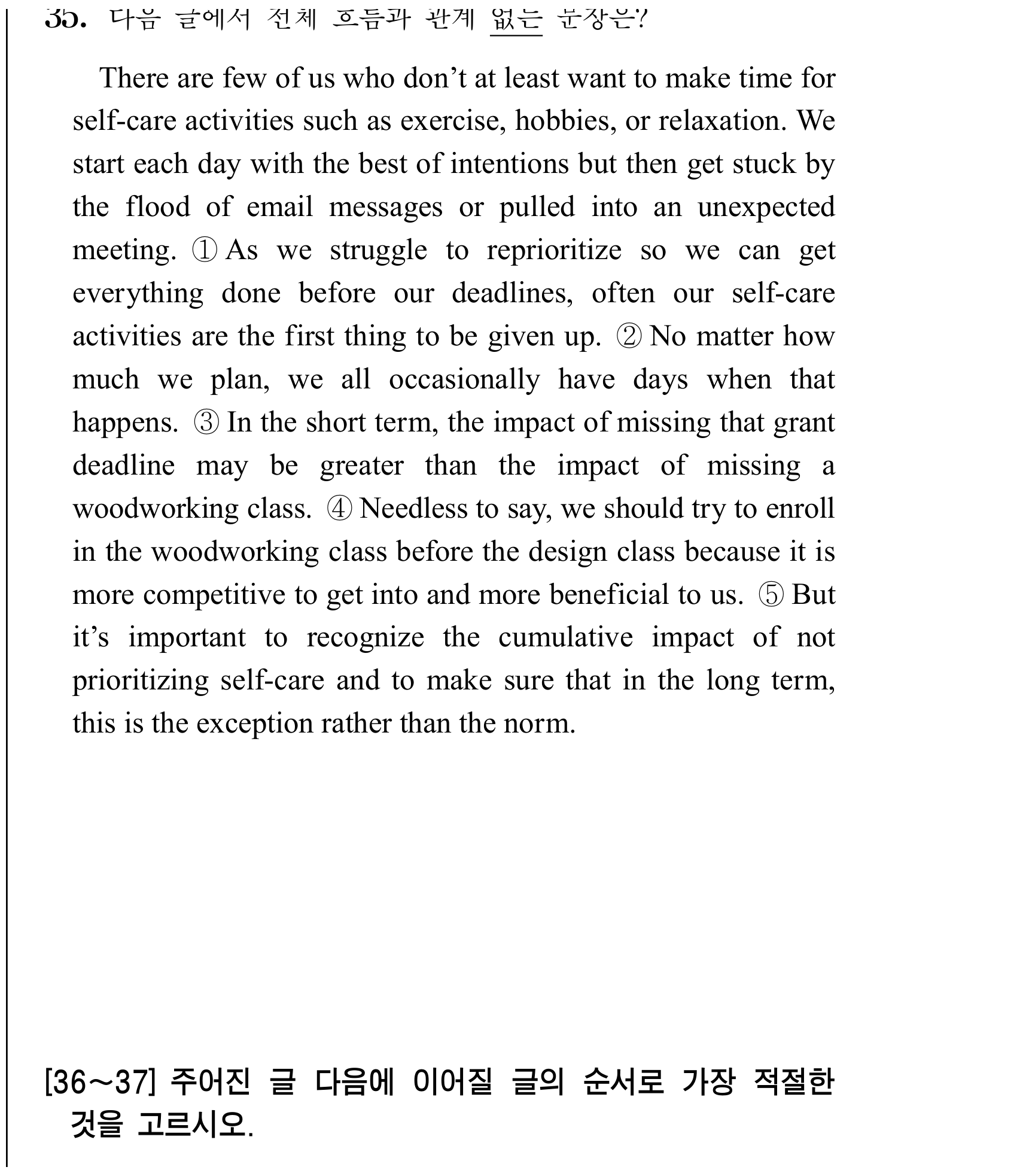
35번무관한문장There are few of us who don’t at least want to make time for self-care activities such as…
There are few of us who don’t at least want to make time for self-care activities such as exercise, hobbies, or relaxation. We start each day with the best of intentions but then get stuck by the flood of email messages or pulled into an unexpected meeting. As we struggle to reprioritize so we can get everything done before our deadlines, often our self-care activities are the first thing to be given up. No matter how much we plan, we all occasionally have days when that happens. In the short term, the impact of missing that grant deadline may be greater than the impact of missing a woodworking class. But it’s important to recognize the cumulative impact of not prioritizing self-care and to make sure that in the long term, this is the exception rather than the norm.
36번순서배열1We usually think of a clock as a physical thing, like an alarm clock or a wristwatch.
We usually think of a clock as a physical thing, like an alarm clock or a wristwatch. But a clock is really a process embodied in a machine, and the nature of that process is repetitive. A clock can be almost any process that repeats itself over and over again for an indefinite period. Water clocks drip at a steady pace; quartz crystals vibrate regularly. Indeed, it is almost impossible to think of a clock that does not depend on a repetitive cycle of events. The only example that comes to mind readily is a candle marked in hours. But here too there is iteration — the repeated burning of molecules of wax — so this too is an iterative process, although at first masked. The use of radiocarbon dating is another, much longer scale clock that also appears to be like this. It seems to yield a smooth time scale but in fact does not: the decay of atoms of carbon-14 is repetitive, although on a large scale it gives the appearance of being continuous.
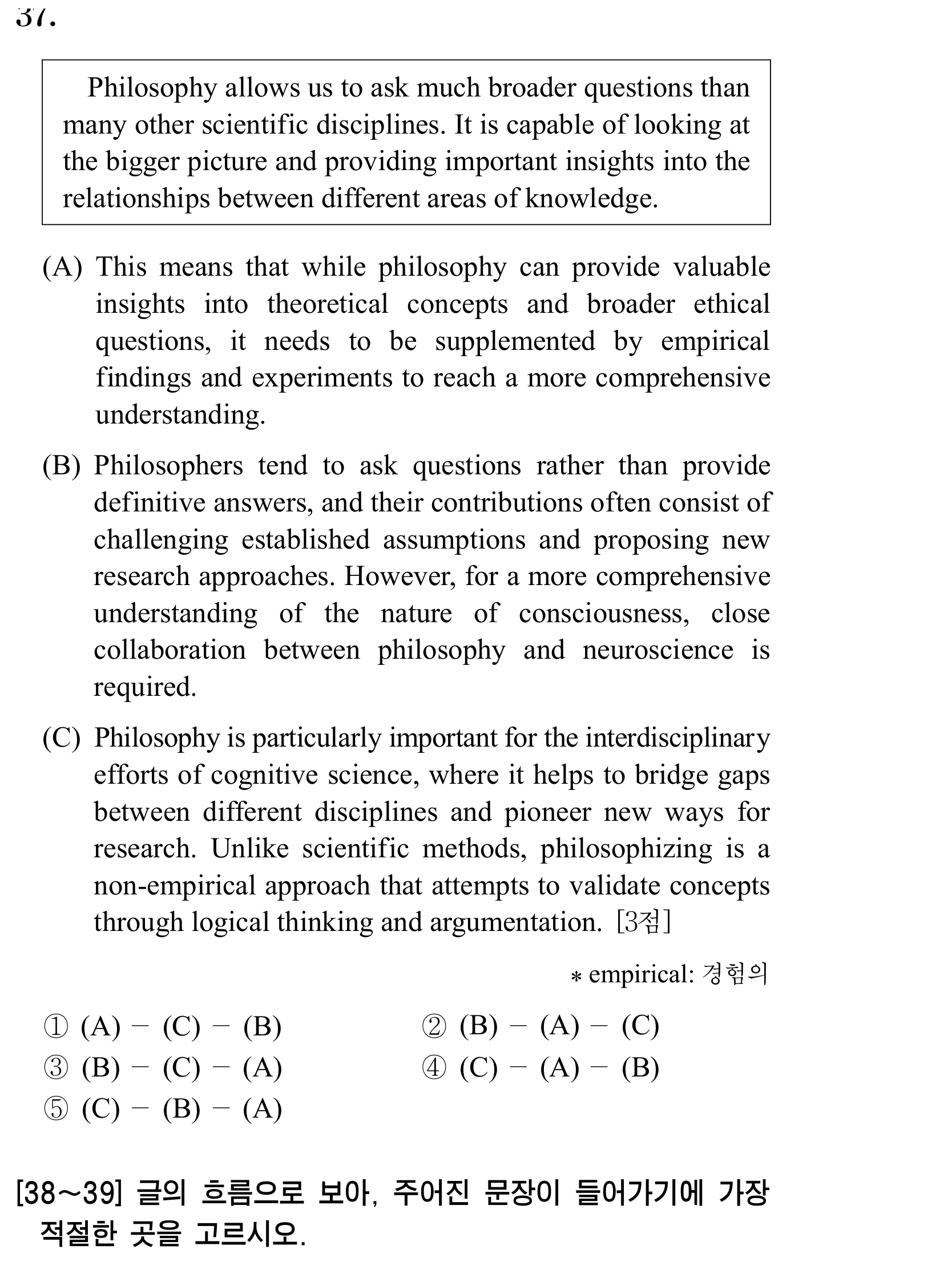
37번순서배열2Philosophy allows us to ask much broader questions than many other scientific disciplines.
Philosophy allows us to ask much broader questions than many other scientific disciplines. It is capable of looking at the bigger picture and providing important insights into the relationships between different areas of knowledge. Philosophy is particularly important for the interdisciplinary efforts of cognitive science, where it helps to bridge gaps between different disciplines and pioneer new ways for research. Unlike scientific methods, philosophizing is a non-empirical approach that attempts to validate concepts through logical thinking and argumentation. Philosophers tend to ask questions rather than provide definitive answers, and their contributions often consist of challenging established assumptions and proposing new research approaches. However, for a more comprehensive understanding of the nature of consciousness, close collaboration between philosophy and neuroscience is required. This means that while philosophy can provide valuable insights into theoretical concepts and broader ethical questions, it needs to be supplemented by empirical findings and experiments to reach a more comprehensive understanding.
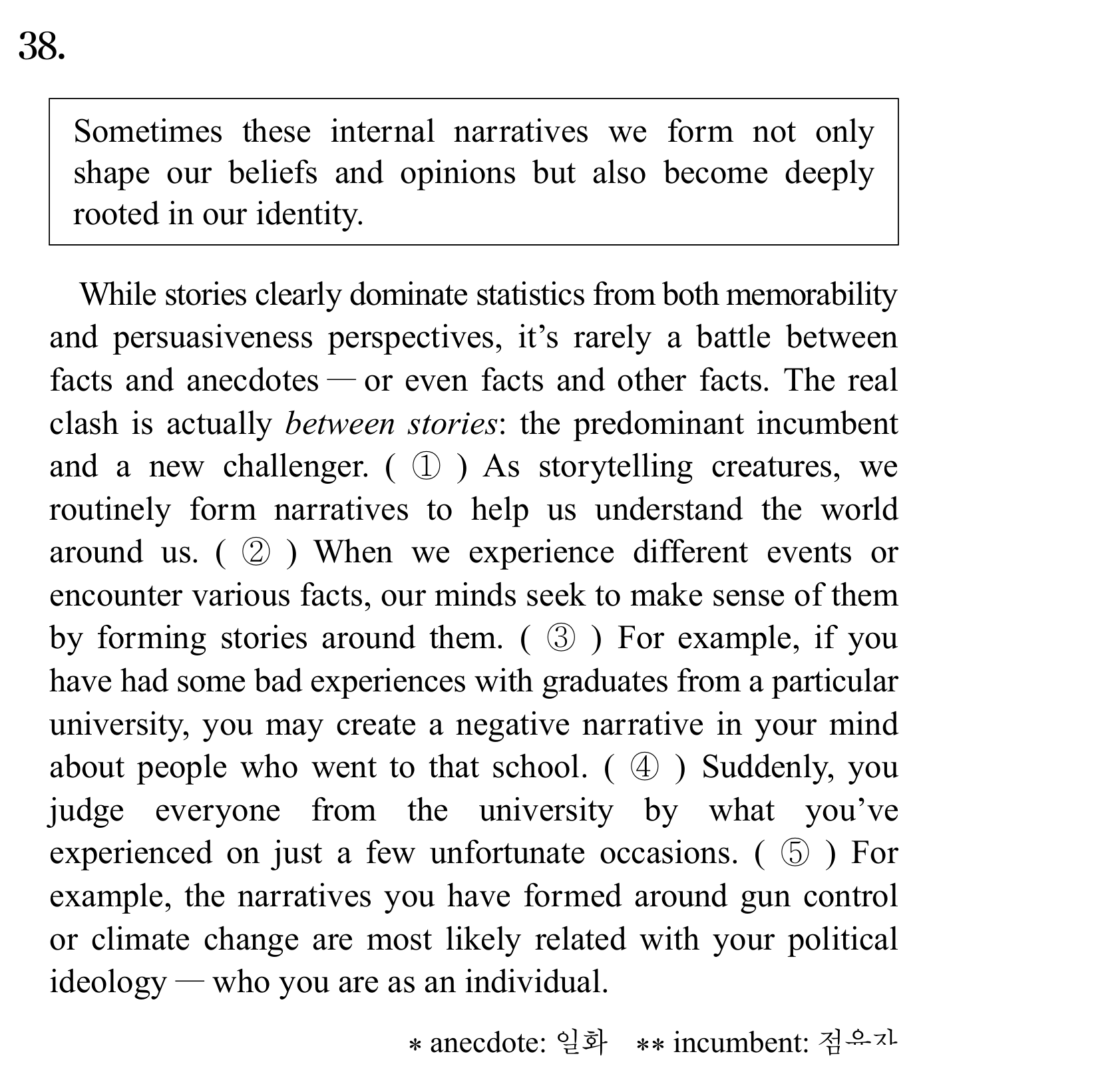
38번문장삽입1While stories clearly dominate statistics from both memorability and persuasiveness persp…
While stories clearly dominate statistics from both memorability and persuasiveness perspectives, it’s rarely a battle between facts and anecdotes — or even facts and other facts. The real clash is actually between stories: the predominant incumbent and a new challenger. As storytelling creatures, we routinely form narratives to help us understand the world around us. When we experience different events or encounter various facts, our minds seek to make sense of them by forming stories around them. For example, if you have had some bad experiences with graduates from a particular university, you may create a negative narrative in your mind about people who went to that school. Suddenly, you judge everyone from the university by what you’ve experienced on just a few unfortunate occasions. Sometimes these internal narratives we form not only shape our beliefs and opinions but also become deeply rooted in our identity. For example, the narratives you have formed around gun control or climate change are most likely related with your political ideology — who you are as an individual.
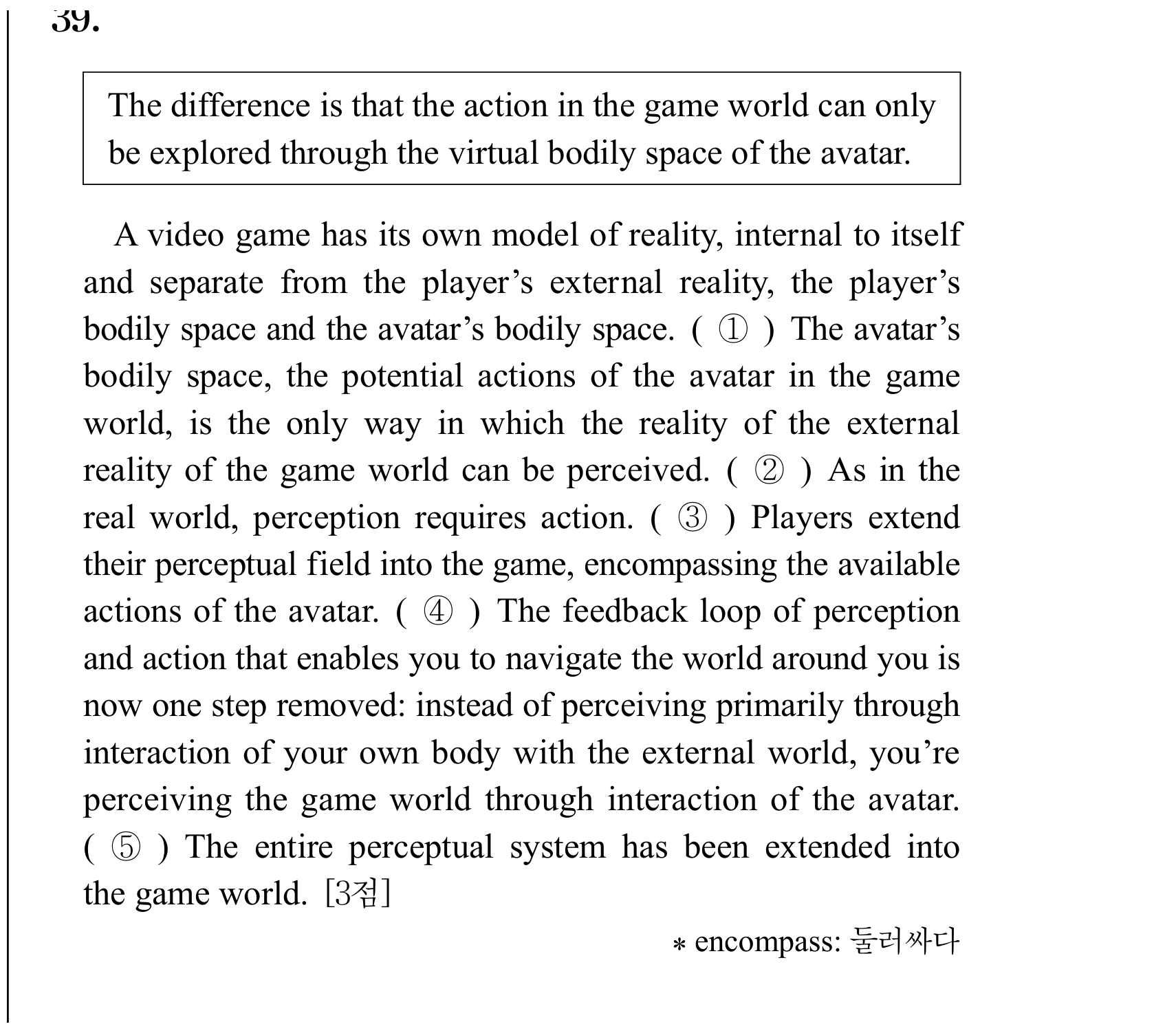
39번문장삽입2A video game has its own model of reality, internal to itself and separate from the playe…
A video game has its own model of reality, internal to itself and separate from the player’s external reality, the player’s bodily space and the avatar’s bodily space. The avatar’s bodily space, the potential actions of the avatar in the game world, is the only way in which the reality of the external reality of the game world can be perceived. As in the real world, perception requires action. The difference is that the action in the game world can only be explored through the virtual bodily space of the avatar. Players extend their perceptual field into the game, encompassing the available actions of the avatar. The feedback loop of perception and action that enables you to navigate the world around you is now one step removed: instead of perceiving primarily through interaction of your own body with the external world, you’re perceiving the game world through interaction of the avatar. The entire perceptual system has been extended into the game world.
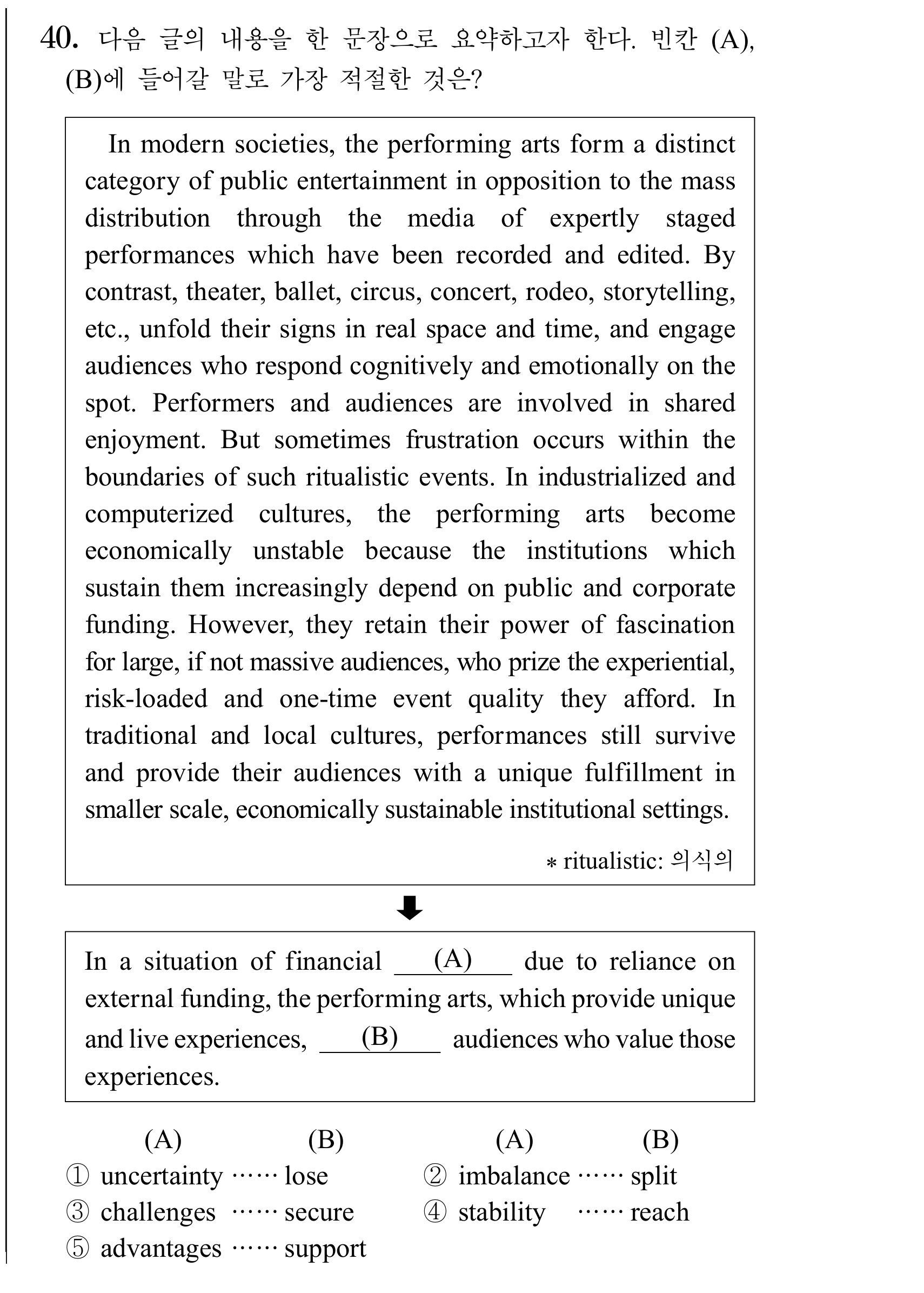
40번요약문완성In modern societies, the performing arts form a distinct category of public entertainment…
In modern societies, the performing arts form a distinct category of public entertainment in opposition to the mass distribution through the media of expertly staged performances which have been recorded and edited. By contrast, theater, ballet, circus, concert, rodeo, storytelling, etc., unfold their signs in real space and time, and engage audiences who respond cognitively and emotionally on the spot. Performers and audiences are involved in shared enjoyment. But sometimes frustration occurs within the boundaries of such ritualistic events. In industrialized and computerized cultures, the performing arts become economically unstable because the institutions which sustain them increasingly depend on public and corporate funding. However, they retain their power of fascination for large, if not massive audiences, who prize the experiential, risk-loaded and one-time event quality they afford. In traditional and local cultures, performances still survive and provide their audiences with a unique fulfillment in smaller scale, economically sustainable institutional settings.
In a situation of financial (A) due to reliance on external funding, the performing arts, which provide unique and live experiences, (B) audiences who value those experiences.
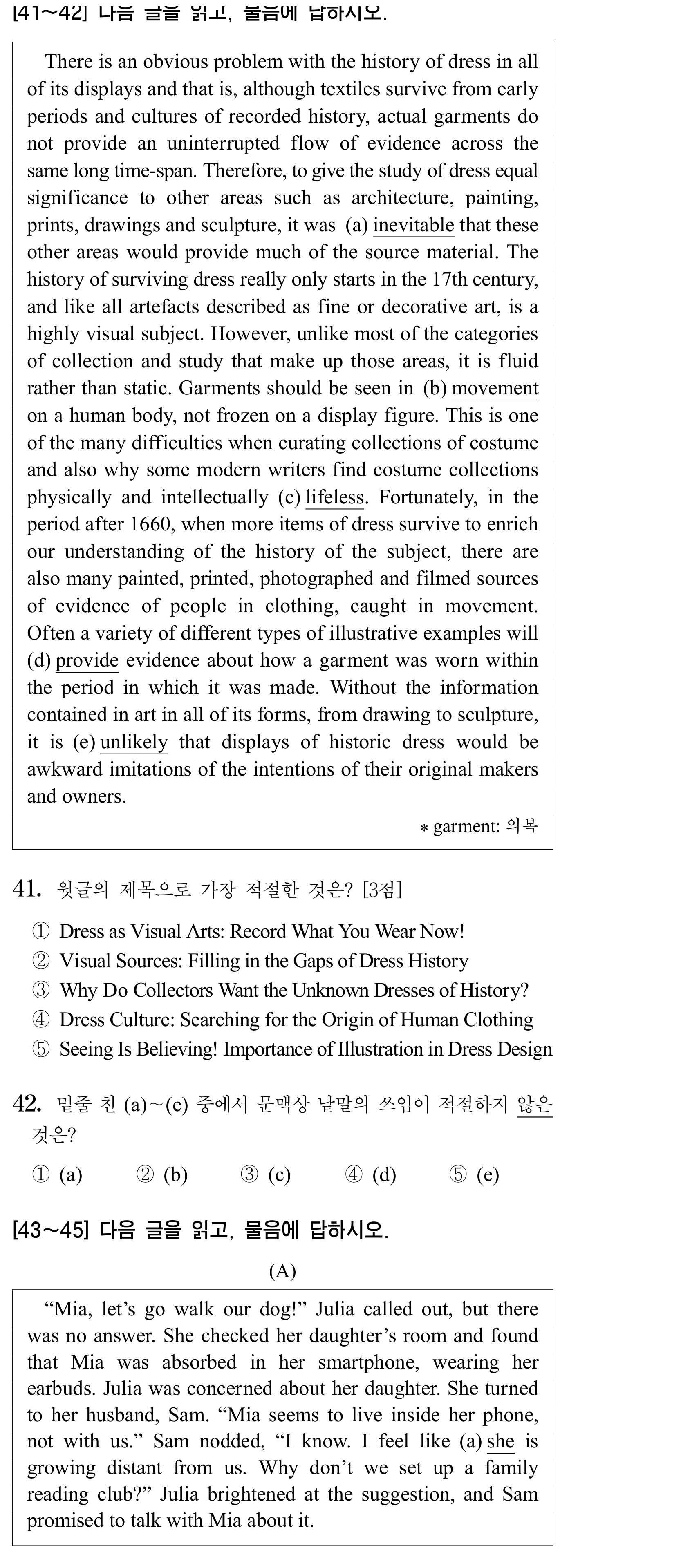
41번장문_제목There is an obvious problem with the history of dress in all of its displays and that is,…
There is an obvious problem with the history of dress in all of its displays and that is, although textiles survive from early periods and cultures of recorded history, actual garments do not provide an uninterrupted flow of evidence across the same long time-span. Therefore, to give the study of dress equal significance to other areas such as architecture, painting, prints, drawings and sculpture, it was (a) inevitable that these other areas would provide much of the source material. The history of surviving dress really only starts in the 17th century, and like all artefacts described as fine or decorative art, is a highly visual subject. However, unlike most of the categories of collection and study that make up those areas, it is fluid rather than static. Garments should be seen in (b) movement on a human body, not frozen on a display figure. This is one of the many difficulties when curating collections of costume and also why some modern writers find costume collections physically and intellectually (c) lifeless. Fortunately, in the period after 1660, when more items of dress survive to enrich our understanding of the history of the subject, there are also many painted, printed, photographed and filmed sources of evidence of people in clothing, caught in movement. Often a variety of different types of illustrative examples will (d) provide evidence about how a garment was worn within the period in which it was made. Without the information contained in art in all of its forms, from drawing to sculpture, it is (e) unlikely that displays of historic dress would be awkward imitations of the intentions of their original makers and owners.
---
(A) “Mia, let’s go walk our dog!” Julia called out, but there was no answer. She checked her daughter’s room and found that Mia was absorbed in her smartphone, wearing her earbuds. Julia was concerned about her daughter. She turned to her husband, Sam. “Mia seems to live inside her phone, not with us.” Sam nodded, “I know. I feel like (a) she is growing distant from us. Why don’t we set up a family reading club?” Julia brightened at the suggestion, and Sam promised to talk with Mia about it.
43번장문_순서(B) Mia’s family held their first book club meeting on Saturday afternoon.
(B) Mia’s family held their first book club meeting on Saturday afternoon. Everyone enjoyed the book Mia had chosen. Julia was the first to speak: “Dr. Duvall nearly invented a drug for eternal life, yet disappeared one day and ended up running Café Paris. That’s such a mystery.” Mia responded, her eyes sparkling, “Mom, I understand him. He always dreamed of being a barista, and his dream came true.” Sam supported (b) his daughter, and their conversation grew lively. During the discussion, Mia felt reconnected with her parents and already looked forward to their next book club meeting.
(C) At the library, Mia scanned the shelves for nearly an hour, feeling lost among the endless titles. Then, a librarian approached and asked, “Looking for something in particular?” “I need a book for my family’s reading club,” Mia admitted. “What genre do you enjoy?” she asked kindly. “Hmm, I like mysteries,” Mia replied. The librarian handed her a book titled *Café Paris* and said with a smile, “You’ll love this one.” Mia thanked (c) her and checked it out.
(D) When Sam suggested starting a family reading club, Mia immediately shook her head and said, “No, Dad. I don’t have time to read books. You know how busy (d) I am with exams all semester.” He didn’t give up. “But wouldn’t it be fun if we all read the same story and shared our thoughts? You could simply read for 20 minutes, maybe during your lunch break.” After some persuasion, Mia reluctantly agreed. Deep down, (e) she knew she was spending too much time on her phone. So she asked, “Dad, can I choose the first book?” Sam gladly said, “Yes.”
2026학년도 수능 영어 변형문제 맛보기
이 시험 지문으로 실제로 만든 변형문제 3문항입니다. 같은 지문으로 유형을 바꿔 더 만들 수 있습니다.
20번 지문 · 어법 변형
다음 글의 밑줄 친 부분 중, 어법상 틀린 것은 모두 몇 개인가?
The study of literature has repeatedly failed to recognize the influence of modern musical lyricists and their contributions to the evolution of language. ①Unlike Shakespeare, whom ②has been studied and celebrated for his development of the English language, ③particularly in vocabulary and grammatical structure, modern songwriters ④have experienced restraints on the acknowledgement of their contributions and largely ⑤been ignoring. Over the past century, we have witnessed an explosion of incredible literary works by these artists, ⑥which, through their music,, have used linguistic manipulation and storytelling ⑦to enrich our language and literature. ⑧Produced lyrics of distinct and complex imagery, songwriters have had an incredible literary impact on our language. Their remarkable works, including influences on modern language development, must be recognized in the field of modern literature.- ①1개
- ②2개
- ③3개
- ④4개
- ⑤5개
21번 지문 · 빈칸추론 변형
다음 빈칸에 들어갈 말로 가장 적절한 것은?
Digital platforms have made a lot of work less sticky. As work becomes ever more modularised, commoditised and standardised, and as markets for digital work are created, ties between service work and particular places can be disconnected. While the business process of outsourcing that emerged in the 1990s allowed large companies to take advantage of a ‘global reserve army’ by moving their call centres to cheap and distant labour markets, cloudwork changes the volume and granularity at which geographically non-proximate work can take place. A small business in New York can hire a freelance transcriber in Nairobi one day and New Delhi the next. No offices or factories need to be built, ________________, and — in most cases — no local taxes are paid. The switch in the production network of work happens by simply sending some emails or clicking some buttons on a digital work platform. And, in this way, the employer leaves behind no material traces in the places where it was once an employer.- ①employers escape the legal obligations of host communities
- ②workers gain broader access to international job markets
- ③local authorities coordinate oversight of cross-border contracts
- ④digital platforms standardize the quality of freelance services
- ⑤companies reinvest their savings in domestic labor training
22번 지문 · 주제 변형
다음 글의 주제로 가장 적절한 것은?
A sport ecosystem exists based on the type and rate of coopetition existing. Coopetition is defined as “the simultaneous pursuit of cooperation and competition among firms to leverage strategically important resources for superior value creation purposes”. It is a useful way to understand the dynamic nature of sport businesses which need to collaborate for resource efficiency purposes but potentially compete with each other. This special relationship should be managed properly due to trust and confidence issues being paramount. It can be challenging to be collaborative and competitive in sport as they involve different forms of behaviour. This means a careful balancing act may be required in terms of the amount of emphasis placed on each activity. Often sport managers will try to be more competitive due to performance reasons and less collaborative. By necessity they may need to share information but do so in a cautious manner. This means it might be better to have plans in place about how to pursue both simultaneously. This will ensure one is not neglected at the expense of the other.- ①the role of rival-oriented strategies in boosting the performance of sport organizations
- ②the need for deliberate planning to sustain a balance between partnership and rivalry among sport businesses
- ③the influence of information-sharing practices on trust between sport managers and their partners
- ④the contribution of resource-pooling alliances to the cost efficiency of sport enterprises
- ⑤the function of the sport ecosystem in shaping how businesses define their competitive identity
남은 시간
48:00





아직 28문제를 풀지 않았어요 (0/28)