2024년 5월 고3 전국연합 영어 모의고사
28문제 · 제한시간 48분
이 시험 한눈에 — 2024년 5월 고3 전국연합 영어 모의고사
18~45번 28문항을 유형별로 보면 목적 1 · 심경/분위기 1 · 주장 1 · 함축의미추론 1 · 요지/주장 1 · 주제 1 · 제목 1 · 도표 1 · 내용일치 1 · 실용문 1 · 어법 2 · 어휘 1 · 빈칸추론2 1 · 빈칸추론3 1 · 빈칸추론4 1 · 빈칸추론5 1 · 무관한문장 1 · 순서배열1 1 · 순서배열2 1 · 문장삽입1 1 · 문장삽입2 1 · 요약문완성 1 · 장문 5. 아래 지문으로 변형문제·단어장·정답표를 바로 만들 수 있습니다.
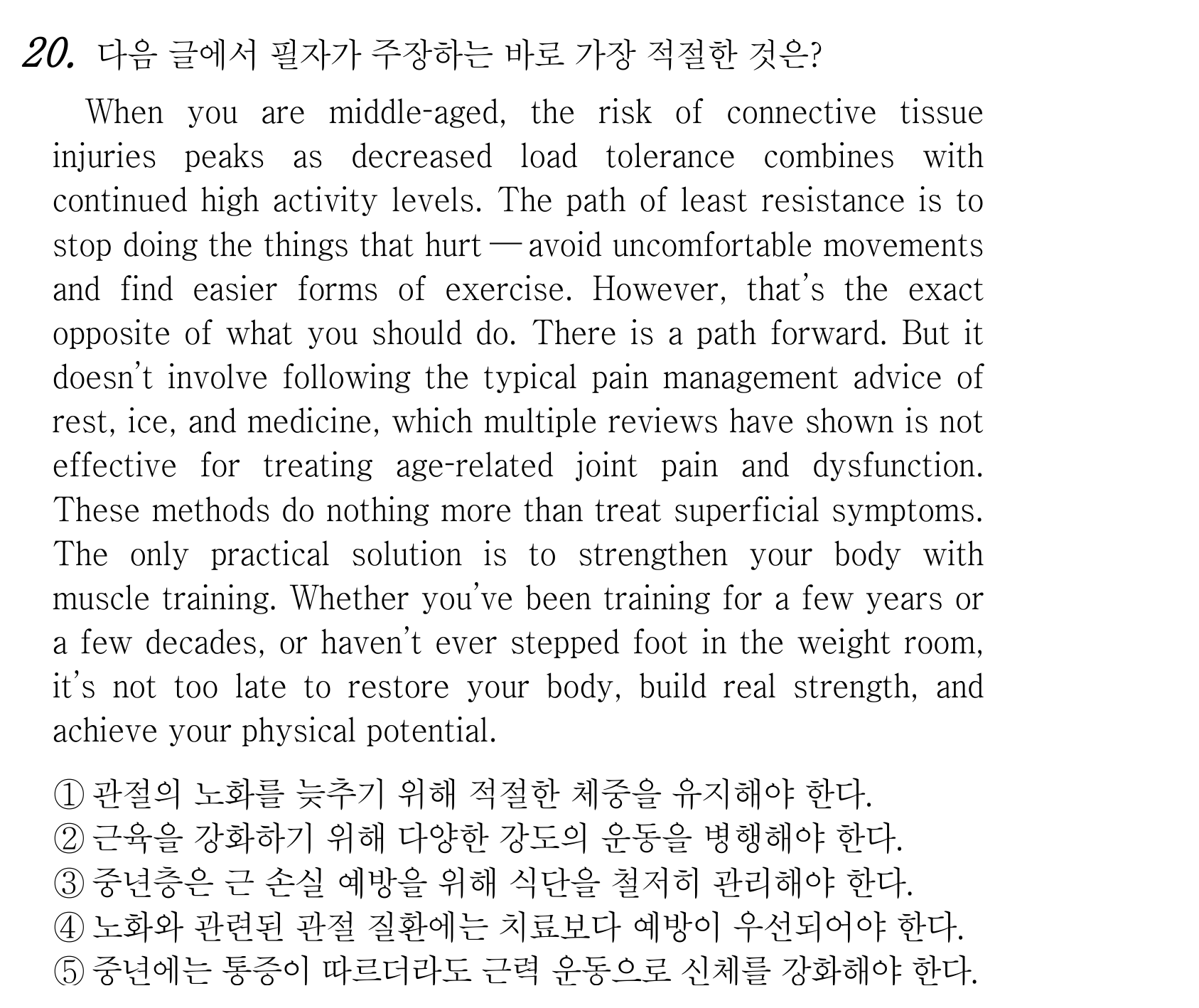
20번주장When you are middle-aged, the risk of connective tissue injuries peaks as decreased load…
When you are middle-aged, the risk of connective tissue injuries peaks as decreased load tolerance combines with continued high activity levels. The path of least resistance is to stop doing the things that hurt — avoid uncomfortable movements and find easier forms of exercise. However, that’s the exact opposite of what you should do. There is a path forward. But it doesn’t involve following the typical pain management advice of rest, ice, and medicine, which multiple reviews have shown is not effective for treating age-related joint pain and dysfunction. These methods do nothing more than treat superficial symptoms. The only practical solution is to strengthen your body with muscle training. Whether you’ve been training for a few years or a few decades, or haven’t ever stepped foot in the weight room, it’s not too late to restore your body, build real strength, and achieve your physical potential.
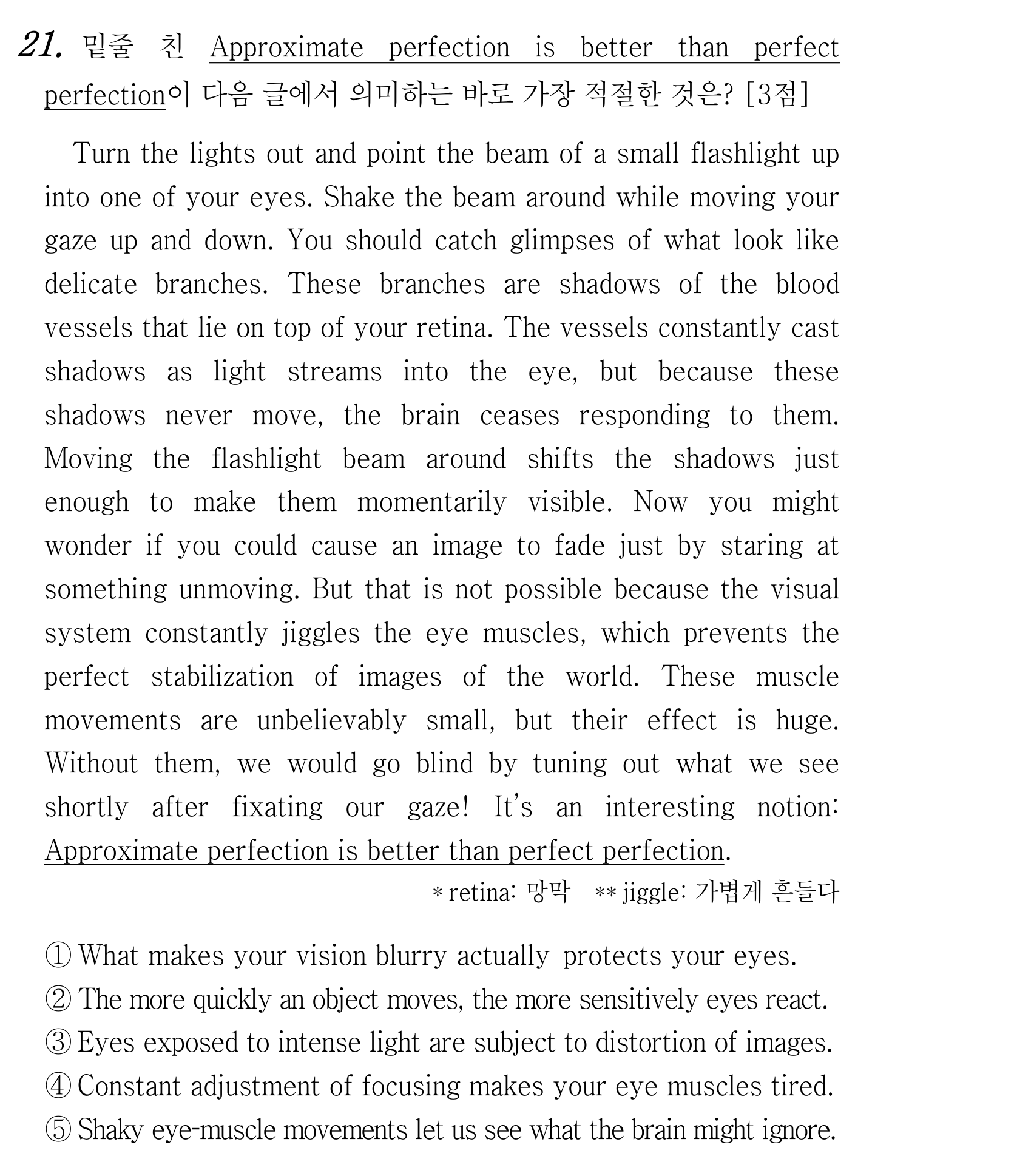
21번함축의미추론Turn the lights out and point the beam of a small flashlight up into one of your eyes.
Turn the lights out and point the beam of a small flashlight up into one of your eyes. Shake the beam around while moving your gaze up and down. You should catch glimpses of what look like delicate branches. These branches are shadows of the blood vessels that lie on top of your retina. The vessels constantly cast shadows as light streams into the eye, but because these shadows never move, the brain ceases responding to them. Moving the flashlight beam around shifts the shadows just enough to make them momentarily visible. Now you might wonder if you could cause an image to fade just by staring at something unmoving. But that is not possible because the visual system constantly jiggles the eye muscles, which prevents the perfect stabilization of images of the world. These muscle movements are unbelievably small, but their effect is huge. Without them, we would go blind by tuning out what we see shortly after fixating our gaze! It’s an interesting notion: Approximate perfection is better than perfect perfection.
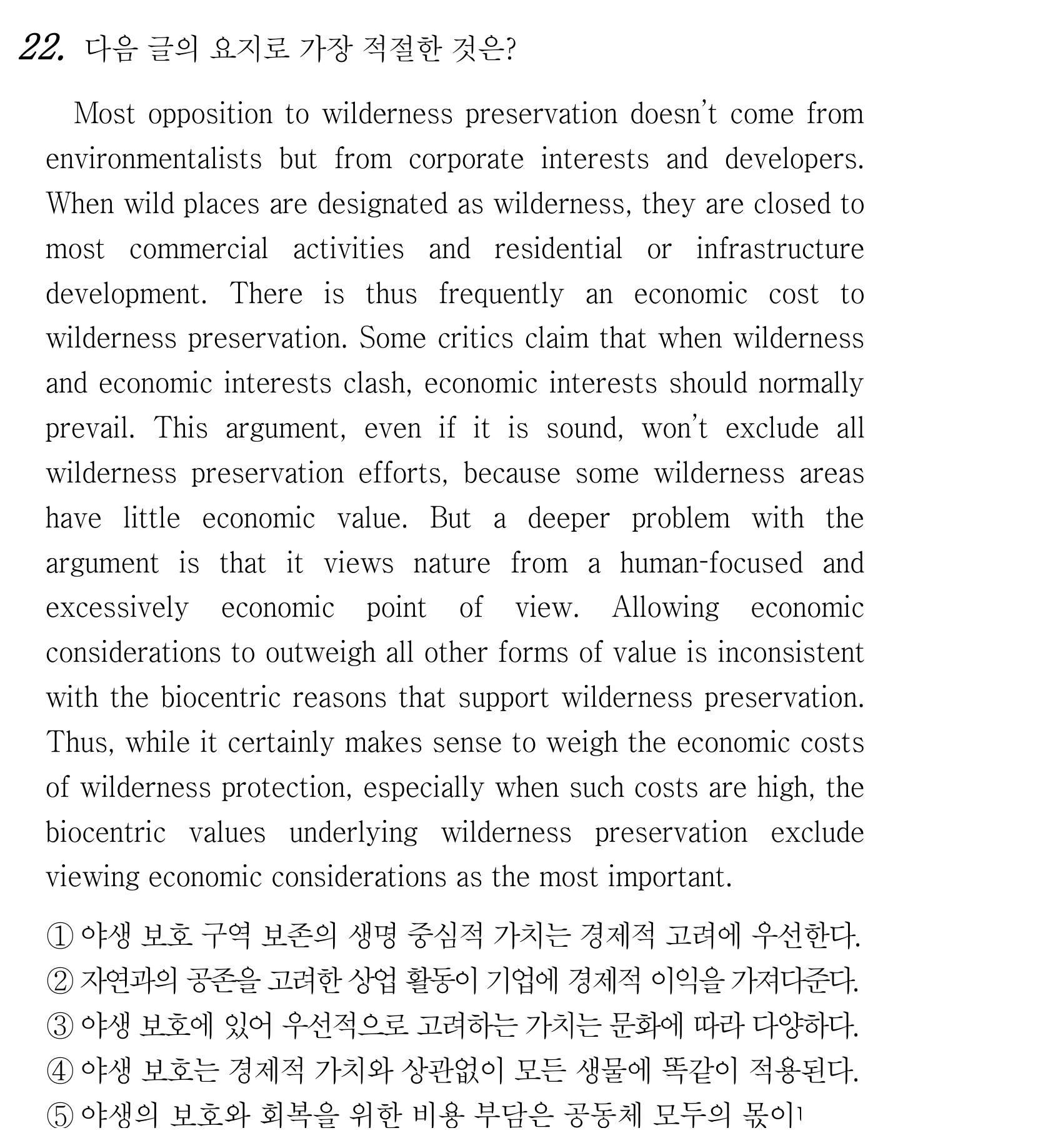
22번요지/주장Most opposition to wilderness preservation doesn't come from environmentalists but from c…
Most opposition to wilderness preservation doesn't come from environmentalists but from corporate interests and developers. When wild places are designated as wilderness, they are closed to most commercial activities and residential or infrastructure development. There is thus frequently an economic cost to wilderness preservation. Some critics claim that when wilderness and economic interests clash, economic interests should normally prevail. This argument, even if it is sound, won't exclude all wilderness preservation efforts, because some wilderness areas have little economic value. But a deeper problem with the argument is that it views nature from a human-focused and excessively economic point of view. Allowing economic considerations to outweigh all other forms of value is inconsistent with the biocentric reasons that support wilderness preservation. Thus, while it certainly makes sense to weigh the economic costs of wilderness protection, especially when such costs are high, the biocentric values underlying wilderness preservation exclude viewing economic considerations as the most important.
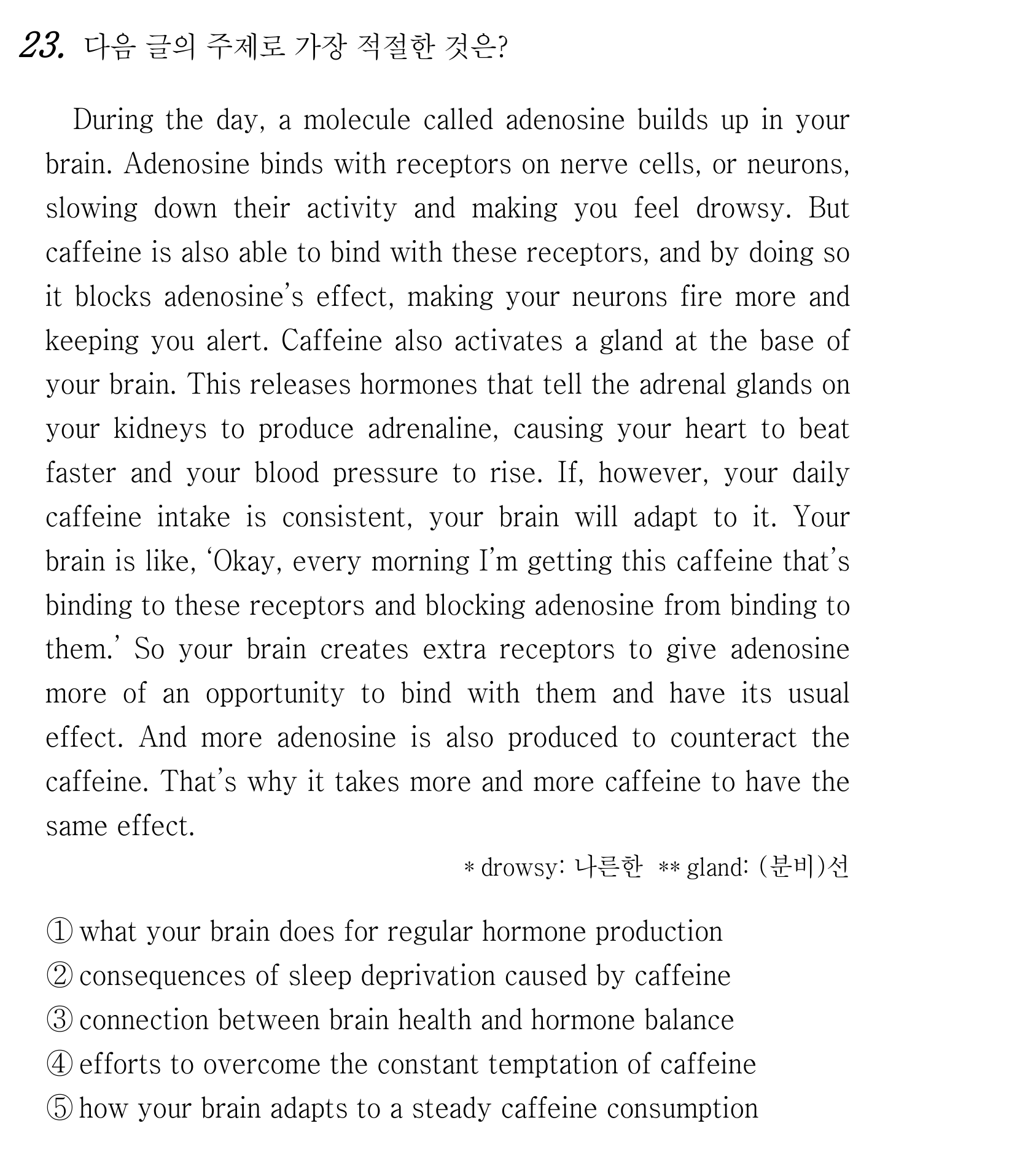
23번주제During the day, a molecule called adenosine builds up in your brain.
During the day, a molecule called adenosine builds up in your brain. Adenosine binds with receptors on nerve cells, or neurons, slowing down their activity and making you feel drowsy. But caffeine is also able to bind with these receptors, and by doing so it blocks adenosine’s effect, making your neurons fire more and keeping you alert. Caffeine also activates a gland at the base of your brain. This releases hormones that tell the adrenal glands on your kidneys to produce adrenaline, causing your heart to beat faster and your blood pressure to rise. If, however, your daily caffeine intake is consistent, your brain will adapt to it. Your brain is like, ‘Okay, every morning I’m getting this caffeine that’s binding to these receptors and blocking adenosine from binding to them.’ So your brain creates extra receptors to give adenosine more of an opportunity to bind with them and have its usual effect. And more adenosine is also produced to counteract the caffeine. That’s why it takes more and more caffeine to have the same effect.
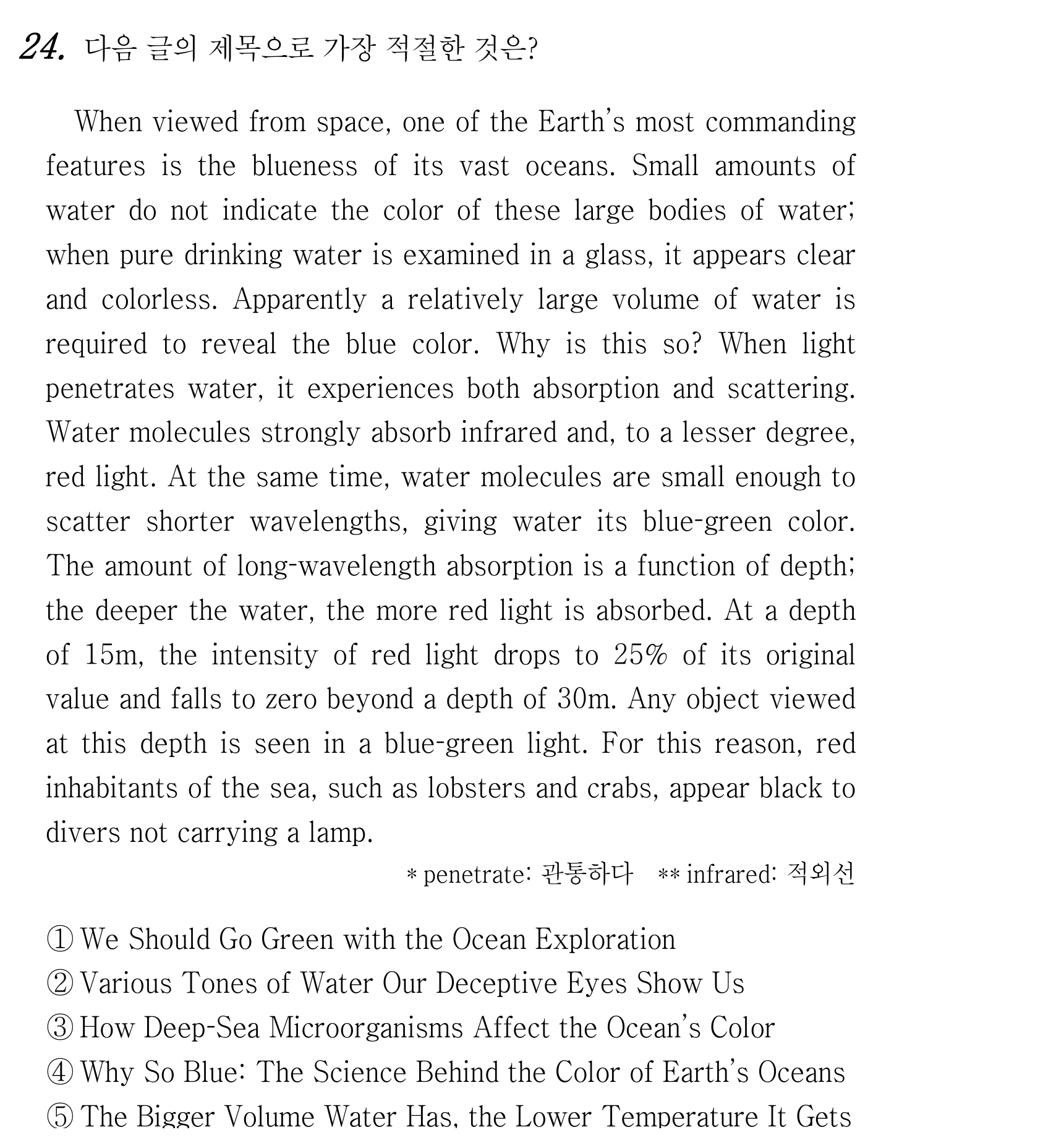
24번제목When viewed from space, one of the Earth’s most commanding features is the blueness of it…
When viewed from space, one of the Earth’s most commanding features is the blueness of its vast oceans. Small amounts of water do not indicate the color of these large bodies of water; when pure drinking water is examined in a glass, it appears clear and colorless. Apparently a relatively large volume of water is required to reveal the blue color. Why is this so? When light penetrates water, it experiences both absorption and scattering. Water molecules strongly absorb infrared and, to a lesser degree, red light. At the same time, water molecules are small enough to scatter shorter wavelengths, giving water its blue-green color. The amount of long-wavelength absorption is a function of depth; the deeper the water, the more red light is absorbed. At a depth of 15m, the intensity of red light drops to 25% of its original value and falls to zero beyond a depth of 30m. Any object viewed at this depth is seen in a blue-green light. For this reason, red inhabitants of the sea, such as lobsters and crabs, appear black to divers not carrying a lamp.
29번어법When a new pathogen emerges, one way it transitions from wherever it has been living into…
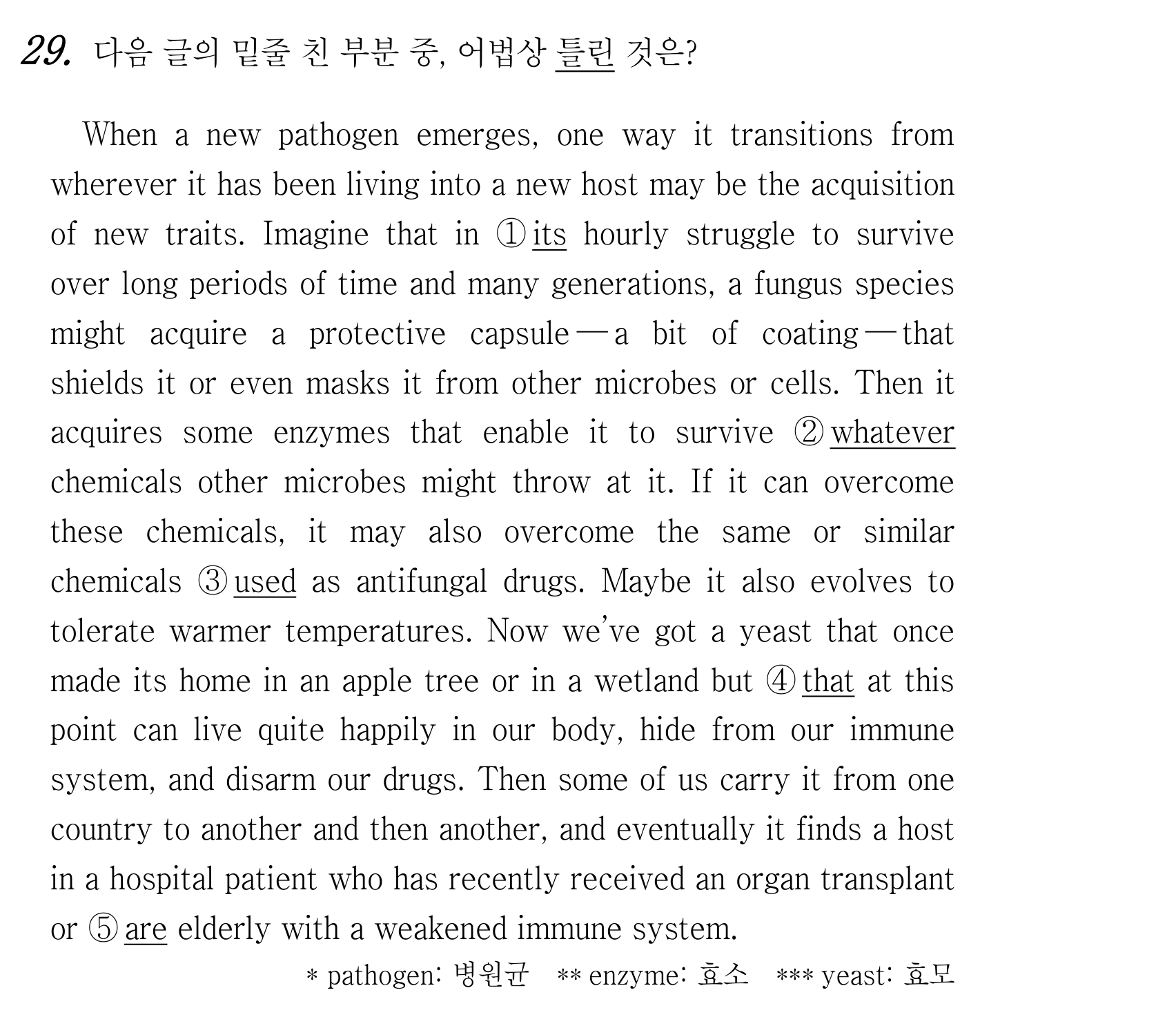
When a new pathogen emerges, one way it transitions from wherever it has been living into a new host may be the acquisition of new traits. Imagine that in its hourly struggle to survive over long periods of time and many generations, a fungus species might acquire a protective capsule—a bit of coating—that shields it or even masks it from other microbes or cells. Then it acquires some enzymes that enable it to survive whatever chemicals other microbes might throw at it. If it can overcome these chemicals, it may also overcome the same or similar chemicals used as antifungal drugs. Maybe it also evolves to tolerate warmer temperatures. Now we’ve got a yeast that once made its home in an apple tree or in a wetland but that at this point can live quite happily in our body, hide from our immune system, and disarm our drugs. Then some of us carry it from one country to another and then another, and eventually it finds a host in a hospital patient who has recently received an organ transplant or is elderly with a weakened immune system.
30번어휘Memory is shaped by emotions connected to an experience.
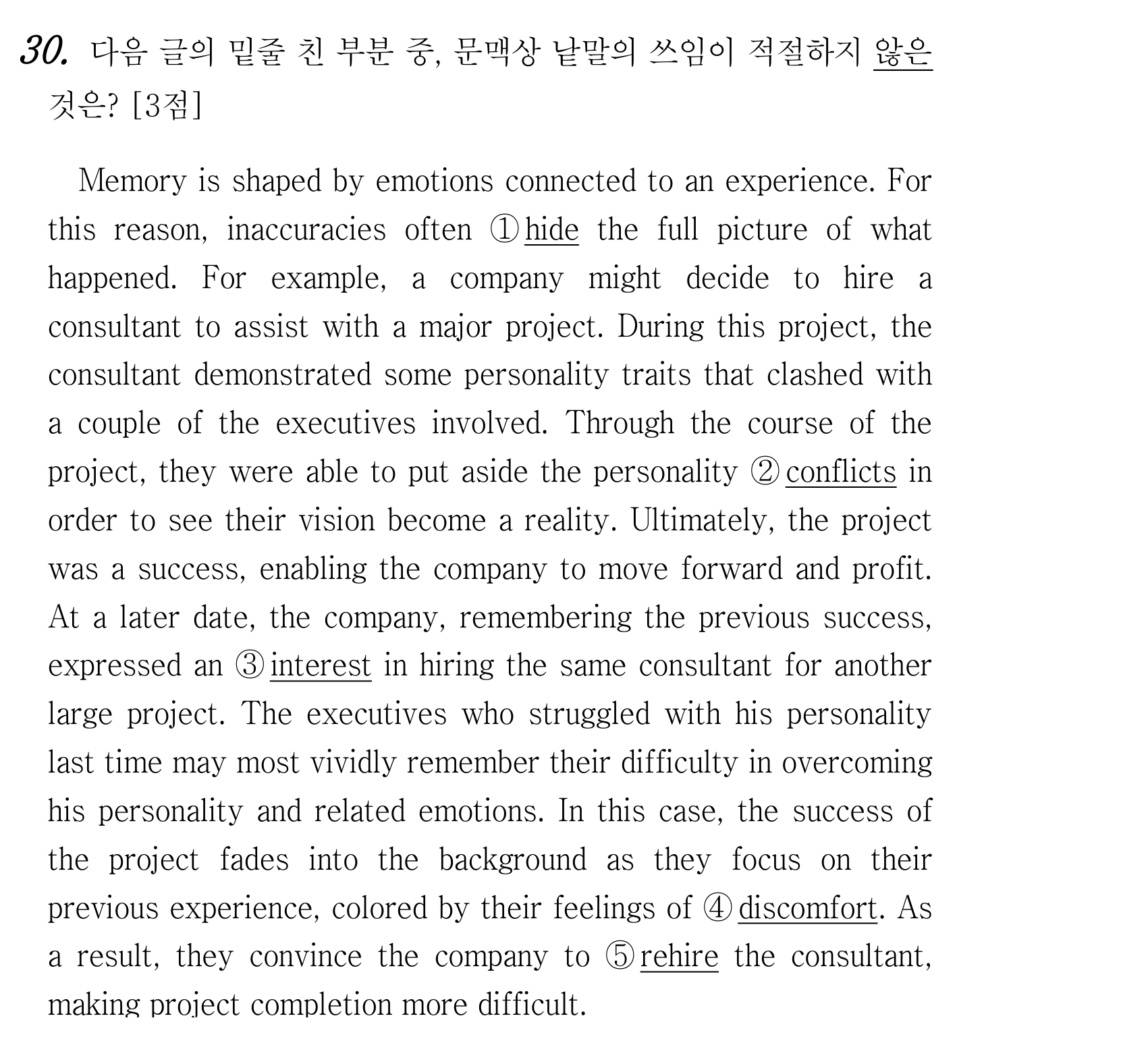
Memory is shaped by emotions connected to an experience. For this reason, inaccuracies often hide the full picture of what happened. For example, a company might decide to hire a consultant to assist with a major project. During this project, the consultant demonstrated some personality traits that clashed with a couple of the executives involved. Through the course of the project, they were able to put aside the personality conflicts in order to see their vision become a reality. Ultimately, the project was a success, enabling the company to move forward and profit. At a later date, the company, remembering the previous success, expressed an interest in hiring the same consultant for another large project. The executives who struggled with his personality last time may most vividly remember their difficulty in overcoming his personality and related emotions. In this case, the success of the project fades into the background as they focus on their previous experience, colored by their feelings of discomfort. As a result, they convince the company to replace the consultant, making project completion more difficult.
31번빈칸추론2As colors came to take on meanings and cultural significance within societies, attempts w…
As colors came to take on meanings and cultural significance within societies, attempts were made to restrict their use. The most extreme example of this phenomenon was the sumptuary laws. While these were passed in ancient Greece and Rome, and examples can be found in ancient China and Japan, they found their fullest expressions in Europe from the mid-twelfth century, before slowly disappearing in the early modern period. Such laws could touch on anything from diet to dress and furnishings, and sought to enforce social boundaries by encoding the social classes into a clear visual system: the peasants, in other words, should eat and dress like peasants; craftsmen should eat and dress like craftsmen. Color was a vital signifier in this social language — dull, earthy colors like russet were explicitly confined to the poorest rural peasants, while bright ones like scarlet were the preserve of a select few.
32번빈칸추론3John Douglas Pettigrew, a professor of psychology at the University of Queensland, found…
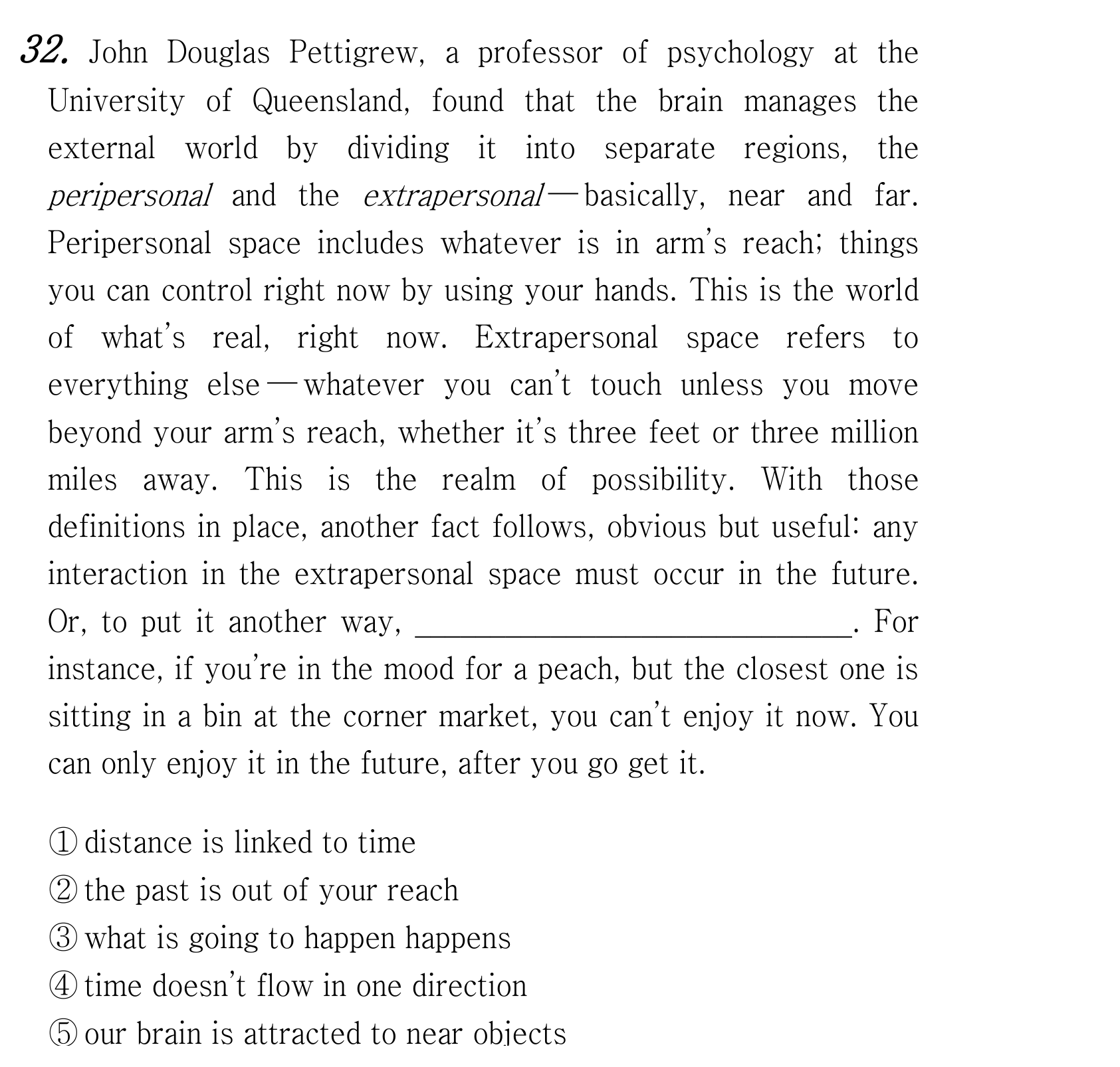
John Douglas Pettigrew, a professor of psychology at the University of Queensland, found that the brain manages the external world by dividing it into separate regions, the peripersonal and the extrapersonal—basically, near and far. Peripersonal space includes whatever is in arm’s reach; things you can control right now by using your hands. This is the world of what’s real, right now. Extrapersonal space refers to everything else—whatever you can’t touch unless you move beyond your arm’s reach, whether it’s three feet or three million miles away. This is the realm of possibility. With those definitions in place, another fact follows, obvious but useful: any interaction in the extrapersonal space must occur in the future. Or, to put it another way, distance is linked to time. For instance, if you’re in the mood for a peach, but the closest one is sitting in a bin at the corner market, you can’t enjoy it now. You can only enjoy it in the future, after you go get it.
33번빈칸추론4Insect-eating plants’ unique strategies for catching live prey have long captured the pub…
Insect-eating plants’ unique strategies for catching live prey have long captured the public imagination. But even within this strange group, in which food-trapping mechanisms have evolved multiple times independently, some unusual ones stand out. According to Ulrike Bauer, an evolutionary biologist, the visually striking pitcher plant *Nepenthes gracilis*, for example, can exploit external energy for a purpose. This species’ pitcher has a rigid, horizontal lid with an exposed underside that produces nectar, luring insects to land on it. When a raindrop strikes the lid’s top, the lid jolts downward and throws any unsuspecting visitor into digestive juices below. Researchers used x-ray scans to analyze cross sections of the pitchers when the lid is raised, lowered, and in a neutral position. Their results revealed a structural weak point in the pitcher’s neck: when a raindrop hits the lid, the weak spot folds in and forces the lid to quickly move downward, similar to a diving board. The weak point makes the pitcher’s body bend and bounce back in a specific, consistent way, so the lid rises back up without bouncing too far — unlike a typical leaf’s chaotic vibration when struck by rain.
34번빈칸추론5Many fish generate their own light in a biological firework display called bioluminescenc…
Many fish generate their own light in a biological firework display called bioluminescence. The lanternfish creates beams that sweep the sea like headlamps. The dragonfish produces wavelengths that only it can see, leaving its victims unaware of the approaching threat. In contrast, the anglerfish hopes its prey will notice and be lured toward its rod-like bioluminescent barbel; its fierce jaws stay hidden in the shadows. Bioluminescence is also used to frustrate predators. A species from the spookfish family relies on a bellyful of symbiotic, glowing bacteria to save it from becoming a meal. It uses the same concept developed by the US Navy during World War II to make bomber aircraft difficult to see. Just as Project Yehudi designed planes with under-wing spotlights, the fish’s glowing belly conceals its silhouette against sunlight to hide it from watching eyes below. In this fish-eat-fish world, survival is a game of hide-and-seek that prioritizes the sense of sight.
35번무관한문장The human race traces back to a surprisingly small number of common ancestors.
The human race traces back to a surprisingly small number of common ancestors. It has been documented that the entire human race can be traced back to only seven different mothers, and one of these women is a common ancestor to roughly 40% of the human species. Why is this? The simple answer is that humans are extremely good at dying and at wiping each other out. History has had many successful rulers and conquerors who have got rid of entire populations, and even beyond that, our species has wiped out plenty of similar humanoid lines that existed on this earth. Scientific finds have so far discovered a number of other humanoid species that once shared the earth with us, some of which include Neanderthals and Denisovans. Yet of these lines, only homo sapiens have survived, only the modern humans. That itself shows how difficult it is for a species to survive and thrive long-term on this planet.
36번순서배열1Philosophers who seek to understand the nature of time might consider the possibility of…
Philosophers who seek to understand the nature of time might consider the possibility of time travel. But there are no real-life cases of time travel. In situations such as this, philosophers often construct thought experiments—imagined scenarios that bring out the thoughts and presuppositions underlying people’s judgments. Sometimes these scenarios are drawn from books, movies, and television. Other times, philosophers just make up their own scenarios. Either way, the point is to put such concepts to the test. In the case of time travel, for example, a common thought experiment is to imagine what would happen if you went back in time and found yourself in a position to interfere in such a way that you were never born. It seems that something must happen to prevent you from doing this, because if you were to succeed, you would not exist and so you would not have been able to go back in time. As a result of thinking through these sorts of cases, some philosophers claim that the very notion of time travel makes no sense.
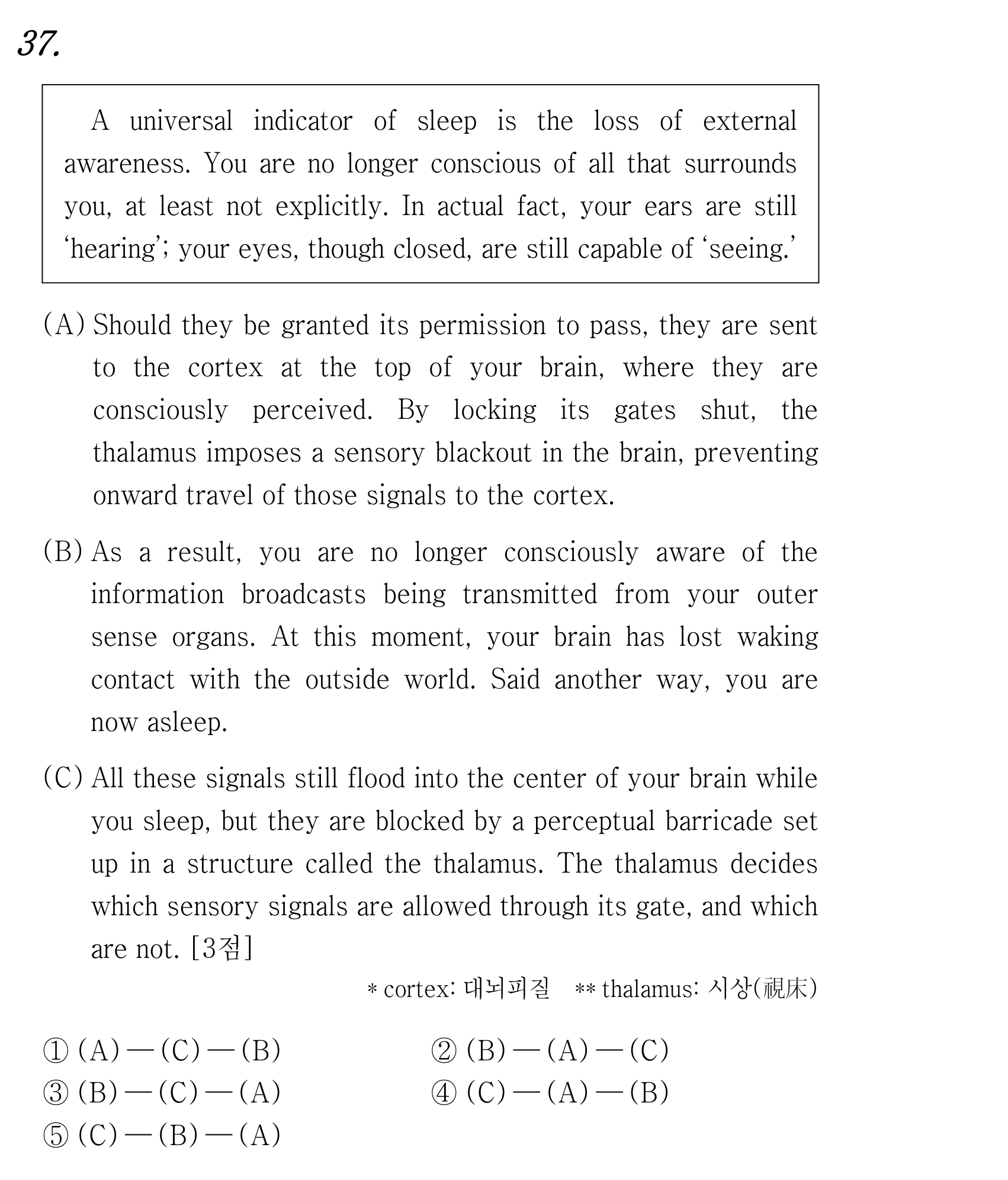
37번순서배열2A universal indicator of sleep is the loss of external awareness.
A universal indicator of sleep is the loss of external awareness. You are no longer conscious of all that surrounds you, at least not explicitly. In actual fact, your ears are still ‘hearing’; your eyes, though closed, are still capable of ‘seeing.’ All these signals still flood into the center of your brain while you sleep, but they are blocked by a perceptual barricade set up in a structure called the thalamus. The thalamus decides which sensory signals are allowed through its gate, and which are not. Should they be granted its permission to pass, they are sent to the cortex at the top of your brain, where they are consciously perceived. By locking its gates shut, the thalamus imposes a sensory blackout in the brain, preventing onward travel of those signals to the cortex. As a result, you are no longer consciously aware of the information broadcasts being transmitted from your outer sense organs. At this moment, your brain has lost waking contact with the outside world. Said another way, you are now asleep.
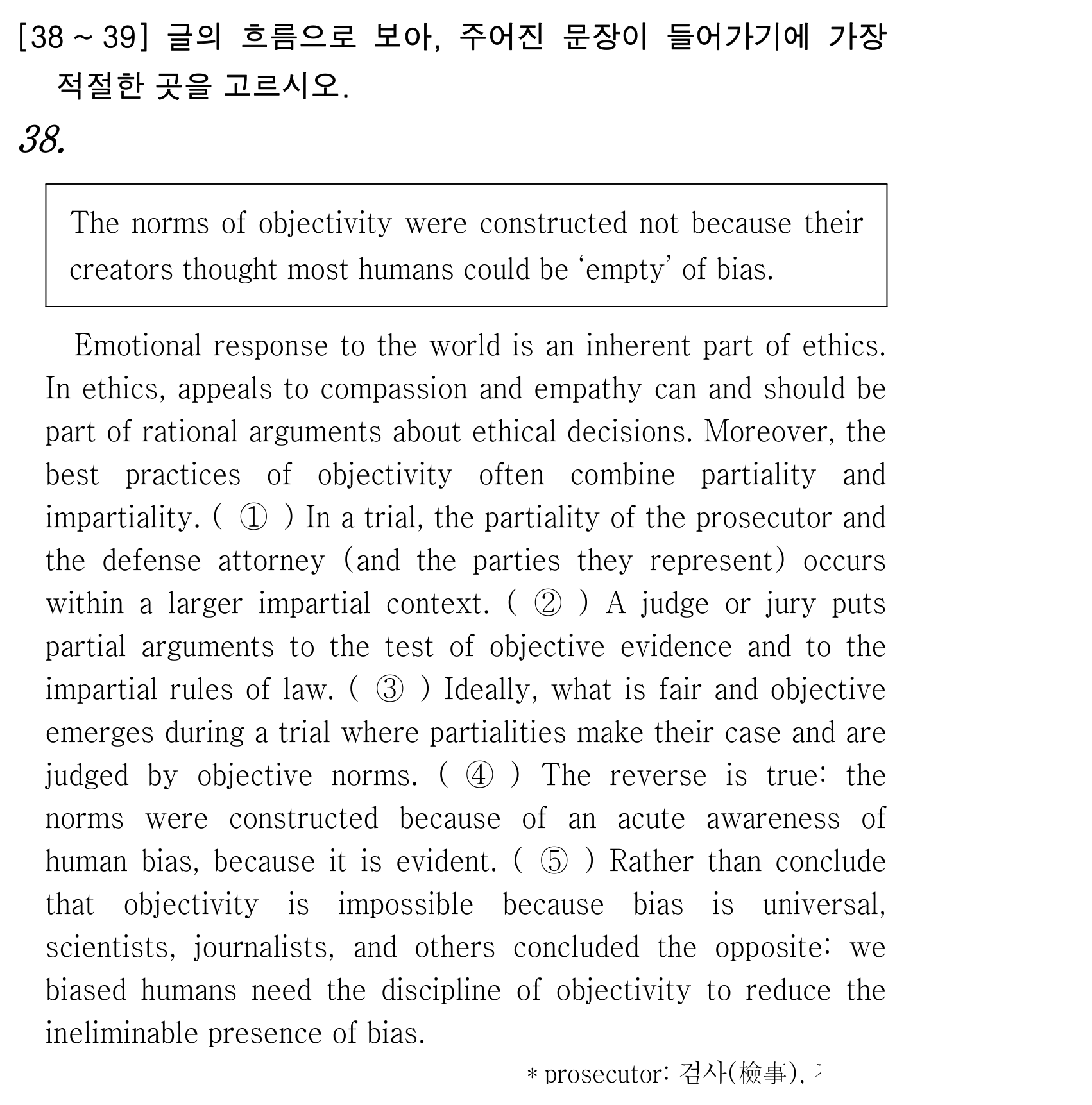
38번문장삽입1Emotional response to the world is an inherent part of ethics.
Emotional response to the world is an inherent part of ethics. In ethics, appeals to compassion and empathy can and should be part of rational arguments about ethical decisions. Moreover, the best practices of objectivity often combine partiality and impartiality. In a trial, the partiality of the prosecutor and the defense attorney (and the parties they represent) occurs within a larger impartial context. A judge or jury puts partial arguments to the test of objective evidence and to the impartial rules of law. Ideally, what is fair and objective emerges during a trial where partialities make their case and are judged by objective norms. The norms of objectivity were constructed not because their creators thought most humans could be ‘empty’ of bias. The reverse is true: the norms were constructed because of an acute awareness of human bias, because it is evident. Rather than conclude that objectivity is impossible because bias is universal, scientists, journalists, and others concluded the opposite: we biased humans need the discipline of objectivity to reduce the ineliminable presence of bias.
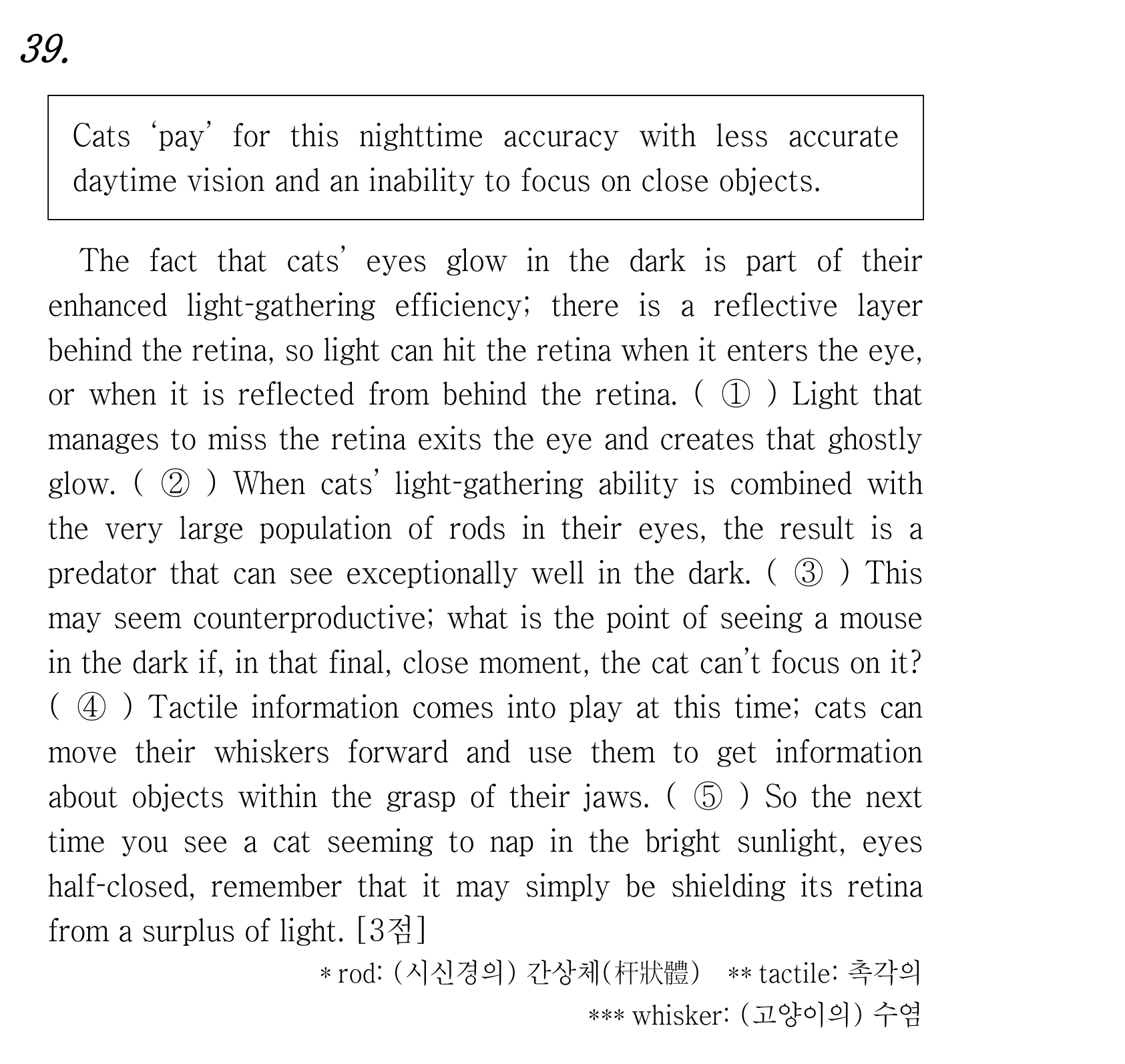
39번문장삽입2The fact that cats’ eyes glow in the dark is part of their enhanced light-gathering effic…
The fact that cats’ eyes glow in the dark is part of their enhanced light-gathering efficiency; there is a reflective layer behind the retina, so light can hit the retina when it enters the eye, or when it is reflected from behind the retina. Light that manages to miss the retina exits the eye and creates that ghostly glow. When cats’ light-gathering ability is combined with the very large population of rods in their eyes, the result is a predator that can see exceptionally well in the dark. Cats ‘pay’ for this nighttime accuracy with less accurate daytime vision and an inability to focus on close objects. This may seem counterproductive; what is the point of seeing a mouse in the dark if, in that final, close moment, the cat can’t focus on it? Tactile information comes into play at this time; cats can move their whiskers forward and use them to get information about objects within the grasp of their jaws. So the next time you see a cat seeming to nap in the bright sunlight, eyes half-closed, remember that it may simply be shielding its retina from a surplus of light.
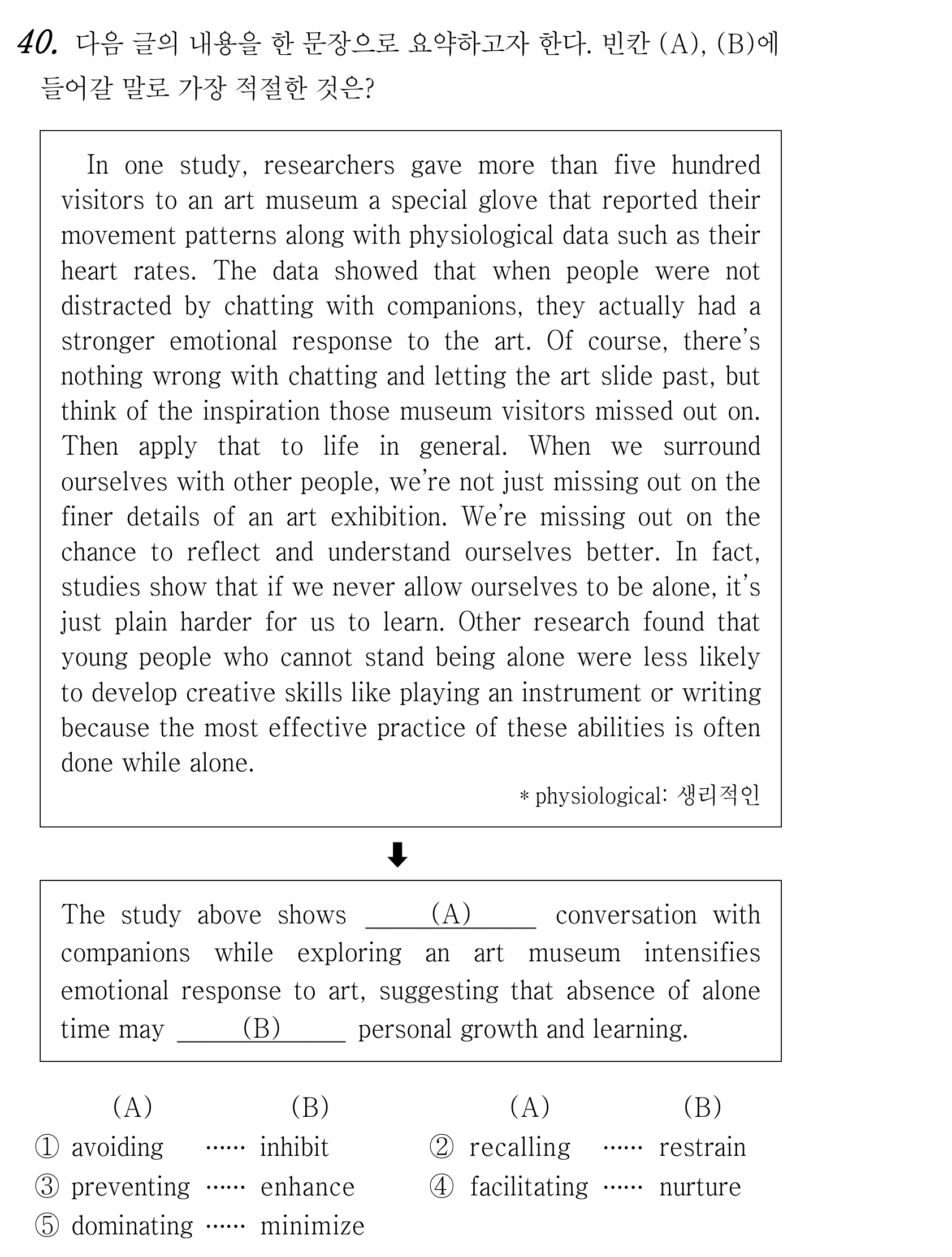
40번요약문완성In one study, researchers gave more than five hundred visitors to an art museum a special…
In one study, researchers gave more than five hundred visitors to an art museum a special glove that reported their movement patterns along with physiological data such as their heart rates. The data showed that when people were not distracted by chatting with companions, they actually had a stronger emotional response to the art. Of course, there’s nothing wrong with chatting and letting the art slide past, but think of the inspiration those museum visitors missed out on. Then apply that to life in general. When we surround ourselves with other people, we’re not just missing out on the finer details of an art exhibition. We’re missing out on the chance to reflect and understand ourselves better. In fact, studies show that if we never allow ourselves to be alone, it’s just plain harder for us to learn. Other research found that young people who cannot stand being alone were less likely to develop creative skills like playing an instrument or writing because the most effective practice of these abilities is often done while alone.
41번장문_제목There are a number of human characteristics that would seem to be disadvantageous yet con…
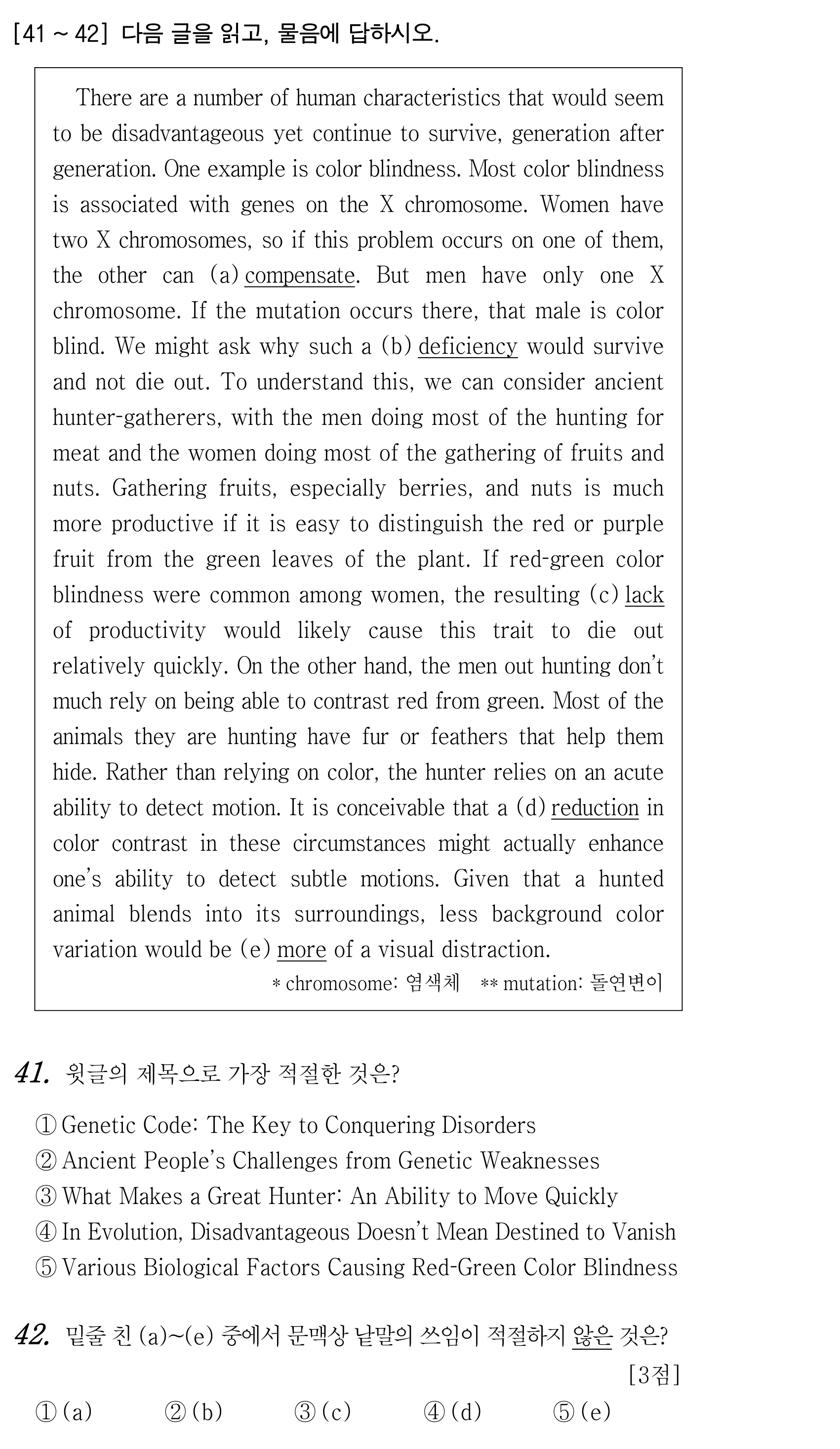
There are a number of human characteristics that would seem to be disadvantageous yet continue to survive, generation after generation. One example is color blindness. Most color blindness is associated with genes on the X chromosome. Women have two X chromosomes, so if this problem occurs on one of them, the other can (a) compensate. But men have only one X chromosome. If the mutation occurs there, that male is color blind. We might ask why such a (b) deficiency would survive and not die out. To understand this, we can consider ancient hunter-gatherers, with the men doing most of the hunting for meat and the women doing most of the gathering of fruits and nuts. Gathering fruits, especially berries, and nuts is much more productive if it is easy to distinguish the red or purple fruit from the green leaves of the plant. If red-green color blindness were common among women, the resulting (c) lack of productivity would likely cause this trait to die out relatively quickly. On the other hand, the men out hunting don’t much rely on being able to contrast red from green. Most of the animals they are hunting have fur or feathers that help them hide. Rather than relying on color, the hunter relies on an acute ability to detect motion. It is conceivable that a (d) reduction in color contrast in these circumstances might actually enhance one’s ability to detect subtle motions. Given that a hunted animal blends into its surroundings, less background color variation would be (e) more of a visual distraction.
2024년 5월 고3 전국연합 영어 모의고사 변형문제 맛보기
이 시험 지문으로 실제로 만든 변형문제 3문항입니다. 같은 지문으로 유형을 바꿔 더 만들 수 있습니다.
21번 지문 · 어법 변형
다음 글의 밑줄 친 부분 중, 어법상 틀린 것은 모두 몇 개인가?
Turn the lights out and point the beam of a small flashlight up into one of your eyes. Shake the beam around while moving your gaze up and down. You should catch glimpses of ①what look like delicate branches. These branches are shadows of the blood vessels ②that lie on top of your retina. The vessels constantly cast shadows as light streams into the eye, but because these shadows never move, the brain ③ceases responding to them. Moving the flashlight beam around shifts the shadows just enough ④to make them momentarily visible. Now you might wonder ⑤if you could cause an image to fade just by staring at something unmoving. But that is not possible because the visual system constantly jiggles the eye muscles, ⑥which prevents the perfect stabilization of images of the world. These muscle movements are unbelievably small, but their effect is huge. Without them, ⑦we would go blind ⑧by tuned out what we see shortly after fixating our gaze! It’s an interesting notion: Approximate perfection is better than perfect perfection.- ①1개
- ②2개
- ③3개
- ④4개
- ⑤5개
23번 지문 · 빈칸추론 변형
다음 빈칸에 들어갈 말로 가장 적절한 것은?
During the day, a molecule called adenosine builds up in your brain. Adenosine binds with receptors on nerve cells, or neurons, slowing down their activity and making you feel drowsy. But caffeine is also able to bind with these receptors, and by doing so it blocks adenosine’s effect, making your neurons fire more and keeping you alert. Caffeine also activates a gland at the base of your brain. This releases hormones that tell the adrenal glands on your kidneys to produce adrenaline, causing your heart to beat faster and your blood pressure to rise. If, however, your daily caffeine intake is consistent, ________________. Your brain is like, ‘Okay, every morning I’m getting this caffeine that’s binding to these receptors and blocking adenosine from binding to them.’ So your brain creates extra receptors to give adenosine more of an opportunity to bind with them and have its usual effect. And more adenosine is also produced to counteract the caffeine. That’s why it takes more and more caffeine to have the same effect.- ①the nervous system gradually loses its sensitivity to fatigue signals
- ②the body recalibrates its chemistry to offset the drug
- ③the adrenal glands compensate by curtailing hormone secretion overall
- ④the stimulant's alertness benefits intensify with prolonged exposure
- ⑤the brain's reward circuitry shifts toward preferring routine stimulation
20번 지문 · 어휘 변형
다음 글의 밑줄 친 부분 중, 문맥상 낱말의 쓰임이 적절하지 않은 것은?
When you are middle-aged, the risk of connective tissue injuries peaks as ①decreased load tolerance combines with continued high activity levels. The path of least resistance is to stop doing the things that hurt — avoid uncomfortable movements and find easier forms of exercise. However, that’s the exact opposite of what you should do. There is a path forward. But it doesn’t involve following the typical pain management advice of rest, ice, and medicine, which multiple reviews have shown is not ②ineffective for treating age-related joint pain and dysfunction. These methods do nothing more than treat ③superficial symptoms. The only ④practical solution is to strengthen your body with muscle training. Whether you’ve been training for a few years or a few decades, or haven’t ever stepped foot in the weight room, it’s not too late to ⑤restore your body, build real strength, and achieve your physical potential.- ①decreased
- ②ineffective
- ③superficial
- ④practical
- ⑤restore
남은 시간
48:00



아직 28문제를 풀지 않았어요 (0/28)