2023년 5월 고3 전국연합 영어 모의고사
28문제 · 제한시간 48분
이 시험 한눈에 — 2023년 5월 고3 전국연합 영어 모의고사
18~45번 28문항을 유형별로 보면 목적 1 · 심경/분위기 1 · 주장 1 · 함축의미추론 1 · 요지/주장 1 · 주제 1 · 제목 1 · 도표 1 · 내용일치 1 · 실용문 1 · 어법 2 · 어휘 1 · 빈칸추론2 1 · 빈칸추론3 1 · 빈칸추론4 1 · 빈칸추론5 1 · 무관한문장 1 · 순서배열1 1 · 순서배열2 1 · 문장삽입1 1 · 문장삽입2 1 · 요약문완성 1 · 장문 5. 아래 지문으로 변형문제·단어장·정답표를 바로 만들 수 있습니다.
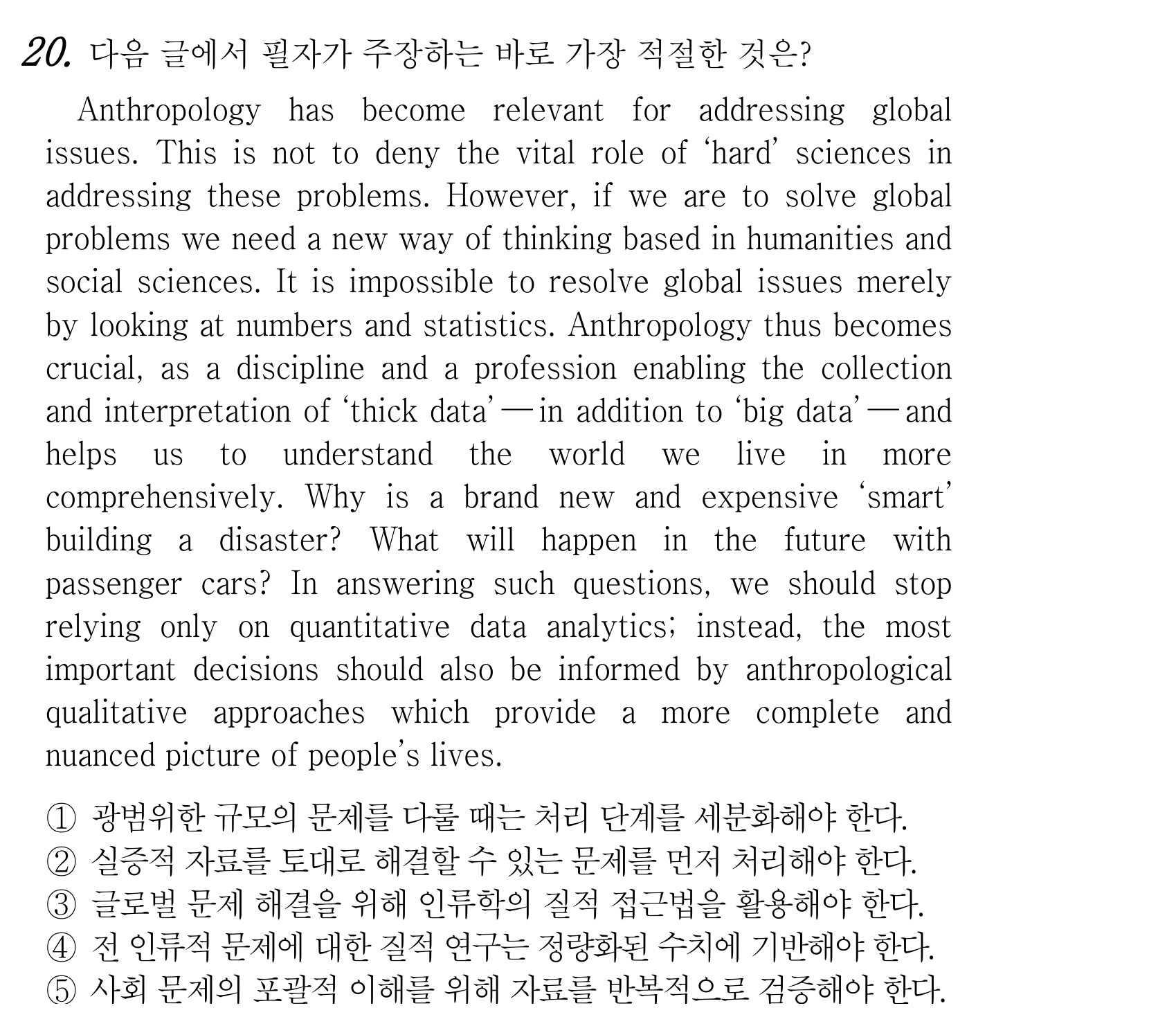
20번주장Anthropology has become relevant for addressing global issues.
Anthropology has become relevant for addressing global issues. This is not to deny the vital role of ‘hard’ sciences in addressing these problems. However, if we are to solve global problems we need a new way of thinking based in humanities and social sciences. It is impossible to resolve global issues merely by looking at numbers and statistics. Anthropology thus becomes crucial, as a discipline and a profession enabling the collection and interpretation of ‘thick data’—in addition to ‘big data’—and helps us to understand the world we live in more comprehensively. Why is a brand new and expensive ‘smart’ building a disaster? What will happen in the future with passenger cars? In answering such questions, we should stop relying only on quantitative data analytics; instead, the most important decisions should also be informed by anthropological qualitative approaches which provide a more complete and nuanced picture of people’s lives.
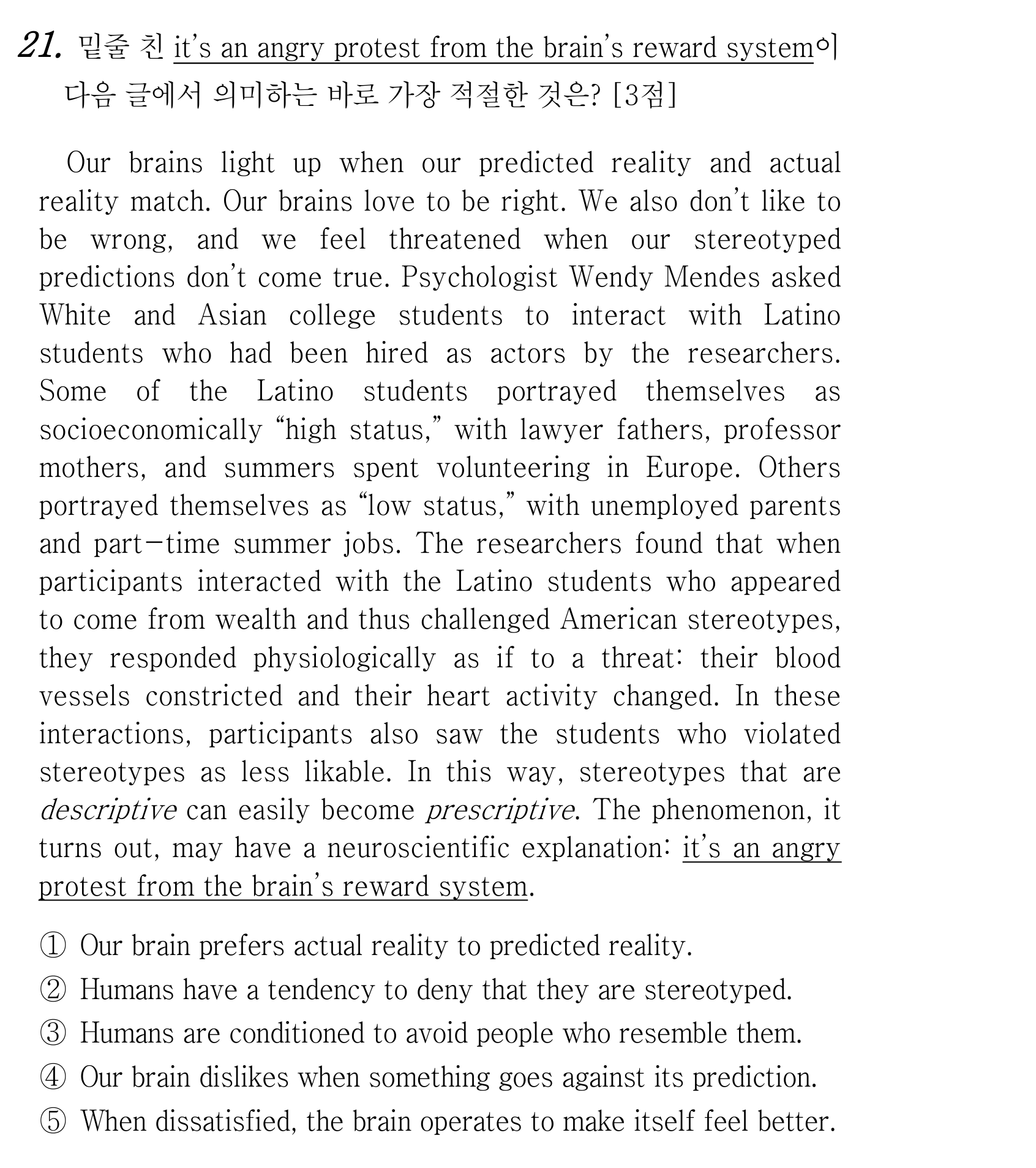
21번함축의미추론Our brains light up when our predicted reality and actual reality match.
Our brains light up when our predicted reality and actual reality match. Our brains love to be right. We also don’t like to be wrong, and we feel threatened when our stereotyped predictions don’t come true. Psychologist Wendy Mendes asked White and Asian college students to interact with Latino students who had been hired as actors by the researchers. Some of the Latino students portrayed themselves as socioeconomically “high status,” with lawyer fathers, professor mothers, and summers spent volunteering in Europe. Others portrayed themselves as “low status,” with unemployed parents and part-time summer jobs. The researchers found that when participants interacted with the Latino students who appeared to come from wealth and thus challenged American stereotypes, they responded physiologically as if to a threat: their blood vessels constricted and their heart activity changed. In these interactions, participants also saw the students who violated stereotypes as less likable. In this way, stereotypes that are descriptive can easily become prescriptive. The phenomenon, it turns out, may have a neuroscientific explanation: it’s an angry protest from the brain’s reward system.
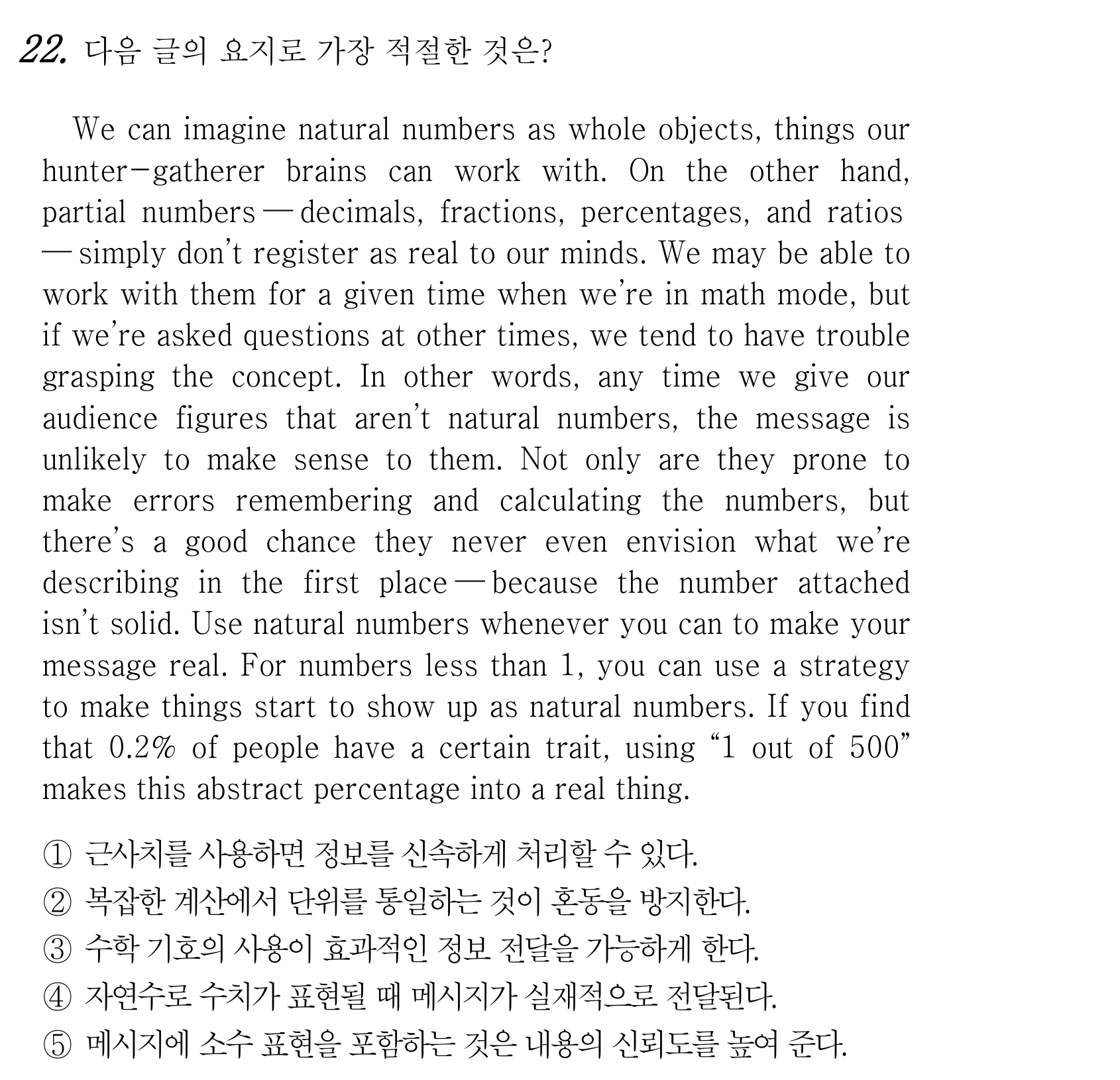
22번요지/주장We can imagine natural numbers as whole objects, things our hunter-gatherer brains can wo…
We can imagine natural numbers as whole objects, things our hunter-gatherer brains can work with. On the other hand, partial numbers — decimals, fractions, percentages, and ratios — simply don’t register as real to our minds. We may be able to work with them for a given time when we’re in math mode, but if we’re asked questions at other times, we tend to have trouble grasping the concept. In other words, any time we give our audience figures that aren’t natural numbers, the message is unlikely to make sense to them. Not only are they prone to make errors remembering and calculating the numbers, but there’s a good chance they never even envision what we’re describing in the first place — because the number attached isn’t solid. Use natural numbers whenever you can to make your message real. For numbers less than 1, you can use a strategy to make things start to show up as natural numbers. If you find that 0.2% of people have a certain trait, using “1 out of 500” makes this abstract percentage into a real thing.
23번주제Facing large-scale, long-term change can seem overwhelming.
Facing large-scale, long-term change can seem overwhelming. Problems like global contagion or economic inequality are so complex that it can be hard to believe any intervention might make a difference. Working through fears of what could be depends on connecting with the abstract. Linking issues like climate change, for example, with the realities of our own neighborhoods, jobs, and relationships, translates conceptual ideas into concrete emotions. Thinking of how the beaches we love might disappear, how more frequent floods might destroy our homes, or how we might have to move to flee mounting wildfire risk, evokes feelings like anger, sadness, or guilt — feelings that inspire us to act. A recent study found that when people feel personally affected by potential climatic change, they are more likely to support carbon reduction efforts and push for proactive policies. Forming emotional connections to potential futures helps us move from denial and despair to action.
24번제목There was once a certain difficulty with the moons of Jupiter that is worth remarking on.
There was once a certain difficulty with the moons of Jupiter that is worth remarking on. These satellites were studied very carefully by Roemer, who noticed that the moons sometimes seemed to be ahead of schedule, and sometimes behind. They were ahead when Jupiter was particularly close to the earth and they were behind when Jupiter was farther from the earth. This would have been a very difficult thing to explain according to the law of gravitation. If a law does not work even in one place where it ought to, it is just wrong. But the reason for this discrepancy was very simple and beautiful: it takes a little while to see the moons of Jupiter because of the time it takes light to travel from Jupiter to the earth. When Jupiter is closer to the earth the time is a little less, and when it is farther from the earth, the time is more. This is why moons appear to be, on the average, a little ahead or a little behind, depending on whether they are closer to or farther from the earth.
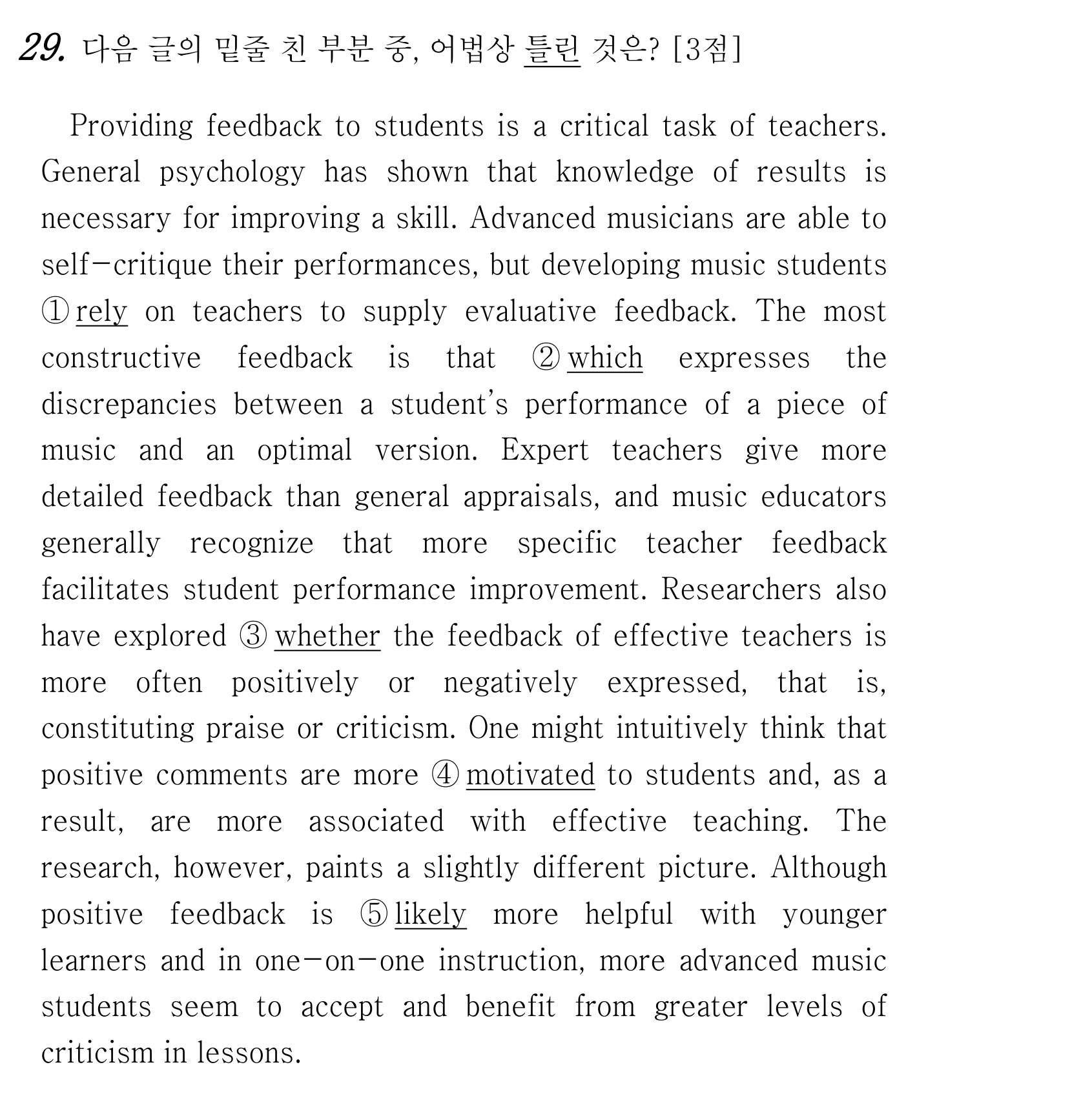
29번어법Providing feedback to students is a critical task of teachers.
Providing feedback to students is a critical task of teachers. General psychology has shown that knowledge of results is necessary for improving a skill. Advanced musicians are able to self-critique their performances, but developing music students rely on teachers to supply evaluative feedback. The most constructive feedback is that which expresses the discrepancies between a student's performance of a piece of music and an optimal version. Expert teachers give more detailed feedback than general appraisals, and music educators generally recognize that more specific teacher feedback facilitates student performance improvement. Researchers also have explored whether the feedback of effective teachers is more often positively or negatively expressed, that is, constituting praise or criticism. One might intuitively think that positive comments are more motivating to students and, as a result, are more associated with effective teaching. The research, however, paints a slightly different picture. Although positive feedback is likely more helpful with younger learners and in one-on-one instruction, more advanced music students seem to accept and benefit from greater levels of criticism in lessons.
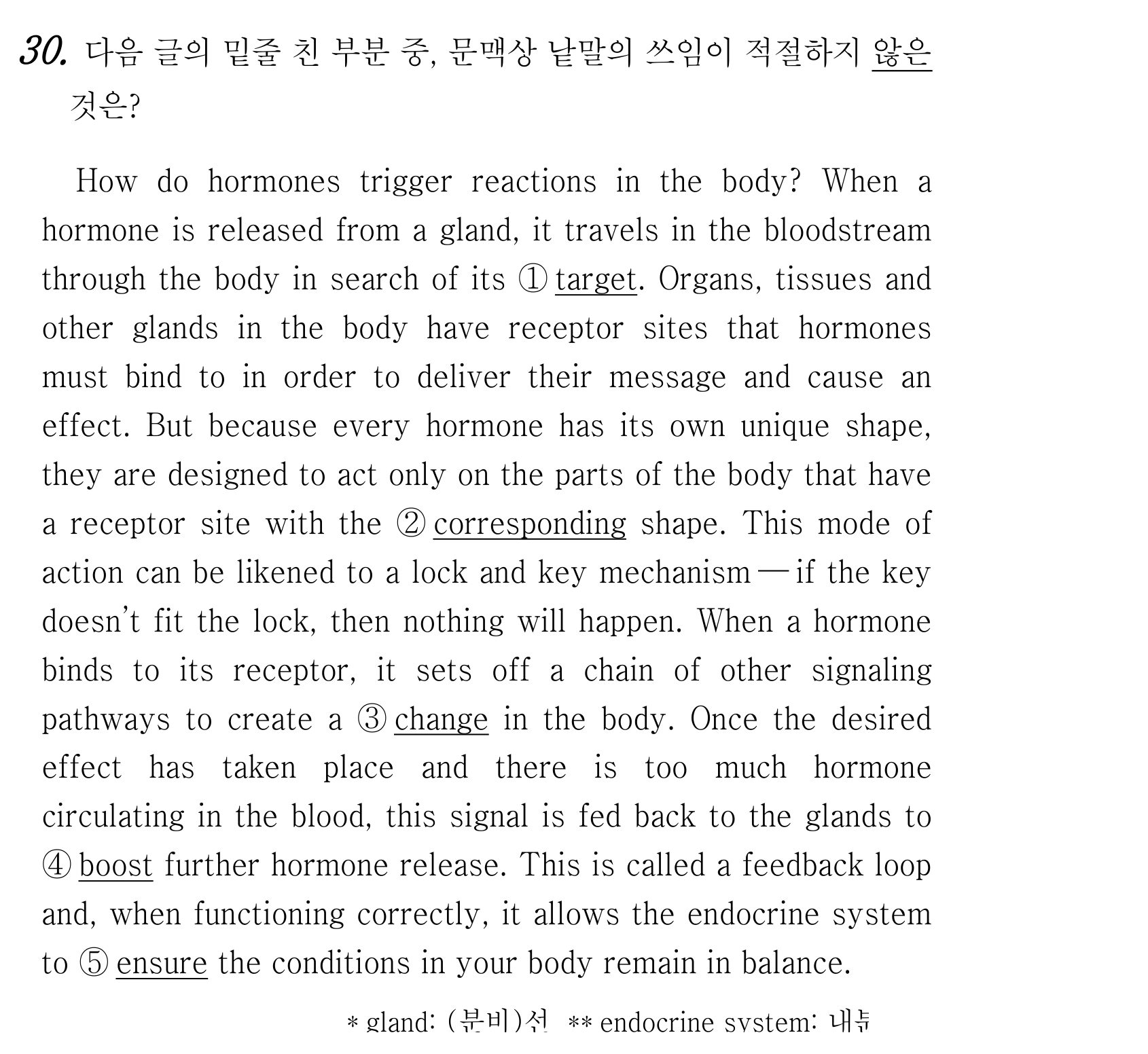
30번어휘How do hormones trigger reactions in the body?
How do hormones trigger reactions in the body? When a hormone is released from a gland, it travels in the bloodstream through the body in search of its target. Organs, tissues and other glands in the body have receptor sites that hormones must bind to in order to deliver their message and cause an effect. But because every hormone has its own unique shape, they are designed to act only on the parts of the body that have a receptor site with the corresponding shape. This mode of action can be likened to a lock and key mechanism — if the key doesn't fit the lock, then nothing will happen. When a hormone binds to its receptor, it sets off a chain of other signaling pathways to create a change in the body. Once the desired effect has taken place and there is too much hormone circulating in the blood, this signal is fed back to the glands to inhibit further hormone release. This is called a feedback loop and, when functioning correctly, it allows the endocrine system to ensure the conditions in your body remain in balance.
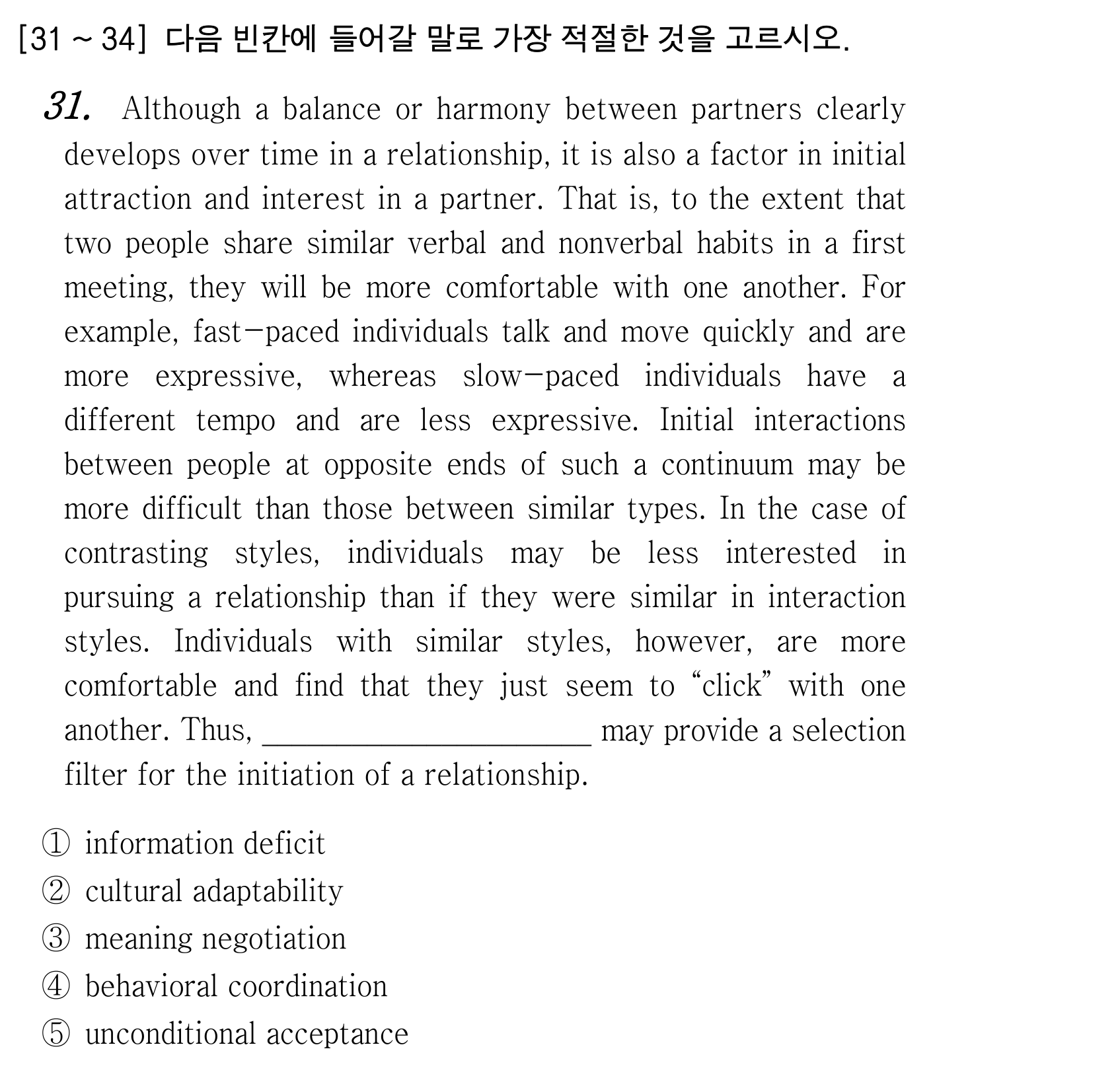
31번빈칸추론2Although a balance or harmony between partners clearly develops over time in a relationsh…
Although a balance or harmony between partners clearly develops over time in a relationship, it is also a factor in initial attraction and interest in a partner. That is, to the extent that two people share similar verbal and nonverbal habits in a first meeting, they will be more comfortable with one another. For example, fast-paced individuals talk and move quickly and are more expressive, whereas slow-paced individuals have a different tempo and are less expressive. Initial interactions between people at opposite ends of such a continuum may be more difficult than those between similar types. In the case of contrasting styles, individuals may be less interested in pursuing a relationship than if they were similar in interaction styles. Individuals with similar styles, however, are more comfortable and find that they just seem to "click" with one another. Thus, behavioral similarity may provide a selection filter for the initiation of a relationship.
32번빈칸추론3Animals arguably make art.
Animals arguably make art. The male bowerbirds of New Guinea and Australia dedicate huge fractions of their time and energy to creating elaborate structures from twigs, flowers, berries, beetle wings, and even colorful trash. These are the backdrops to their complex mating dances, which include acrobatic moves and even imitations of other species. What’s most amazing about the towers and “bowers” they construct is that they aren’t stereotyped like a beehive or hummingbird nest. Each one is different. Artistic skill, along with fine craftsbirdship, is rewarded by the females. Many researchers suggest these displays are used by the females to gauge the cognitive abilities of her potential mates, but Darwin thought that she was actually attracted to their beauty. In other words, the bowers aren’t simply signals of mate quality; they are appreciated by the females for their own sake, much as we appreciate a painting or a bouquet of spring flowers. A 2013 study looked at whether bowerbirds that did better on cognitive tests were more successful at attracting mates. They were not, suggesting whatever the females are looking for, it isn’t a straightforward indicator of cognitive ability.
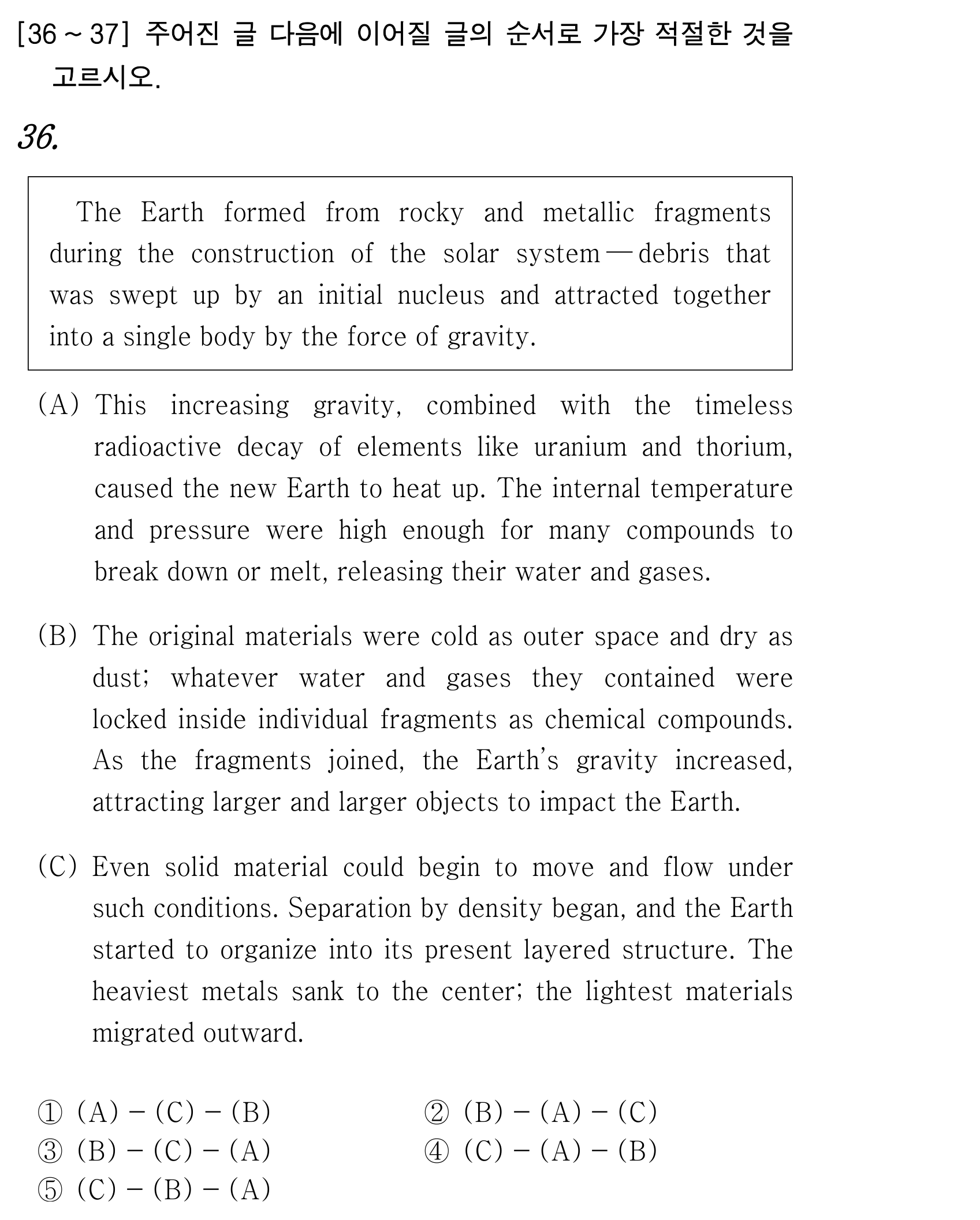
36번순서배열1The Earth formed from rocky and metallic fragments during the construction of the solar s…
The Earth formed from rocky and metallic fragments during the construction of the solar system—debris that was swept up by an initial nucleus and attracted together into a single body by the force of gravity. The original materials were cold as outer space and dry as dust; whatever water and gases they contained were locked inside individual fragments as chemical compounds. As the fragments joined, the Earth's gravity increased, attracting larger and larger objects to impact the Earth. This increasing gravity, combined with the timeless radioactive decay of elements like uranium and thorium, caused the new Earth to heat up. The internal temperature and pressure were high enough for many compounds to break down or melt, releasing their water and gases. Even solid material could begin to move and flow under such conditions. Separation by density began, and the Earth started to organize into its present layered structure. The heaviest metals sank to the center; the lightest materials migrated outward.
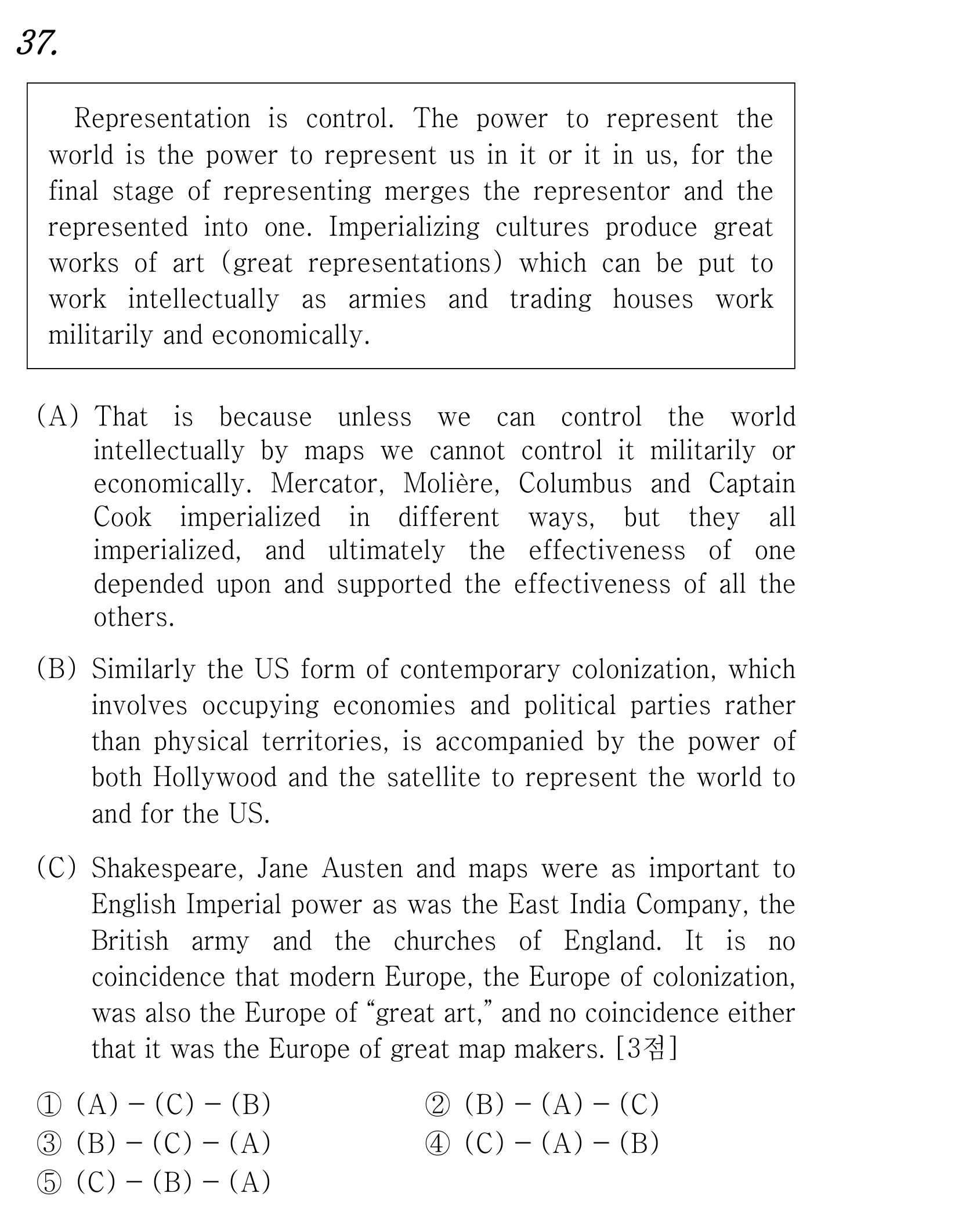
37번순서배열2Representation is control.
Representation is control. The power to represent the world is the power to represent us in it or it in us, for the final stage of representing merges the representor and the represented into one. Imperializing cultures produce great works of art (great representations) which can be put to work intellectually as armies and trading houses work militarily and economically. Shakespeare, Jane Austen and maps were as important to English Imperial power as was the East India Company, the British army and the churches of England. It is no coincidence that modern Europe, the Europe of colonization, was also the Europe of “great art,” and no coincidence either that it was the Europe of great map makers. That is because unless we can control the world intellectually by maps we cannot control it militarily or economically. Mercator, Molière, Columbus and Captain Cook imperialized in different ways, but they all imperialized, and ultimately the effectiveness of one depended upon and supported the effectiveness of all the others. Similarly the US form of contemporary colonization, which involves occupying economies and political parties rather than physical territories, is accompanied by the power of both Hollywood and the satellite to represent the world to and for the US.
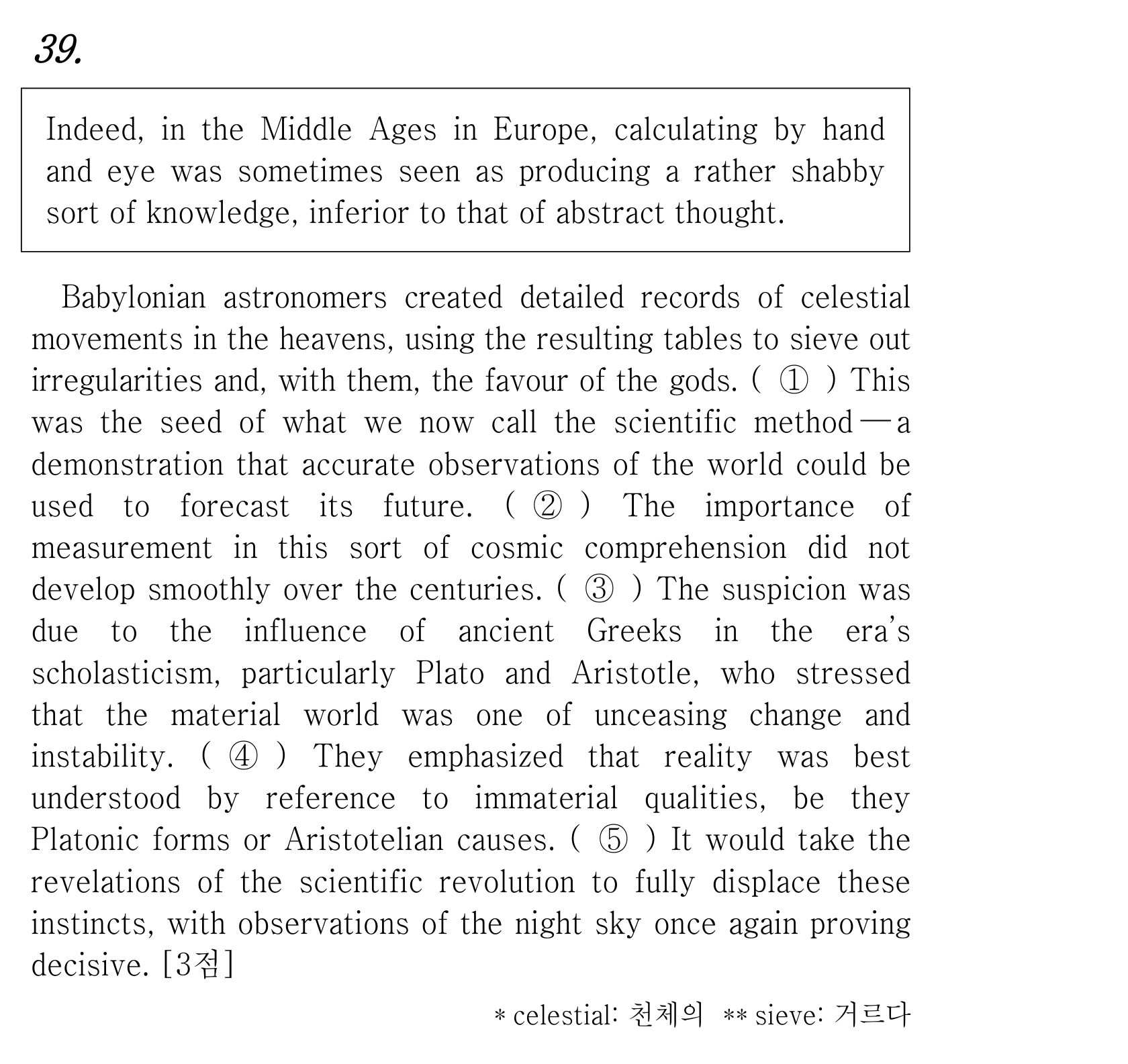
39번문장삽입2Babylonian astronomers created detailed records of celestial movements in the heavens, us…
Babylonian astronomers created detailed records of celestial movements in the heavens, using the resulting tables to sieve out irregularities and, with them, the favour of the gods. This was the seed of what we now call the scientific method—a demonstration that accurate observations of the world could be used to forecast its future. Indeed, in the Middle Ages in Europe, calculating by hand and eye was sometimes seen as producing a rather shabby sort of knowledge, inferior to that of abstract thought. The importance of measurement in this sort of cosmic comprehension did not develop smoothly over the centuries. The suspicion was due to the influence of ancient Greeks in the era’s scholasticism, particularly Plato and Aristotle, who stressed that the material world was one of unceasing change and instability. They emphasized that reality was best understood by reference to immaterial qualities, be they Platonic forms or Aristotelian causes. It would take the revelations of the scientific revolution to fully displace these instincts, with observations of the night sky once again proving decisive.
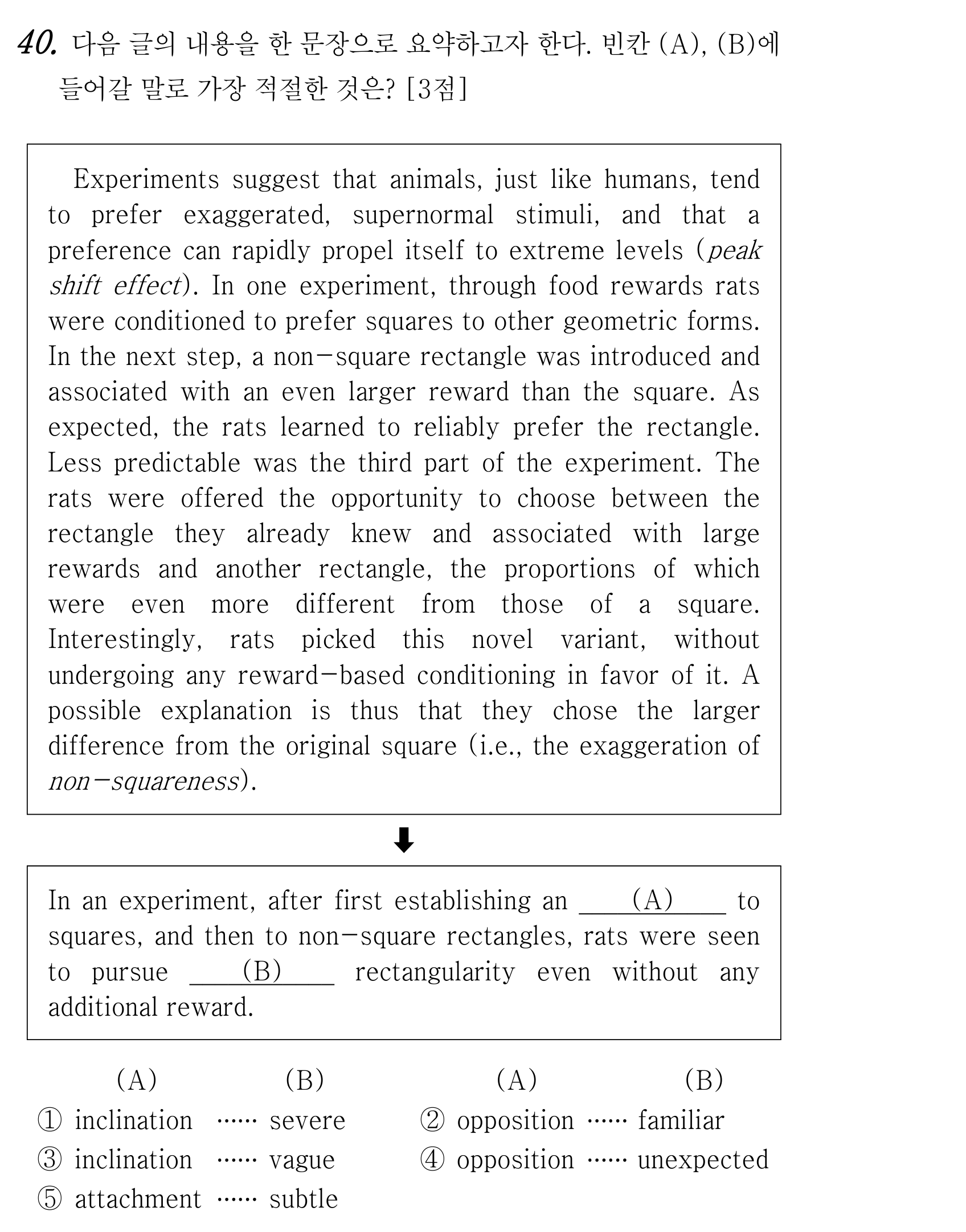
40번요약문완성Experiments suggest that animals, just like humans, tend to prefer exaggerated, supernorm…
Experiments suggest that animals, just like humans, tend to prefer exaggerated, supernormal stimuli, and that a preference can rapidly propel itself to extreme levels (peak shift effect). In one experiment, through food rewards rats were conditioned to prefer squares to other geometric forms. In the next step, a non-square rectangle was introduced and associated with an even larger reward than the square. As expected, the rats learned to reliably prefer the rectangle. Less predictable was the third part of the experiment. The rats were offered the opportunity to choose between the rectangle they already knew and associated with large rewards and another rectangle, the proportions of which were even more different from those of a square. Interestingly, rats picked this novel variant, without undergoing any reward-based conditioning in favor of it. A possible explanation is thus that they chose the larger difference from the original square (i.e., the exaggeration of non-squareness).
41번장문_제목Although we humans are equipped with reflexive responses for survival, at birth we are (a…
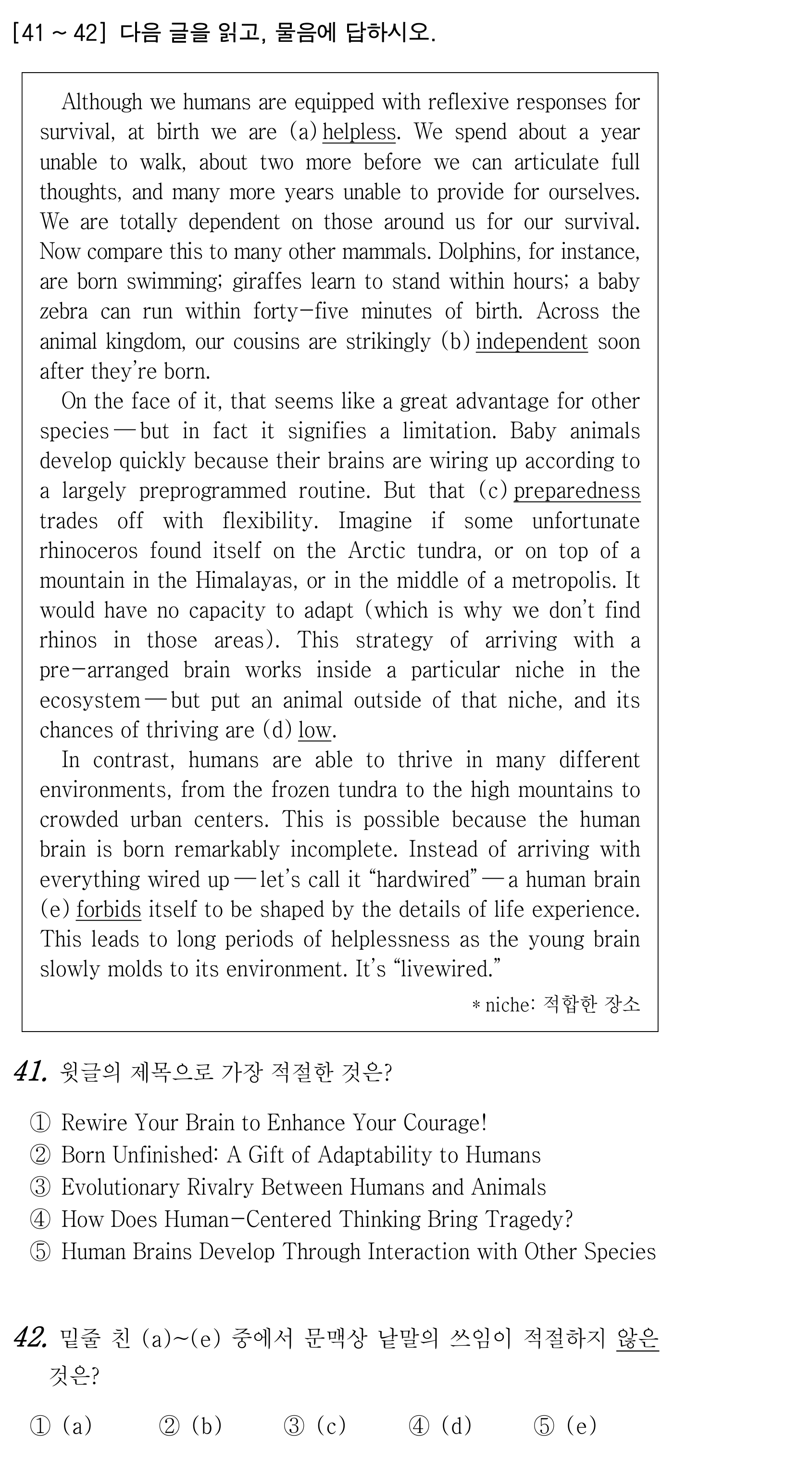
Although we humans are equipped with reflexive responses for survival, at birth we are (a) helpless. We spend about a year unable to walk, about two more before we can articulate full thoughts, and many more years unable to provide for ourselves. We are totally dependent on those around us for our survival. Now compare this to many other mammals. Dolphins, for instance, are born swimming; giraffes learn to stand within hours; a baby zebra can run within forty-five minutes of birth. Across the animal kingdom, our cousins are strikingly (b) independent soon after they’re born.
On the face of it, that seems like a great advantage for other species—but in fact it signifies a limitation. Baby animals develop quickly because their brains are wiring up according to a largely preprogrammed routine. But that (c) preparedness trades off with flexibility. Imagine if some unfortunate rhinoceros found itself on the Arctic tundra, or on top of a mountain in the Himalayas, or in the middle of a metropolis. It would have no capacity to adapt (which is why we don’t find rhinos in those areas). This strategy of arriving with a pre-arranged brain works inside a particular niche in the ecosystem—but put an animal outside of that niche, and its chances of thriving are (d) low.
In contrast, humans are able to thrive in many different environments, from the frozen tundra to the high mountains to crowded urban centers. This is possible because the human brain is born remarkably incomplete. Instead of arriving with everything wired up—let’s call it “hardwired”—a human brain (e) forbids itself to be shaped by the details of life experience. This leads to long periods of helplessness as the young brain slowly molds to its environment. It’s “livewired.”
43번장문_순서(A) There were two neighbors living next to each other.
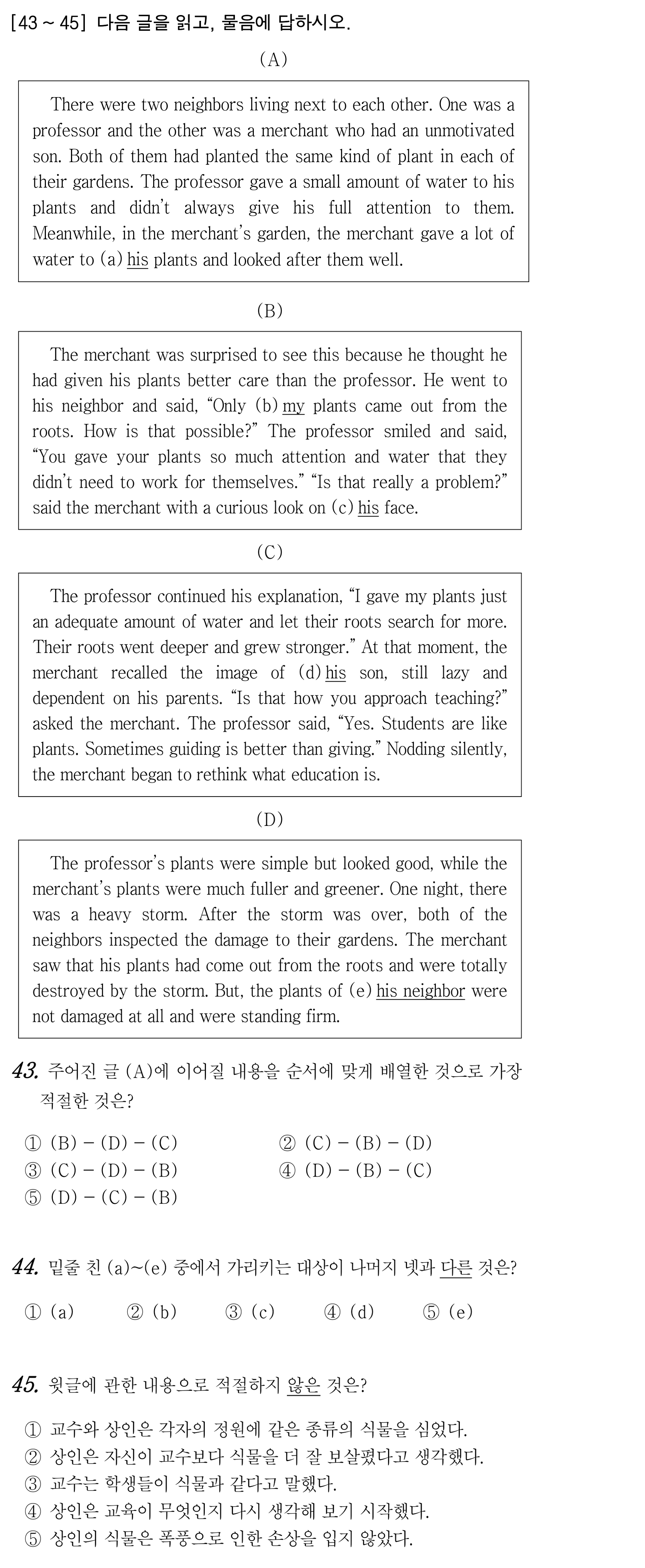
(A) There were two neighbors living next to each other. One was a professor and the other was a merchant who had an unmotivated son. Both of them had planted the same kind of plant in each of their gardens. The professor gave a small amount of water to his plants and didn’t always give his full attention to them. Meanwhile, in the merchant’s garden, the merchant gave a lot of water to (a) his plants and looked after them well.
(B) The merchant was surprised to see this because he thought he had given his plants better care than the professor. He went to his neighbor and said, “Only (b) my plants came out from the roots. How is that possible?” The professor smiled and said, “You gave your plants so much attention and water that they didn’t need to work for themselves.” “Is that really a problem?” said the merchant with a curious look on (c) his face.
(C) The professor continued his explanation, “I gave my plants just an adequate amount of water and let their roots search for more. Their roots went deeper and grew stronger.” At that moment, the merchant recalled the image of (d) his son, still lazy and dependent on his parents. “Is that how you approach teaching?” asked the merchant. The professor said, “Yes. Students are like plants. Sometimes guiding is better than giving.” Nodding silently, the merchant began to rethink what education is.
(D) The professor’s plants were simple but looked good, while the merchant’s plants were much fuller and greener. One night, there was a heavy storm. After the storm was over, both of the neighbors inspected the damage to their gardens. The merchant saw that his plants had come out from the roots and were totally destroyed by the storm. But, the plants of (e) his neighbor were not damaged at all and were standing firm.
2023년 5월 고3 전국연합 영어 모의고사 변형문제 맛보기
이 시험 지문으로 만든 변형문제가 아직 없습니다. 지문을 고르면 어법·빈칸·주제·어휘 등 유형별 변형문제를 바로 만들 수 있습니다.
이 시험으로 첫 변형문제 만들기 →남은 시간
48:00



아직 28문제를 풀지 않았어요 (0/28)