2023년 11월 고2 전국연합 영어 모의고사
28문제 · 제한시간 48분
이 시험 한눈에 — 2023년 11월 고2 전국연합 영어 모의고사
18~45번 28문항을 유형별로 보면 목적 1 · 심경/분위기 1 · 주장 1 · 함축의미추론 1 · 요지/주장 1 · 주제 1 · 제목 1 · 도표 1 · 내용일치 1 · 실용문 1 · 어법 2 · 어휘 1 · 빈칸추론2 1 · 빈칸추론3 1 · 빈칸추론4 1 · 빈칸추론5 1 · 무관한문장 1 · 순서배열1 1 · 순서배열2 1 · 문장삽입1 1 · 문장삽입2 1 · 요약문완성 1 · 장문 5. 아래 지문으로 변형문제·단어장·정답표를 바로 만들 수 있습니다.
20번주장Agriculture includes a range of activities such as planting, harvesting, fertilizing, pes…
Agriculture includes a range of activities such as planting, harvesting, fertilizing, pest management, raising animals, and distributing food and agricultural products. It is one of the oldest and most essential human activities, dating back thousands of years, and has played a critical role in the development of human civilizations, allowing people to create stable food supplies and settle in one place. Today, agriculture remains a vital industry that feeds the world's population, supports rural communities, and provides raw materials for other industries. However, agriculture faces numerous challenges such as climate change, water scarcity, soil degradation, and biodiversity loss. As the world's population continues to grow, it is essential to find sustainable solutions to address the challenges facing agriculture and ensure the continued production of food and other agricultural products.
21번함축의미추론The arts and aesthetics offer emotional connection to the full range of human experience.
The arts and aesthetics offer emotional connection to the full range of human experience. “The arts can be more than just sugar on the tongue,” Anjan Chatterjee, a professor at the University of Pennsylvania, says. “In art, when there’s something challenging, which can also be uncomfortable, this discomfort, if we’re willing to engage with it, offers the possibility of some change, some transformation. That can also be a powerful aesthetic experience.” The arts, in this way, become vehicles to contend with ideas and concepts that are difficult and uncomfortable otherwise. When Picasso painted his masterpiece *Guernica* in 1937, he captured the heartbreaking and cruel nature of war, and offered the world a way to consider the universal suffering caused by the Spanish Civil War. When Lorraine Hansberry wrote her play *A Raisin in the Sun*, she gave us a powerful story of people struggling with racism, discrimination, and the pursuit of the American dream while also offering a touching portrait of family life.
22번요지/주장Many historians have pointed to the significance of accurate time measurement to Western…
Many historians have pointed to the significance of accurate time measurement to Western economic progress. The French historian Jacques Le Goff called the birth of the public mechanical clock a turning point in Western society. Until the late Middle Ages, people had sun or water clocks, which did not play any meaningful role in business activities. Market openings and activities started with the sunrise and typically ended at noon when the sun was at its peak. But when the first public mechanical clocks were introduced and spread across European cities, market times were set by the stroke of the hour. Public clocks thus greatly contributed to public life and work by providing a new concept of time that was easy for everyone to understand. This, in turn, helped facilitate trade and commerce. Interactions and transactions between consumers, retailers, and wholesalers became less irregular. Important town meetings began to follow the pace of the clock, allowing people to better plan their time and allocate resources in a more efficient manner.
23번주제Sylvan Goldman invented the shopping cart and introduced it in his stores in 1937.
Sylvan Goldman invented the shopping cart and introduced it in his stores in 1937. It was an excellent device that would make it easy for shoppers to buy as much as they wanted without getting tired or seeking others' help. But Goldman discovered that in spite of his repeated advertisements and explanations, he could not persuade his shoppers to use the wheeled carts. Men were reluctant because they thought they would appear weak if they pushed such carts instead of carrying their shopping. Women wouldn't touch them because the carts reminded them of baby carriages. It was only a few elderly shoppers who used them. That made the carts even less attractive to the majority of the shoppers. Then Goldman hit upon an idea. He hired several models, men and women, of different ages and asked them to wheel the carts in the store and shop. A young woman employee standing near the entrance told the regular shoppers, 'Look, everyone is using the carts. Why don't you?' That was the turning point. A few shills disguised as regular shoppers easily accomplished what logic, explanations, and advertisements failed to do. Within a few weeks shoppers readily accepted those carts.
24번제목In response to human-like care robots, critics might charge that human-robot interactions…
In response to human-like care robots, critics might charge that human-robot interactions create moral hazards for dementia patients. Even if deception is sometimes allowed when it serves worthy goals, should it be allowed for vulnerable users? Just as children on the autism spectrum with robot companions might be easily fooled into thinking of robots as friends, older adults with cognitive deficits might be. According to Alexis Elder, a professor at UMD, robots are *false* friends, inferior to true friendship. Reasoning along similar lines, John Sullins, a professor at Sonoma State University, holds that robots should "remain iconic or cartoonish so that they are easily distinguished as synthetic even by unsophisticated users." At least then no one is fooled. Making robots clearly fake also avoids the so-called "uncanny valley," where robots are perceived as scary because they so closely resemble us, but not quite. Other critics of robot deception argue that when care recipients are deceived into thinking that robots care, this crosses a line and violates human *dignity*.
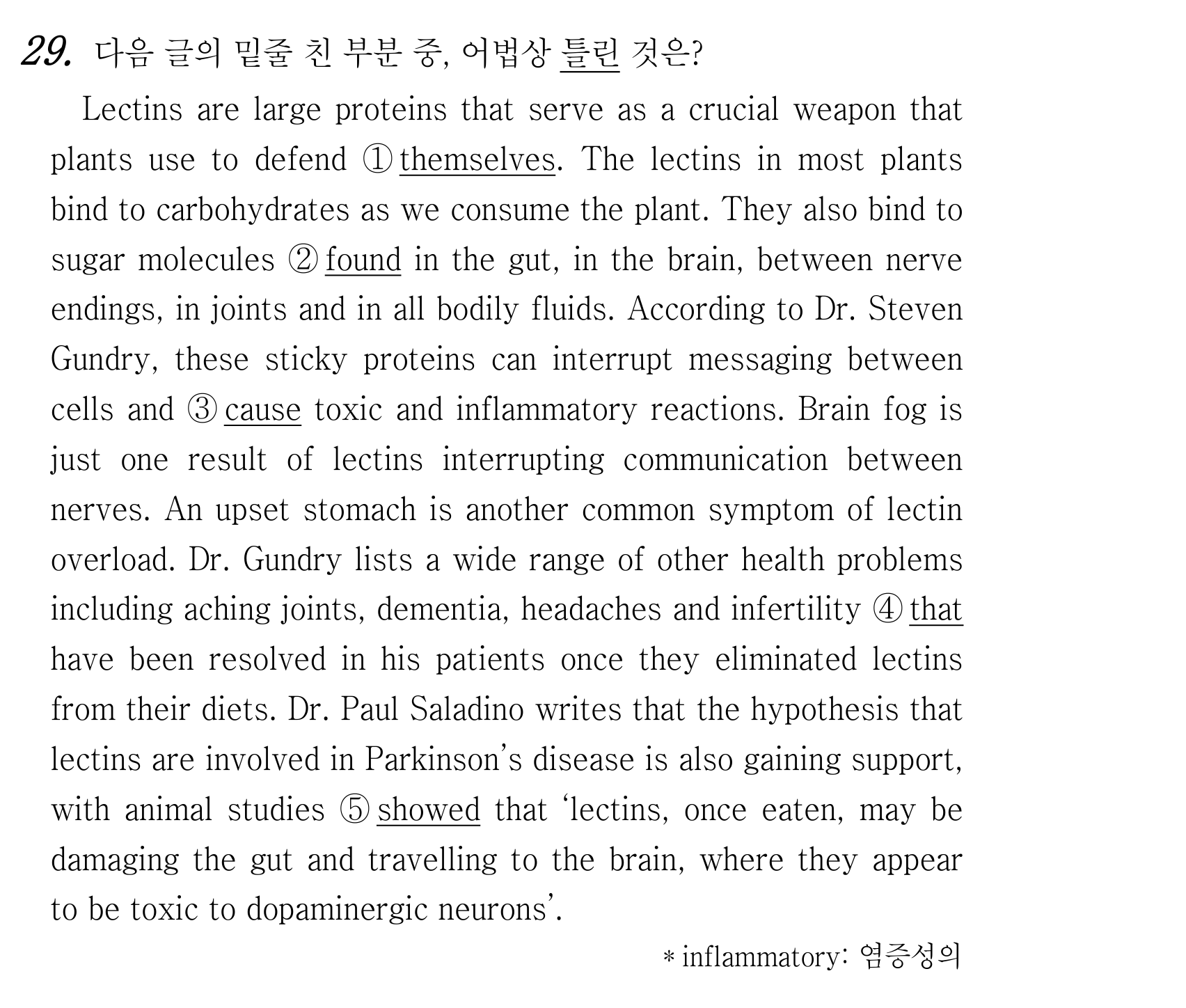
29번어법Lectins are large proteins that serve as a crucial weapon that plants use to defend thems…
Lectins are large proteins that serve as a crucial weapon that plants use to defend themselves. The lectins in most plants bind to carbohydrates as we consume the plant. They also bind to sugar molecules found in the gut, in the brain, between nerve endings, in joints and in all bodily fluids. According to Dr. Steven Gundry, these sticky proteins can interrupt messaging between cells and cause toxic and inflammatory reactions. Brain fog is just one result of lectins interrupting communication between nerves. An upset stomach is another common symptom of lectin overload. Dr. Gundry lists a wide range of other health problems including aching joints, dementia, headaches and infertility that have been resolved in his patients once they eliminated lectins from their diets. Dr. Paul Saladino writes that the hypothesis that lectins are involved in Parkinson’s disease is also gaining support, with animal studies showing that ‘lectins, once eaten, may be damaging the gut and travelling to the brain, where they appear to be toxic to dopaminergic neurons’.
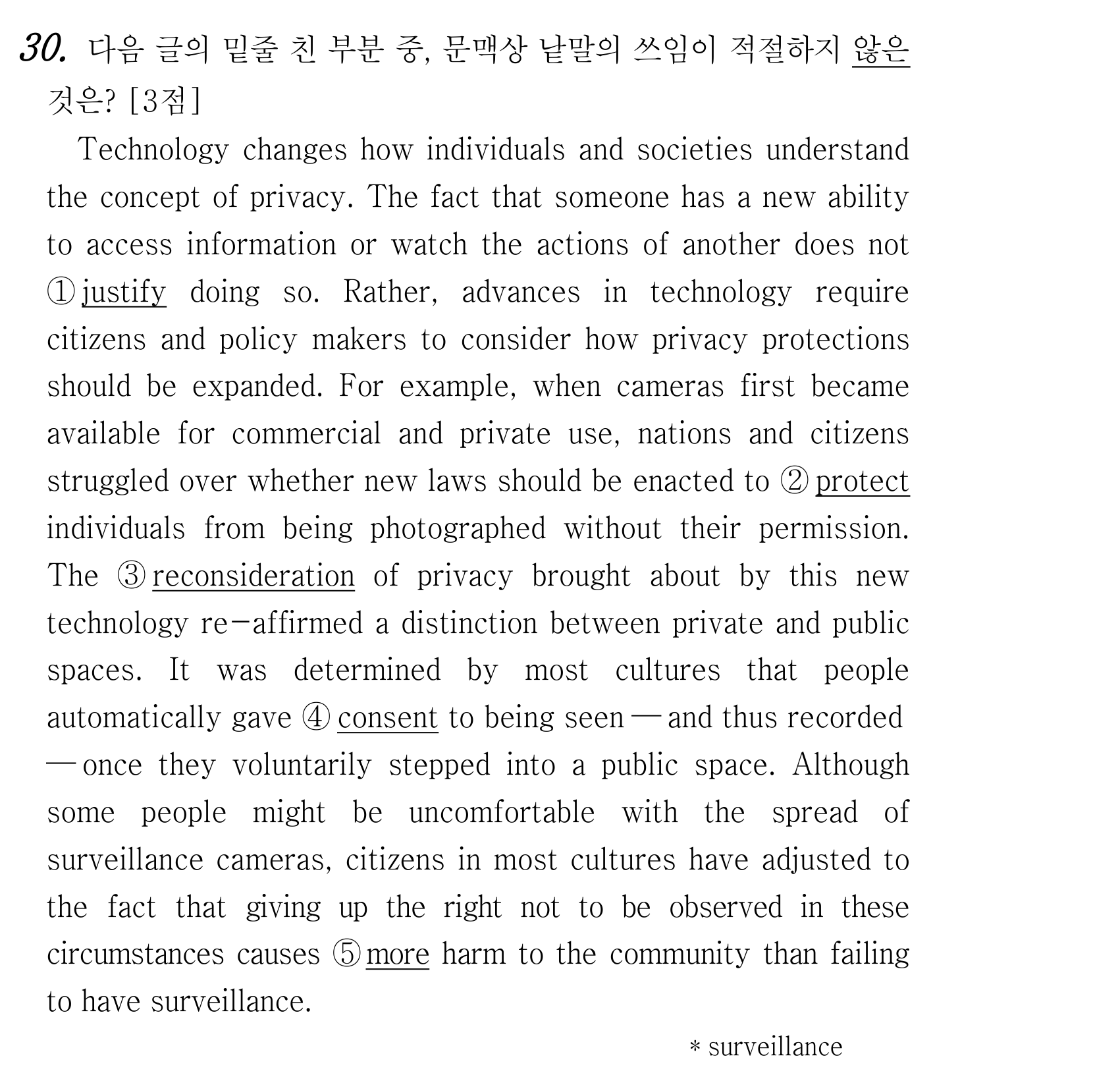
30번어휘Technology changes how individuals and societies understand the concept of privacy.
Technology changes how individuals and societies understand the concept of privacy. The fact that someone has a new ability to access information or watch the actions of another does not justify doing so. Rather, advances in technology require citizens and policy makers to consider how privacy protections should be expanded. For example, when cameras first became available for commercial and private use, nations and citizens struggled over whether new laws should be enacted to protect individuals from being photographed without their permission. The reconsideration of privacy brought about by this new technology re-affirmed a distinction between private and public spaces. It was determined by most cultures that people automatically gave consent to being seen — and thus recorded — once they voluntarily stepped into a public space. Although some people might be uncomfortable with the spread of surveillance cameras, citizens in most cultures have adjusted to the fact that giving up the right not to be observed in these circumstances causes less harm to the community than failing to have surveillance.
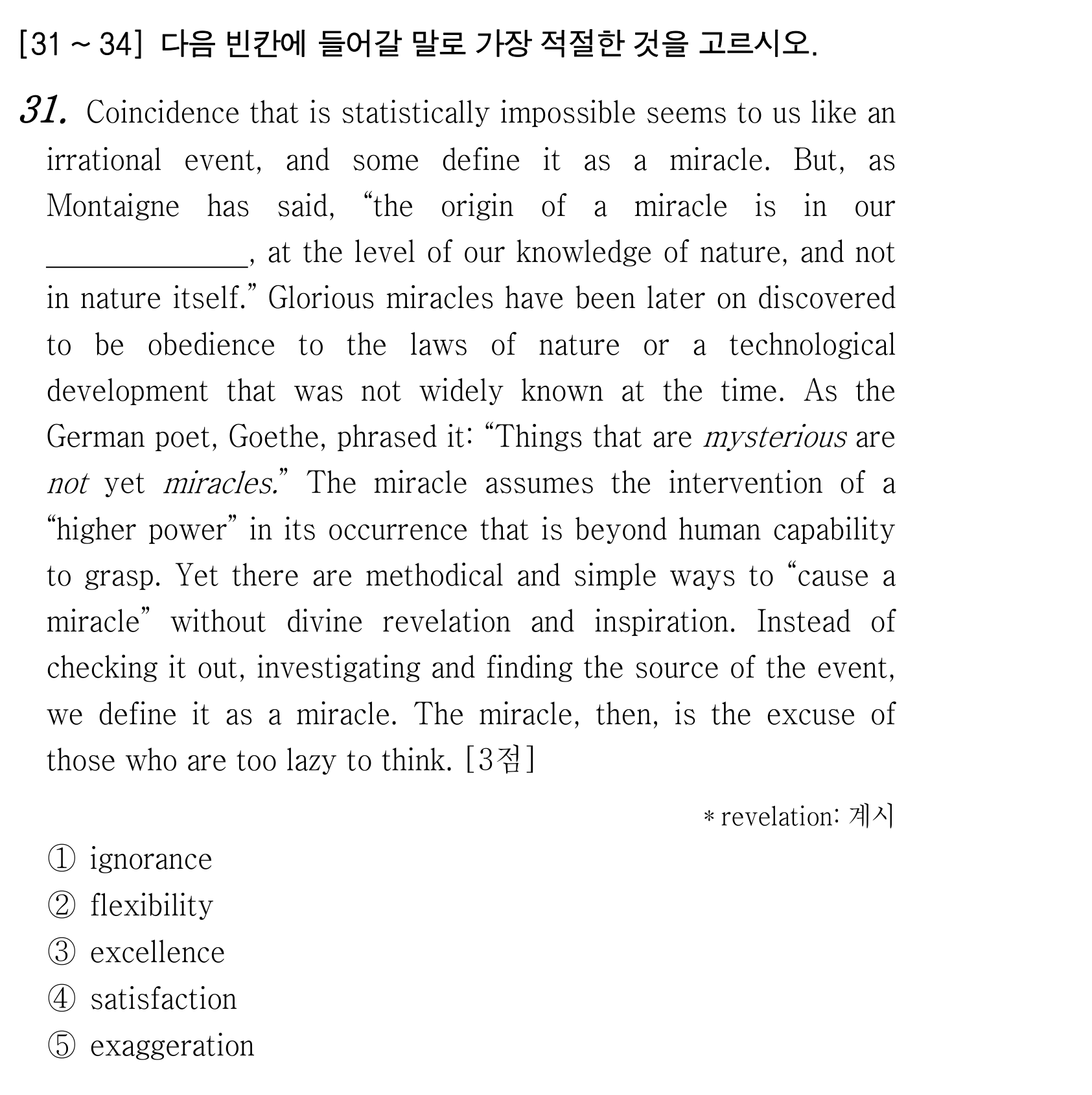
31번빈칸추론2Coincidence that is statistically impossible seems to us like an irrational event, and so…
Coincidence that is statistically impossible seems to us like an irrational event, and some define it as a miracle. But, as Montaigne has said, “the origin of a miracle is in our ignorance, at the level of our knowledge of nature, and not in nature itself.” Glorious miracles have been later on discovered to be obedience to the laws of nature or a technological development that was not widely known at the time. As the German poet, Goethe, phrased it: “Things that are mysterious are not yet miracles.” The miracle assumes the intervention of a “higher power” in its occurrence that is beyond human capability to grasp. Yet there are methodical and simple ways to “cause a miracle” without divine revelation and inspiration. Instead of checking it out, investigating and finding the source of the event, we define it as a miracle. The miracle, then, is the excuse of those who are too lazy to think.
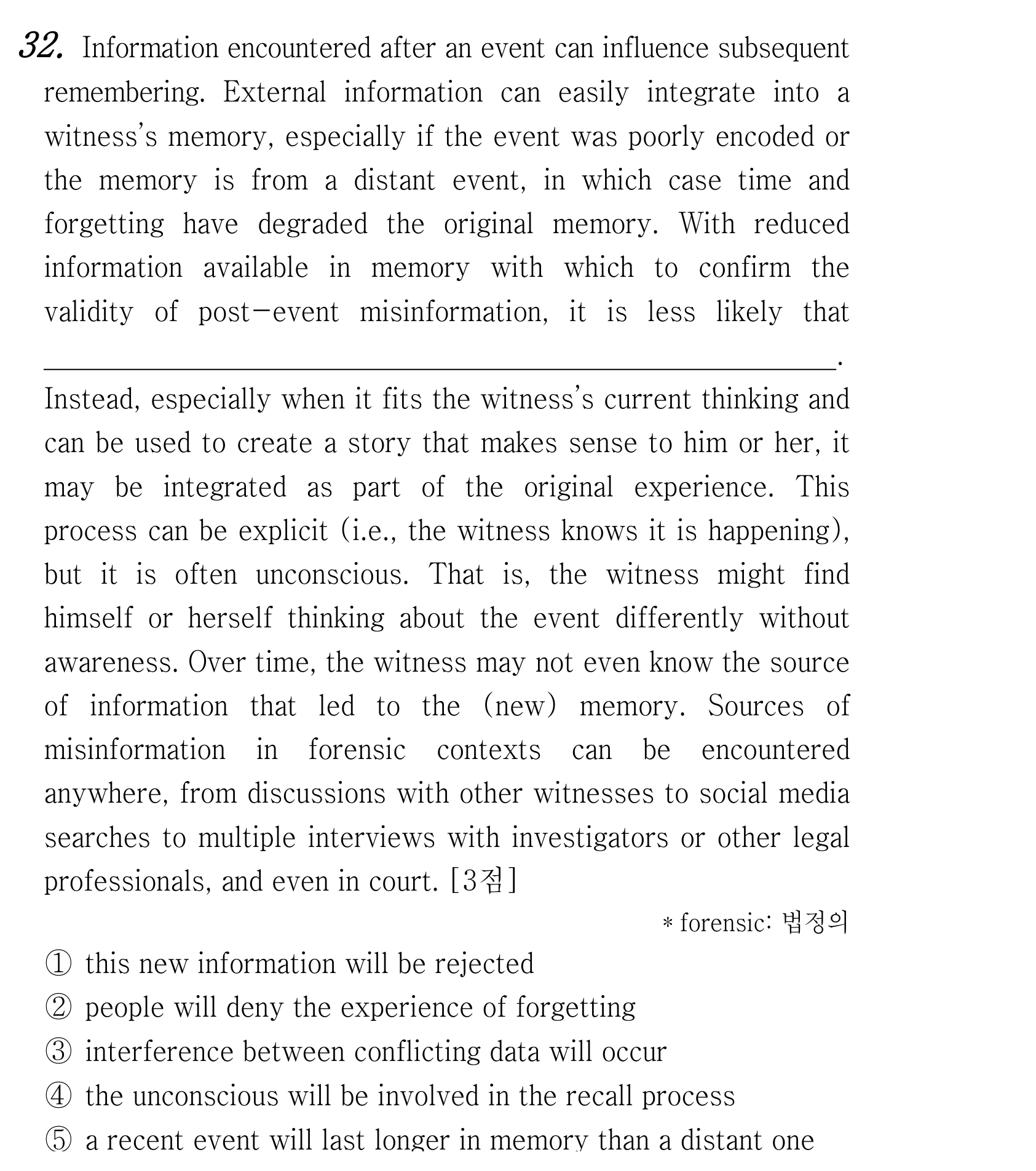
32번빈칸추론3Information encountered after an event can influence subsequent remembering.
Information encountered after an event can influence subsequent remembering. External information can easily integrate into a witness’s memory, especially if the event was poorly encoded or the memory is from a distant event, in which case time and forgetting have degraded the original memory. With reduced information available in memory with which to confirm the validity of post-event misinformation, it is less likely that this new information will be rejected. Instead, especially when it fits the witness’s current thinking and can be used to create a story that makes sense to him or her, it may be integrated as part of the original experience. This process can be explicit (i.e., the witness knows it is happening), but it is often unconscious. That is, the witness might find himself or herself thinking about the event differently without awareness. Over time, the witness may not even know the source of information that led to the (new) memory. Sources of misinformation in forensic contexts can be encountered anywhere, from discussions with other witnesses to social media searches to multiple interviews with investigators or other legal professionals, and even in court.
33번빈칸추론4Correlations are powerful because the insights they offer are relatively clear.
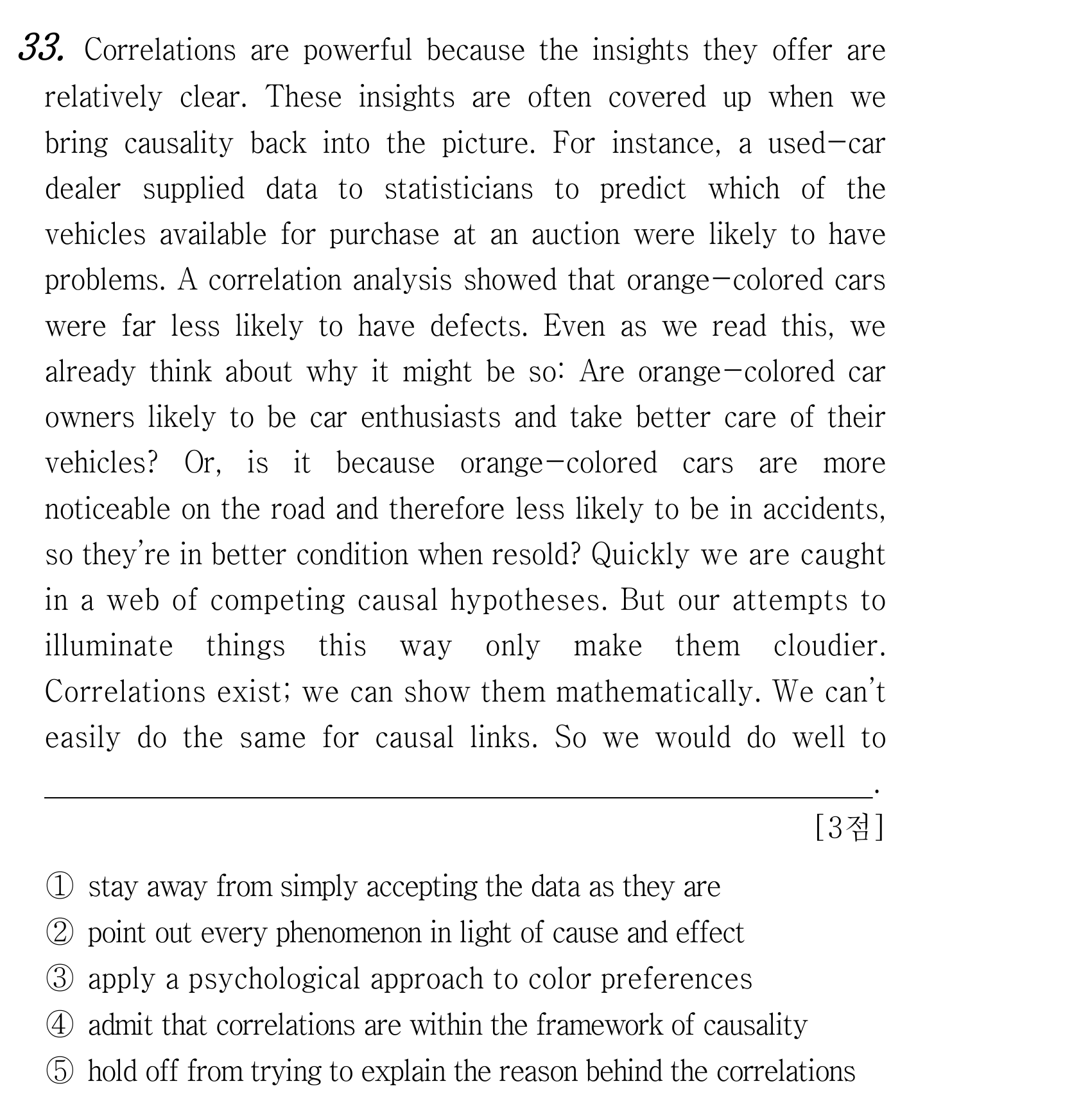
Correlations are powerful because the insights they offer are relatively clear. These insights are often covered up when we bring causality back into the picture. For instance, a used-car dealer supplied data to statisticians to predict which of the vehicles available for purchase at an auction were likely to have problems. A correlation analysis showed that orange-colored cars were far less likely to have defects. Even as we read this, we already think about why it might be so: Are orange-colored car owners likely to be car enthusiasts and take better care of their vehicles? Or, is it because orange-colored cars are more noticeable on the road and therefore less likely to be in accidents, so they're in better condition when resold? Quickly we are caught in a web of competing causal hypotheses. But our attempts to illuminate things this way only make them cloudier. Correlations exist; we can show them mathematically. We can't easily do the same for causal links. So we would do well to hold off from trying to explain the reason behind the correlations.
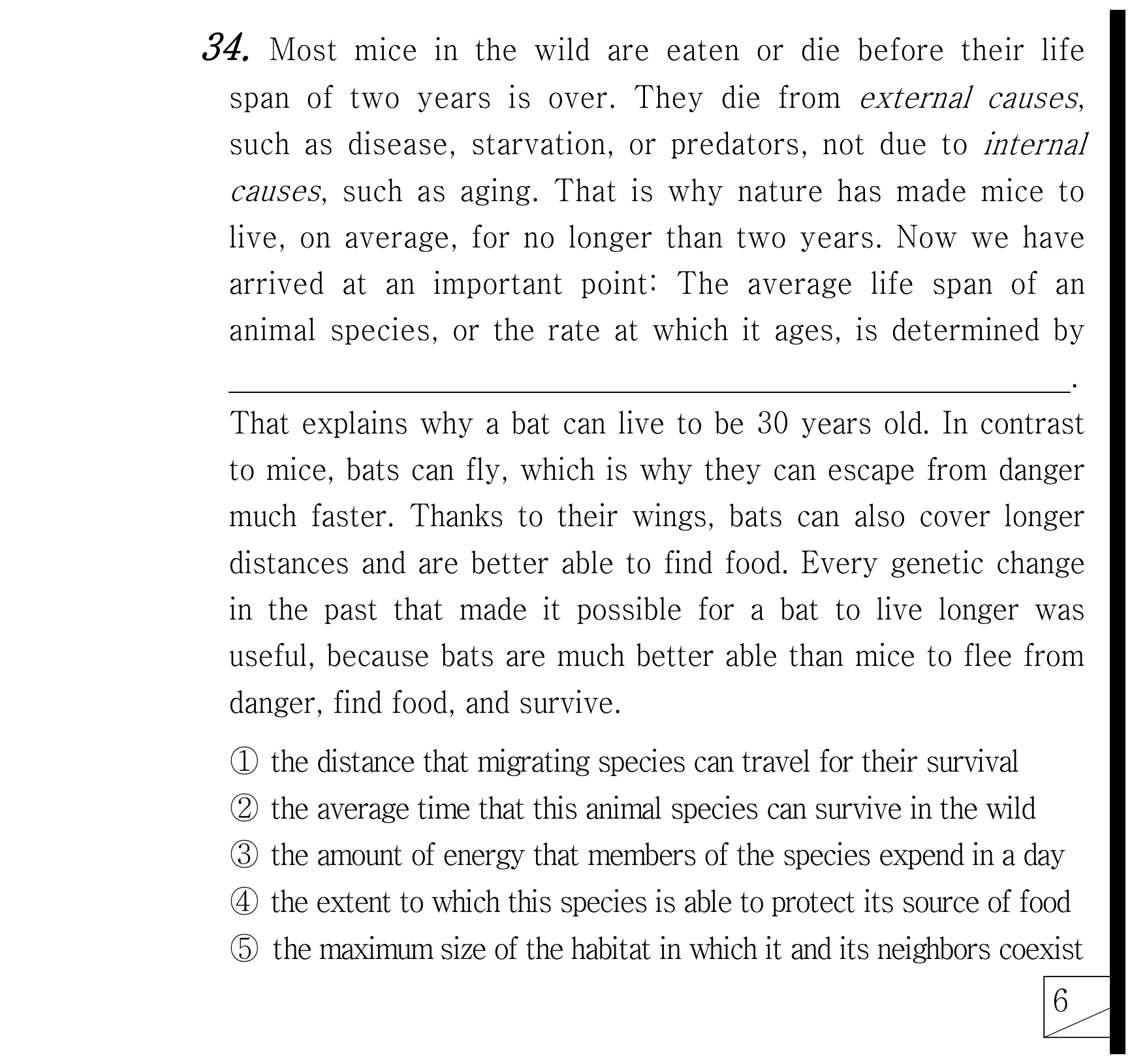
34. Most mice in the wild are eaten or die before their life span of two years is over. They die from *external causes*, such as disease, starvation, or predators, not due to *internal causes*, such as aging. That is why nature has made mice to live, on average, for no longer than two years. Now we have arrived at an important point: The average life span of an animal species, or the rate at which it ages, is determined by the extent to which this species is able to protect its source of food. That explains why a bat can live to be 30 years old. In contrast to mice, bats can fly, which is why they can escape from danger much faster. Thanks to their wings, bats can also cover longer distances and are better able to find food. Every genetic change in the past that made it possible for a bat to live longer was useful, because bats are much better able than mice to flee from danger, find food, and survive.
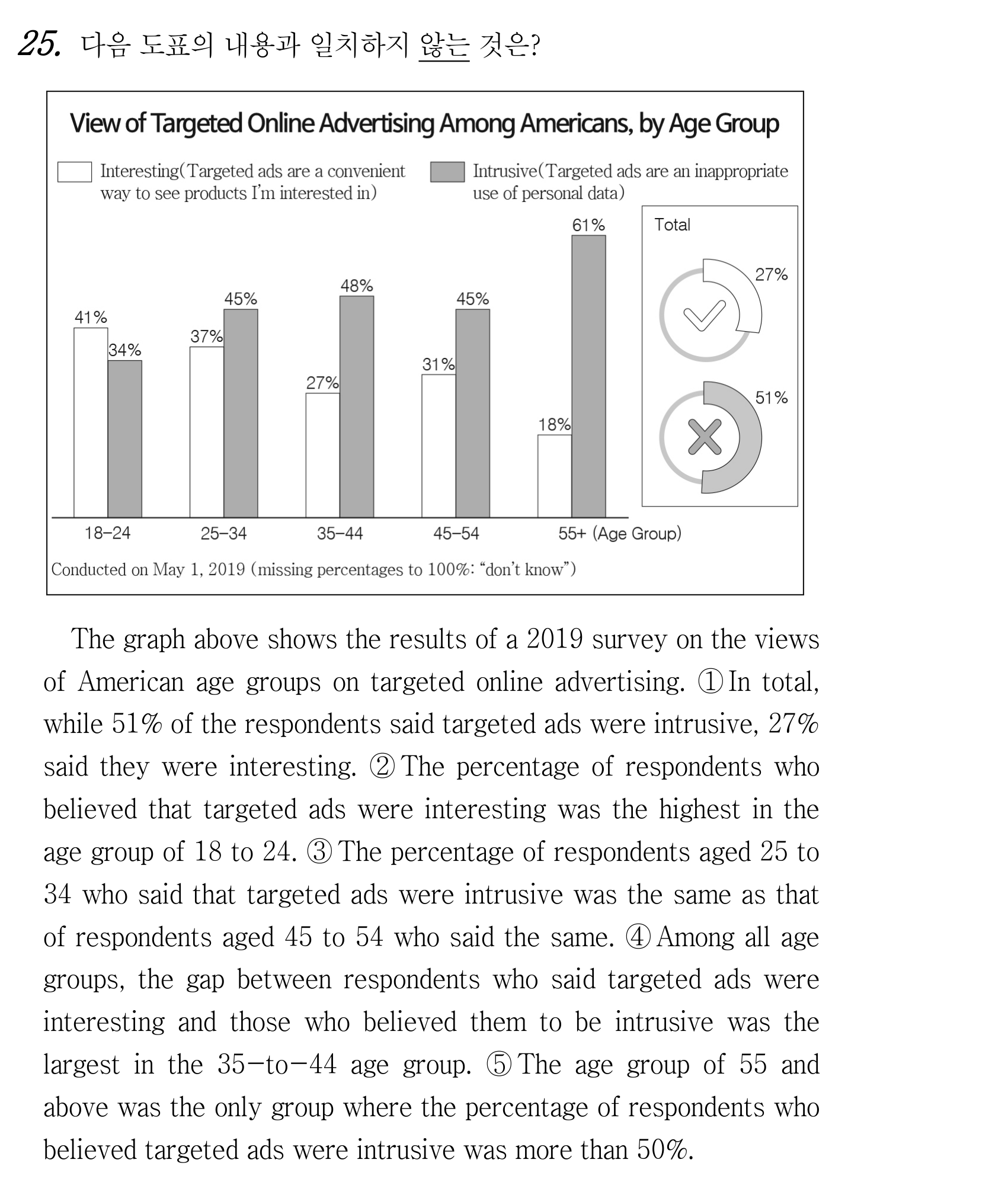
34번빈칸추론534 who said that targeted ads were intrusive was the same as that of respondents aged 45…
34 who said that targeted ads were intrusive was the same as that of respondents aged 45 to 54 who said the same. Among all age groups, the gap between respondents who said targeted ads were interesting and those who believed them to be intrusive was the largest in the 35-to-44 age group. The age group of 55 and above was the only group where the percentage of respondents who believed targeted ads were intrusive was more than 50%.
35번무관한문장Moral excellence, according to Aristotle, is the result of habit and repetition, though m…
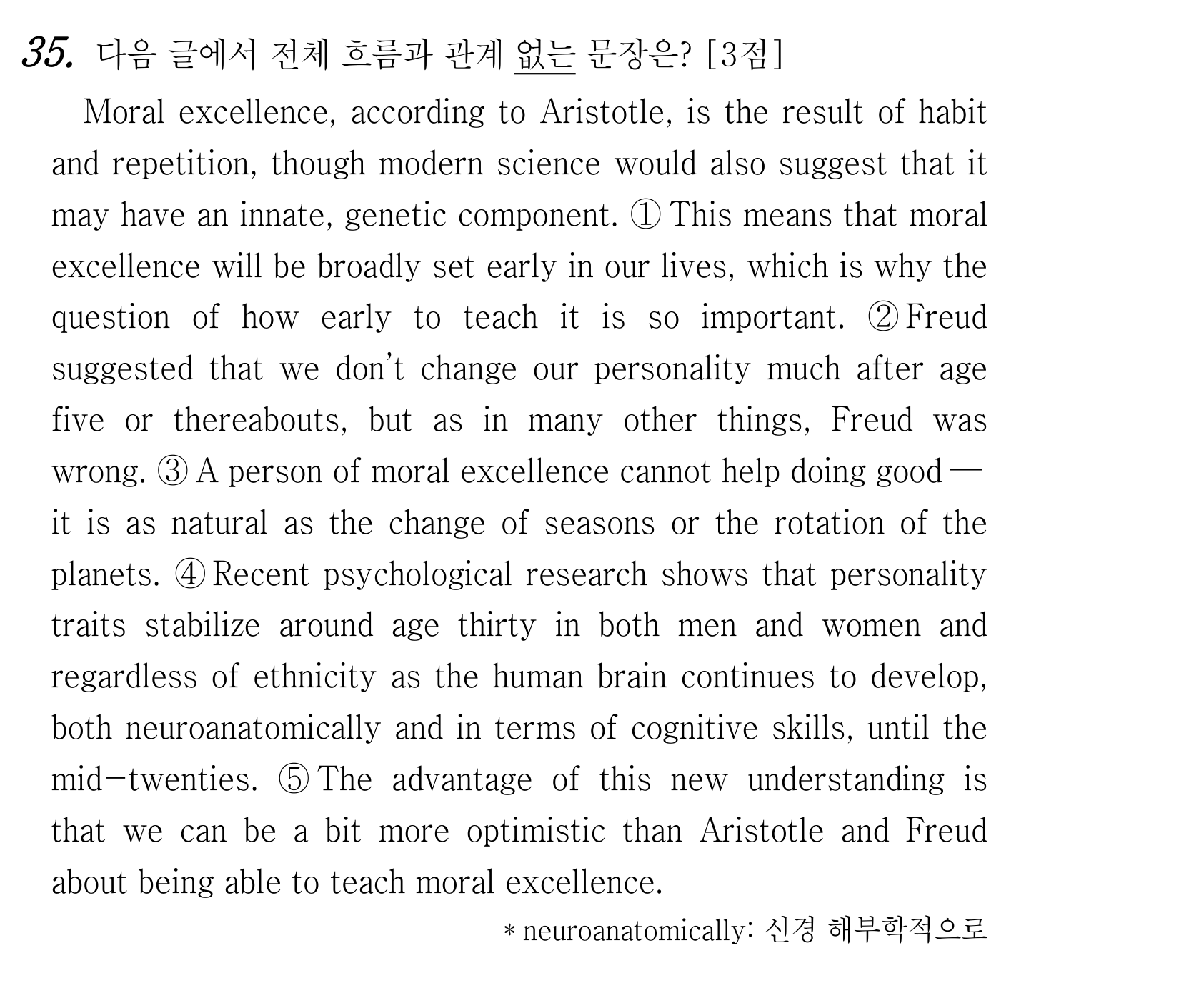
Moral excellence, according to Aristotle, is the result of habit and repetition, though modern science would also suggest that it may have an innate, genetic component. This means that moral excellence will be broadly set early in our lives, which is why the question of how early to teach it is so important. Freud suggested that we don't change our personality much after age five or thereabouts, but as in many other things, Freud was wrong. Recent psychological research shows that personality traits stabilize around age thirty in both men and women and regardless of ethnicity as the human brain continues to develop, both neuroanatomically and in terms of cognitive skills, until the mid-twenties. The advantage of this new understanding is that we can be a bit more optimistic than Aristotle and Freud about being able to teach moral excellence.
36번순서배열1The size of a species is not accidental.
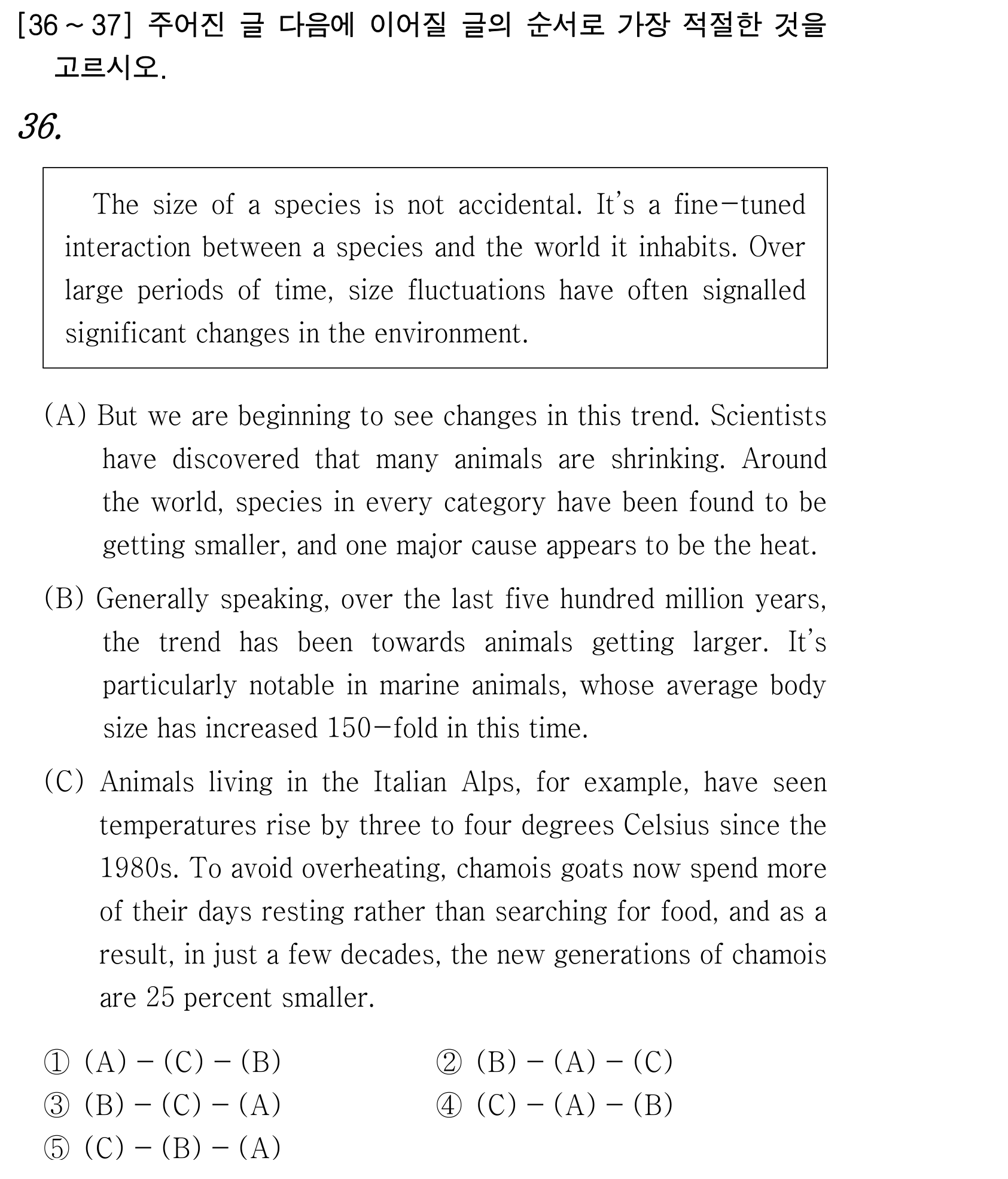
The size of a species is not accidental. It’s a fine-tuned interaction between a species and the world it inhabits. Over large periods of time, size fluctuations have often signalled significant changes in the environment. Generally speaking, over the last five hundred million years, the trend has been towards animals getting larger. It’s particularly notable in marine animals, whose average body size has increased 150-fold in this time. But we are beginning to see changes in this trend. Scientists have discovered that many animals are shrinking. Around the world, species in every category have been found to be getting smaller, and one major cause appears to be the heat. Animals living in the Italian Alps, for example, have seen temperatures rise by three to four degrees Celsius since the 1980s. To avoid overheating, chamois goats now spend more of their days resting rather than searching for food, and as a result, in just a few decades, the new generations of chamois are 25 percent smaller.
37번순서배열2For a long time, random sampling was a good shortcut.
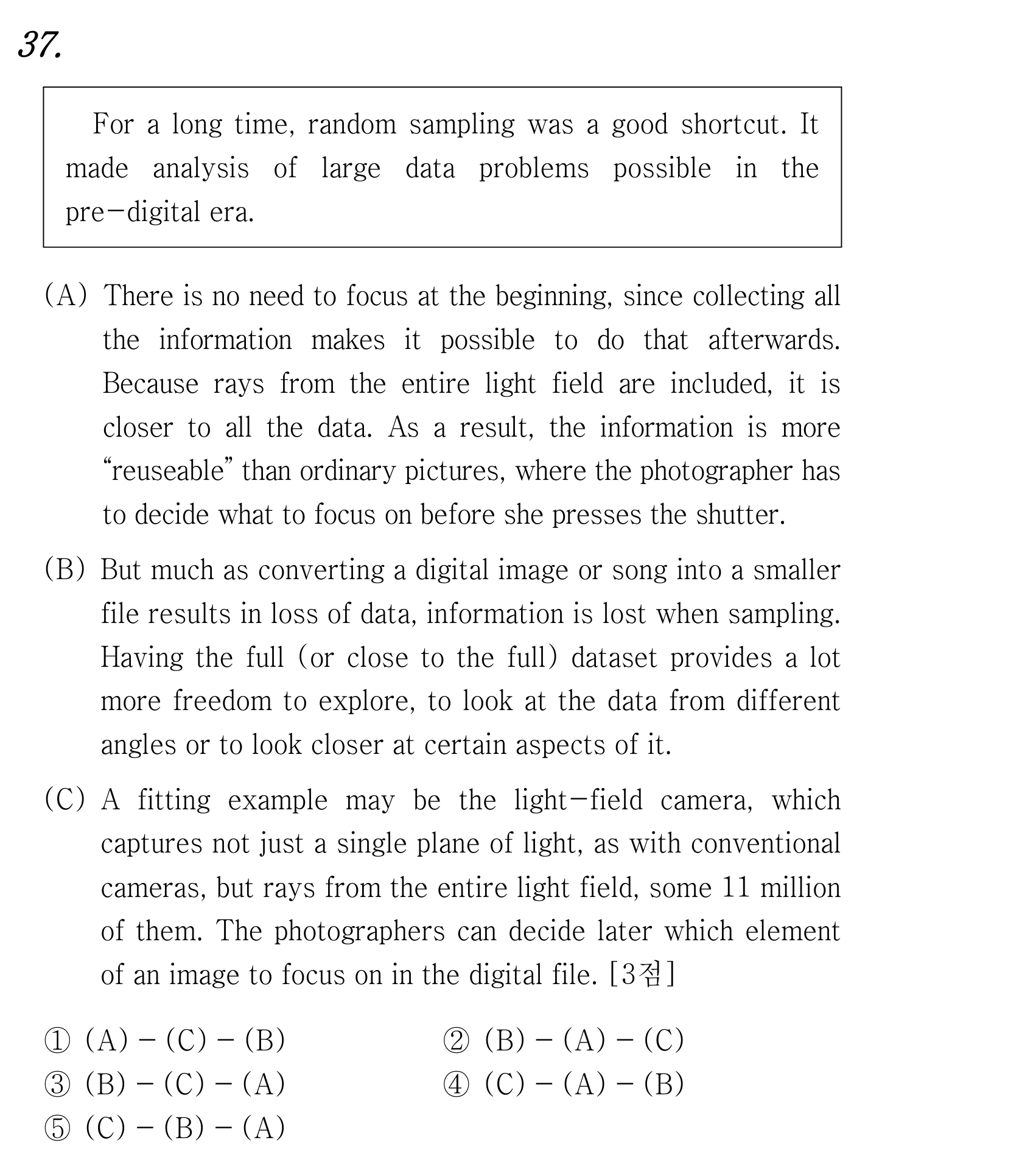
For a long time, random sampling was a good shortcut. It made analysis of large data problems possible in the pre-digital era. But much as converting a digital image or song into a smaller file results in loss of data, information is lost when sampling. Having the full (or close to the full) dataset provides a lot more freedom to explore, to look at the data from different angles or to look closer at certain aspects of it. A fitting example may be the light-field camera, which captures not just a single plane of light, as with conventional cameras, but rays from the entire light field, some 11 million of them. The photographers can decide later which element of an image to focus on in the digital file. There is no need to focus at the beginning, since collecting all the information makes it possible to do that afterwards. Because rays from the entire light field are included, it is closer to all the data. As a result, the information is more “reuseable” than ordinary pictures, where the photographer has to decide what to focus on before she presses the shutter.
38번문장삽입1Introverted leaders do have to overcome the strong cultural presumption that extroverts a…
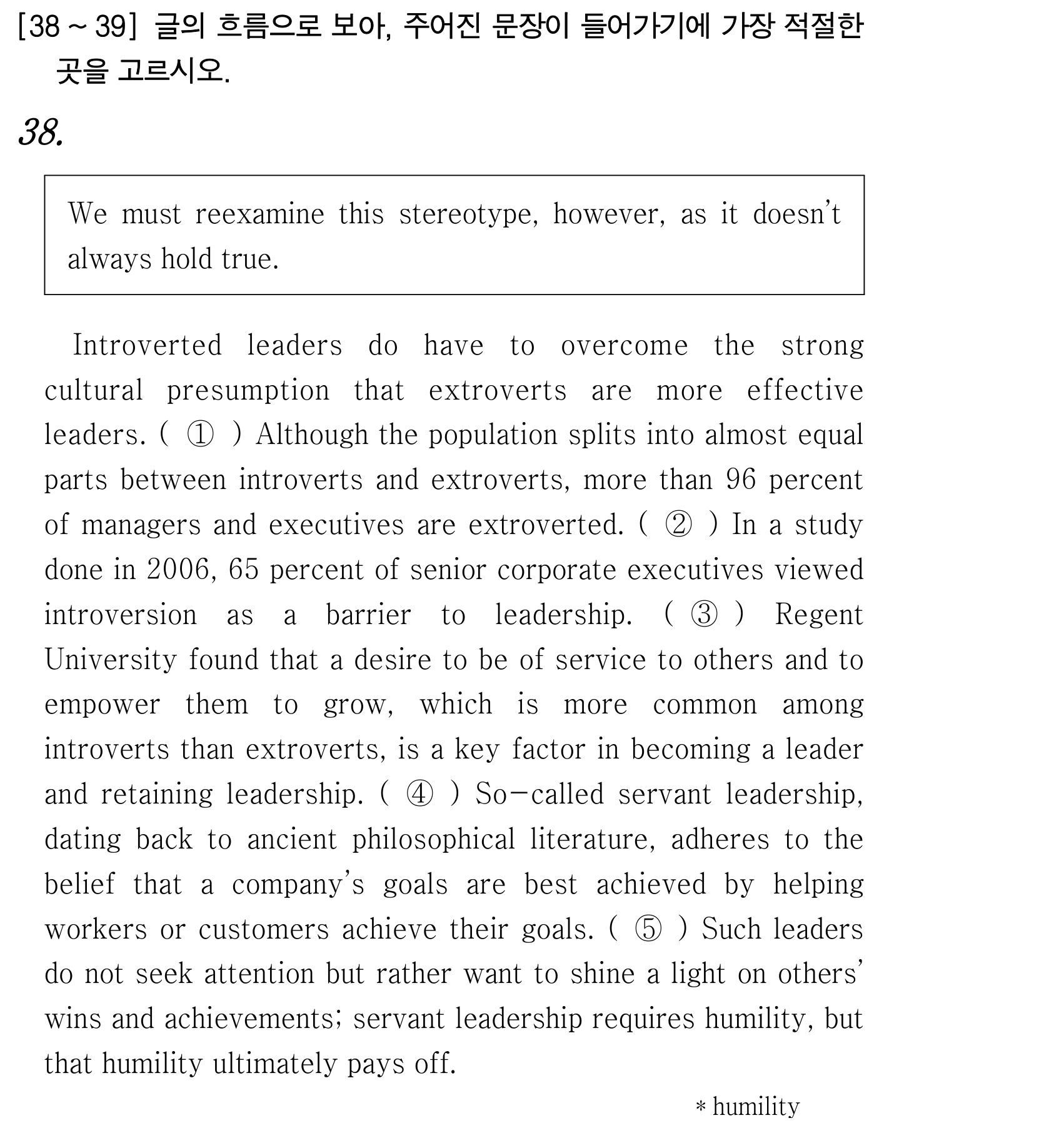
Introverted leaders do have to overcome the strong cultural presumption that extroverts are more effective leaders. Although the population splits into almost equal parts between introverts and extroverts, more than 96 percent of managers and executives are extroverted. In a study done in 2006, 65 percent of senior corporate executives viewed introversion as a barrier to leadership. We must reexamine this stereotype, however, as it doesn't always hold true. Regent University found that a desire to be of service to others and to empower them to grow, which is more common among introverts than extroverts, is a key factor in becoming a leader and retaining leadership. So-called servant leadership, dating back to ancient philosophical literature, adheres to the belief that a company's goals are best achieved by helping workers or customers achieve their goals. Such leaders do not seek attention but rather want to shine a light on others' wins and achievements; servant leadership requires humility, but that humility ultimately pays off.
39번문장삽입2By the nineteenth century, France had developed a system of precisely defined units of me…
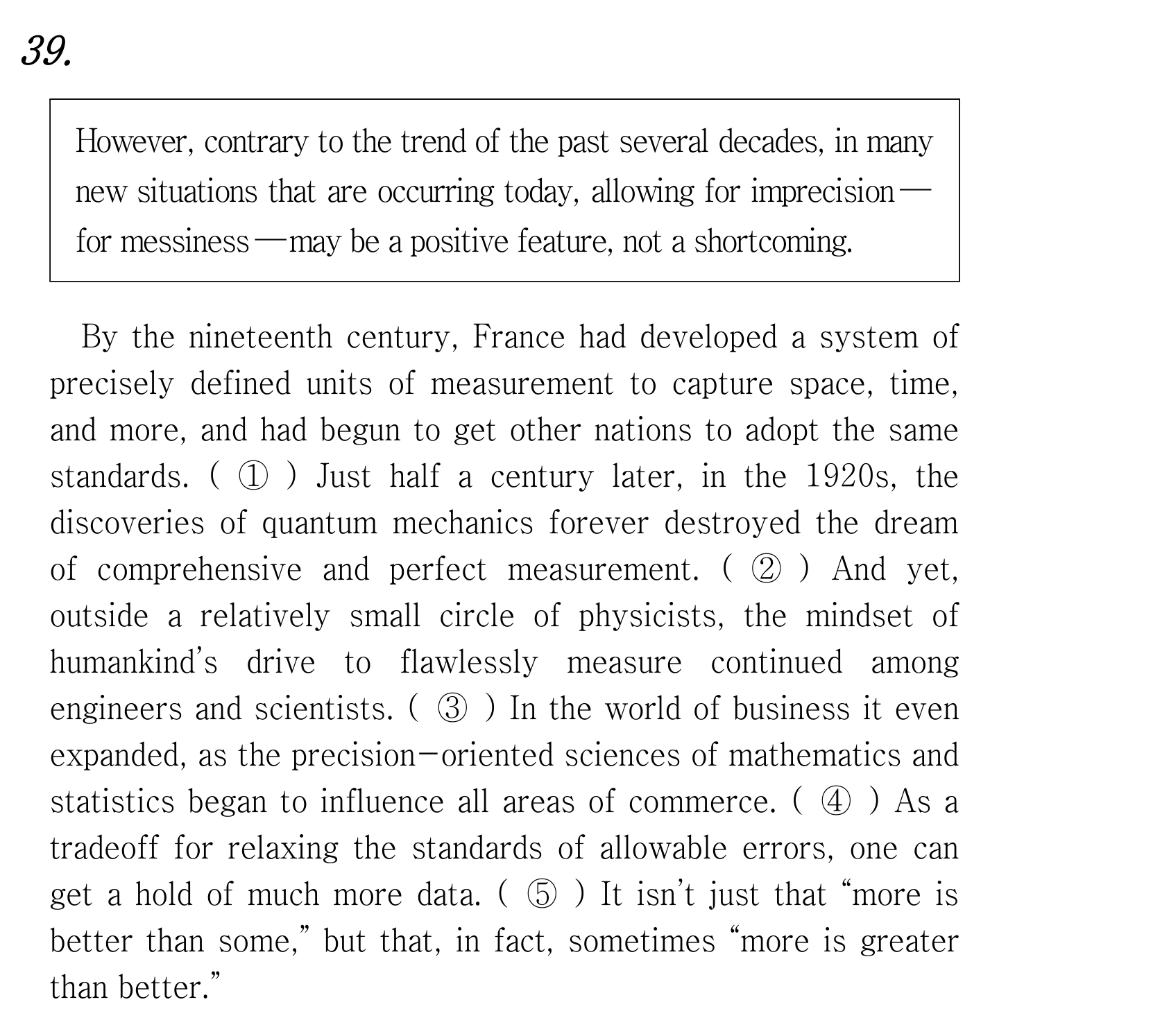
By the nineteenth century, France had developed a system of precisely defined units of measurement to capture space, time, and more, and had begun to get other nations to adopt the same standards. Just half a century later, in the 1920s, the discoveries of quantum mechanics forever destroyed the dream of comprehensive and perfect measurement. And yet, outside a relatively small circle of physicists, the mindset of humankind’s drive to flawlessly measure continued among engineers and scientists. In the world of business it even expanded, as the precision-oriented sciences of mathematics and statistics began to influence all areas of commerce. However, contrary to the trend of the past several decades, in many new situations that are occurring today, allowing for imprecision—for messiness—may be a positive feature, not a shortcoming. As a tradeoff for relaxing the standards of allowable errors, one can get a hold of much more data. It isn’t just that “more is better than some,” but that, in fact, sometimes “more is greater than better.”
40번요약문완성Multiple laboratory studies show that cooperative people tend to receive social advantage…
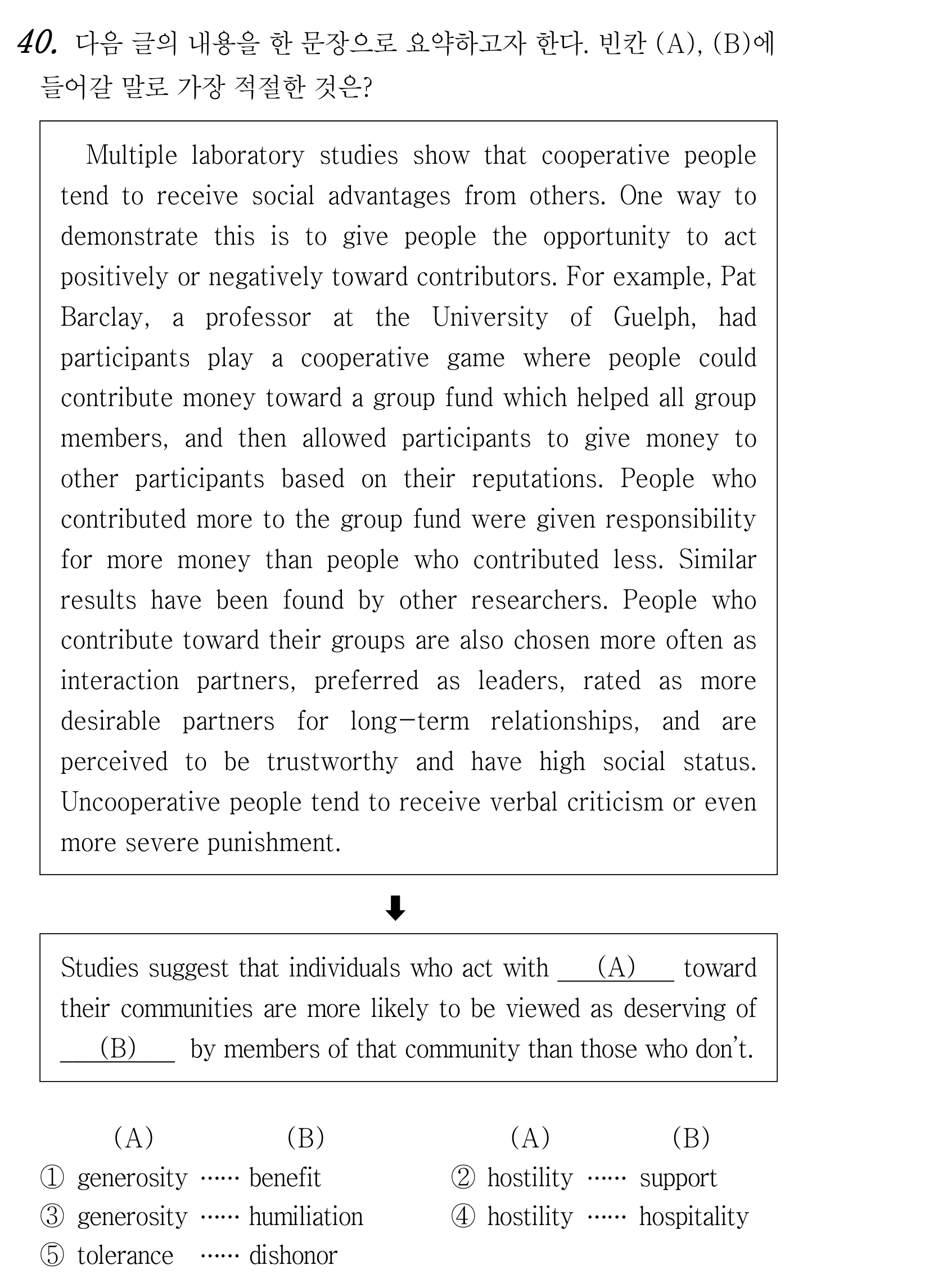
Multiple laboratory studies show that cooperative people tend to receive social advantages from others. One way to demonstrate this is to give people the opportunity to act positively or negatively toward contributors. For example, Pat Barclay, a professor at the University of Guelph, had participants play a cooperative game where people could contribute money toward a group fund which helped all group members, and then allowed participants to give money to other participants based on their reputations. People who contributed more to the group fund were given responsibility for more money than people who contributed less. Similar results have been found by other researchers. People who contribute toward their groups are also chosen more often as interaction partners, preferred as leaders, rated as more desirable partners for long-term relationships, and are perceived to be trustworthy and have high social status. Uncooperative people tend to receive verbal criticism or even more severe punishment.
41번장문_제목In Western society, many music performance settings make a clear distinction between perf…
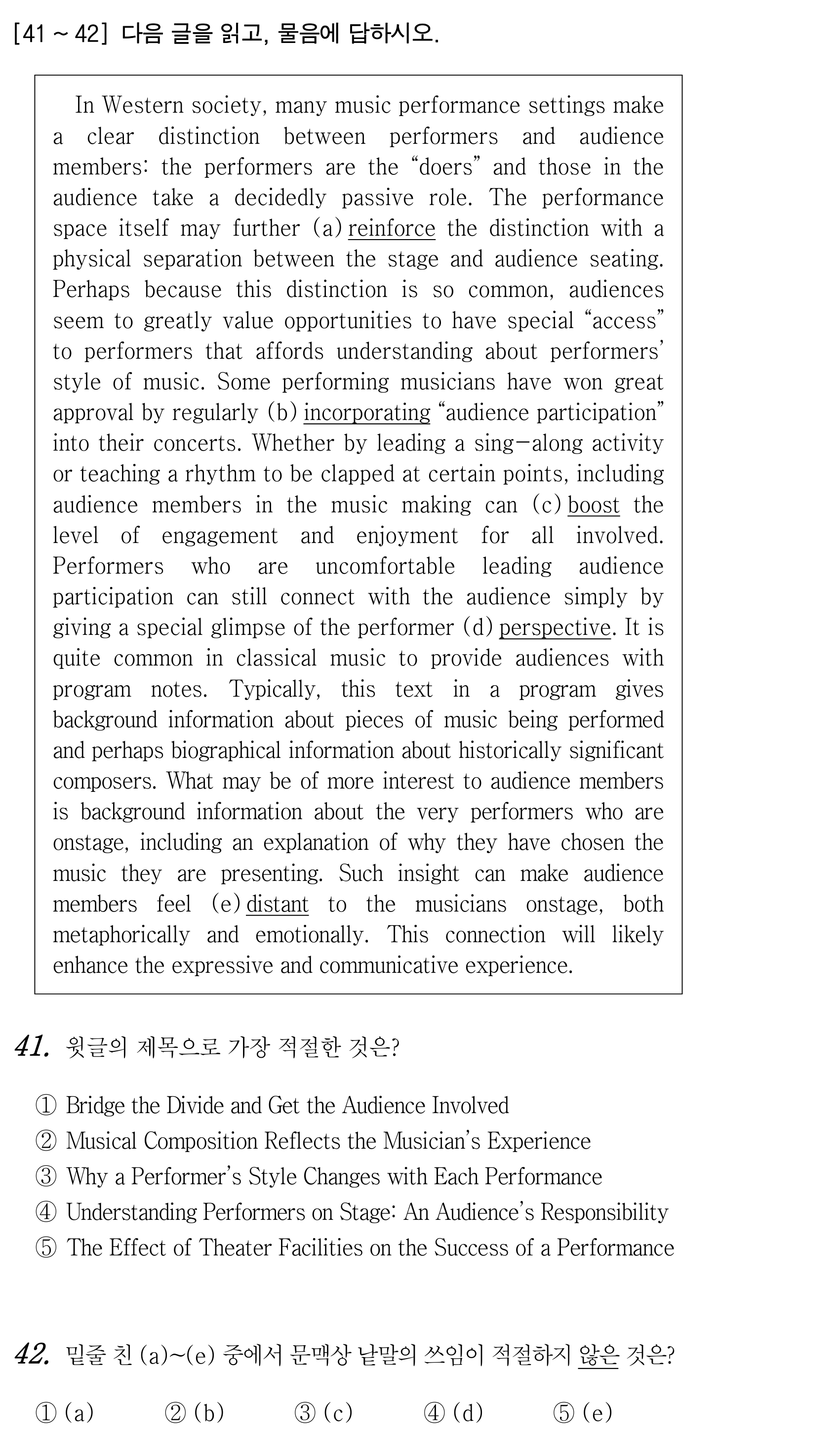
In Western society, many music performance settings make a clear distinction between performers and audience members: the performers are the “doers” and those in the audience take a decidedly passive role. The performance space itself may further (a) reinforce the distinction with a physical separation between the stage and audience seating. Perhaps because this distinction is so common, audiences seem to greatly value opportunities to have special “access” to performers that affords understanding about performers’ style of music. Some performing musicians have won great approval by regularly (b) incorporating “audience participation” into their concerts. Whether by leading a sing-along activity or teaching a rhythm to be clapped at certain points, including audience members in the music making can (c) boost the level of engagement and enjoyment for all involved. Performers who are uncomfortable leading audience participation can still connect with the audience simply by giving a special glimpse of the performer (d) perspective. It is quite common in classical music to provide audiences with program notes. Typically, this text in a program gives background information about pieces of music being performed and perhaps biographical information about historically significant composers. What may be of more interest to audience members is background information about the very performers who are onstage, including an explanation of why they have chosen the music they are presenting. Such insight can make audience members feel (e) distant to the musicians onstage, both metaphorically and emotionally. This connection will likely enhance the expressive and communicative experience.
2023년 11월 고2 전국연합 영어 모의고사 변형문제 맛보기
이 시험 지문으로 만든 변형문제가 아직 없습니다. 지문을 고르면 어법·빈칸·주제·어휘 등 유형별 변형문제를 바로 만들 수 있습니다.
이 시험으로 첫 변형문제 만들기 →남은 시간
48:00




아직 28문제를 풀지 않았어요 (0/28)