Habits aren’t bad. We need them to survive — 2026년 3월 고1 24번 해석 및 풀이
후니쌤2026년 4월 16일조회 189
Habits aren’t bad. We need them to survive — 2026년 3월 고1 24번 해석 및 풀이

안녕하세요! 오스틴 영어의 후니쌤입니다. 오늘은 2026년 3월 고1 모의고사 24번, 제목 찾기 유형을 함께 분석해 볼 거예요.

제목 유형은 단순히 내용만 파악해서는 부족합니다! 지문의 근원적인 흐름을 읽어내야 하죠. 미국에서 아이들을 가르칠 때도 늘 강조했지만, 글 전체를 관통하는 핵심 소재를 잡는 게 정말 중요합니다! 그럼 바로 시작할게요.

2026-03-29 핵심 문제유형: 제목 찾기 — 습관을 다루는 전략적 접근
이 지문, 뼈대만 먼저
주제strategic use of habits for business and life비즈니스와 삶을 위한 습관의 전략적 활용
흐름habits are necessary → temptation bundling strategy → research project result습관은 필수적임 → 유혹 묶기 전략 제시 → 연구 프로젝트를 통한 효과 입증
주장We should build habits by combining them with temptations.하고 싶은 유혹과 해야 하는 습관을 결합해 습관을 형성해야 한다.
근거Gym attendance increased by 51% when audio devices were restricted to the gym.오디오 기기 사용을 헬스장으로 제한하자 헬스장 방문율이 51% 증가했다.
결론Temptation bundling is a powerful tool to build desirable habits.유혹 묶기는 바람직한 습관을 형성하는 강력한 도구이다.

지문 분석: 습관의 재발견

이제 각 문장의 뼈대를 발라내 봅시다. 문법은 체계적으로 이해해야 흔들리지 않아요!

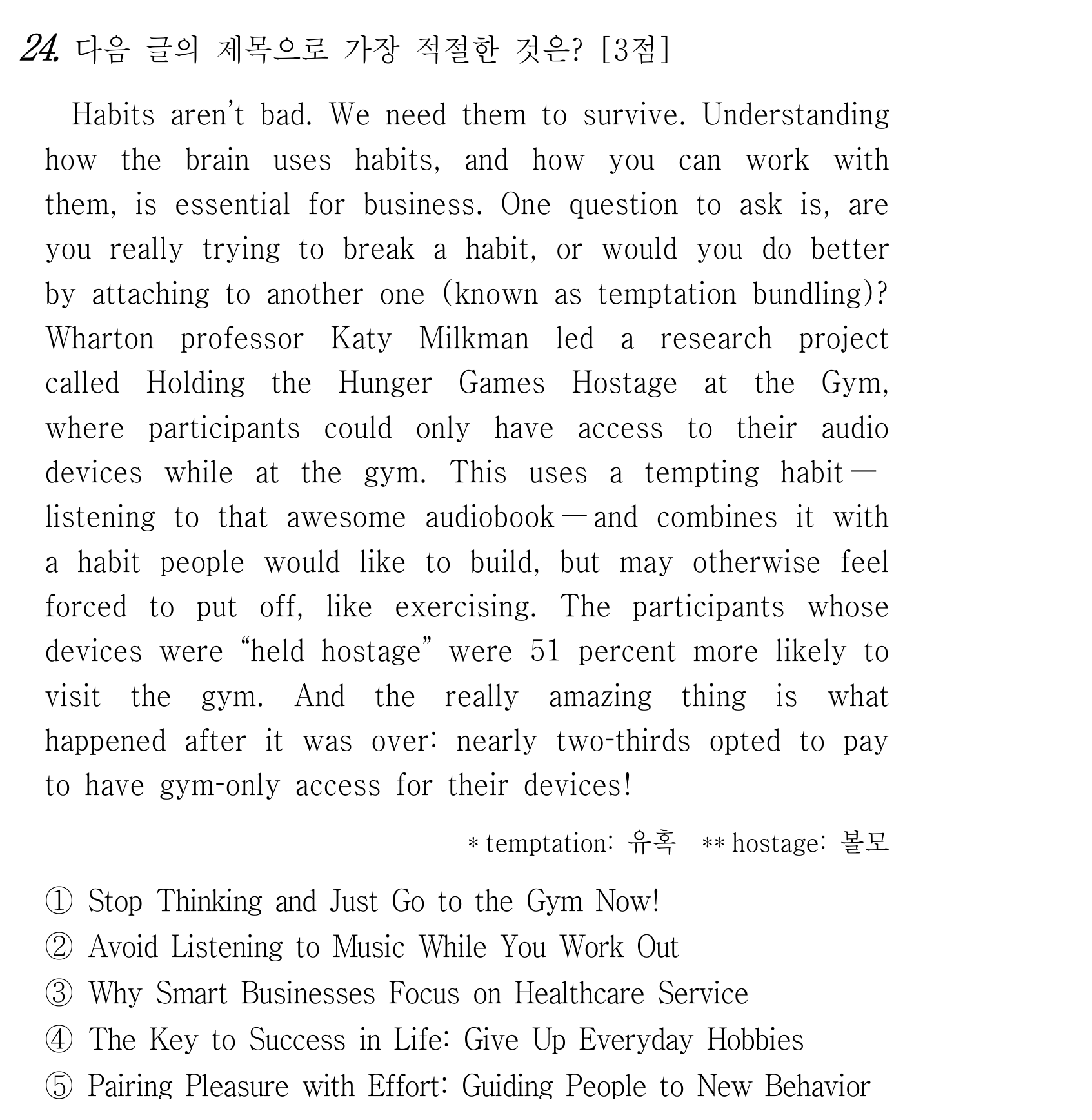
Habits aren’t bad. We need them to survive. Understanding how the brain uses habits, and how you can work with them, is essential for business. One question to ask is, are you really trying to break a habit, or would you do better by attaching to another one (known as temptation bundling)? Wharton professor Katy Milkman led a research project called Holding the Hunger Games Hostage at the Gym, where participants could only have access to their audio devices while at the gym. This uses a tempting habit — listening to that awesome audiobook — and combines it with a habit people would like to build, but may otherwise feel forced to put off, like exercising. The participants whose devices were “held hostage” were 51 percent more likely to visit the gym. And the really amazing thing is what happened after it was over: nearly two-thirds opted to pay to have gym-only access for their devices!

문장별 구조 분석

도입 2형식 SVC HabitsS aren’tV badSC.
습관은S 나쁜 것이 아닙니다V.
3형식 SVO WeS needV themO to survive부사적 용법(목적)M.
우리는S 생존하기 위해M 그것들이O 필요합니다V.
동의어 survive ≒ persist, endure, hold out
주제문 2형식 SVC Understanding 명사절how the brain uses habits, and 명사절how you can work with them동명사구 주어S isV essentialSC for businessM.
뇌가 습관을 어떻게 사용하는지, 그리고 당신이 어떻게 그것들을 다룰 수 있는지 이해하는 것은S 사업에M 필수적입니다SC.
동의어 essential ≒ indispensable, crucial, vital
동명사 주어
V-ing(동명사) + (구) + 단수동사(V)
주어 자리에 덩어리가 길게 와도 단수 취급하는 게 포인트입니다!
간접의문문 (명사절)
의문사 + 주어(S) + 동사(V)
how the brain uses habits와 how you can work with them은 각각 의문사+S+V 어순의 간접의문문으로, 동명사 Understanding의 목적어 역할을 하는 명사절입니다.
부연 2형식 SVC One questionS to ask형용사적 용법M isV, 명사절are you really trying to break a habit, or would you do better by attaching to another one (known as temptation bundling)SC?
던져야 할 질문 하나는S, 당신이 정말로 습관을 깨려고 하는지, 아니면 또 다른 습관에 붙이는 것(유혹 묶기라고 알려진)을 함으로써 더 잘할 수 있는지입니다SC.
예시 3형식 SVO Wharton professor Katy MilkmanS ledV a research projectO called Holding the Hunger Games Hostage at the GymM, 형용사절where participants could only have access to their audio devices while at the gymM.
Wharton 대학의 Katy Milkman 교수는S '헬스장에서 헝거 게임 인질로 잡기'라는 연구 프로젝트를O 이끌었는데V, 거기서 참가자들은 헬스장에 있는 동안에만 오디오 기기에 접근할 수 있었습니다M.
동의어 led ≒ conducted, directed, guided · participant ≒ subject, attendee
출제 포인트 — 관계부사 vs 관계대명사
  • 뒤에 완전한 문장(participants could only have access...)이 이어지므로 관계부사 where가 올바릅니다.
  • 이 자리에 관계대명사 which를 쓰면 문법상 틀리게 됩니다. (which 뒤에는 불완전한 문장이 와야 함)

후니쌤의 잔소리: 제목 유형, 이렇게 푸세요!

제목 유형은 **"글의 핵심 키워드 + 글쓴이의 의도"**가 결합되어야 합니다. 단순히 단어만 나열된 선택지는 오답일 확률이 높아요!

  • 1단계: 선택지 먼저 분석
  • 2단계: 첫 문장과 마지막 문장 연결
  • 3단계: 핵심 키워드 반복 확인
  • 4단계: 소거법으로 오답 지우기
  • 5단계: 의문문이 나오면 집중할 것

1. 첫 문장과 마지막 문장을 주목하세요

지문의 초반에 "Habits aren't bad"라고 습관의 가치를 언급했죠? 그리고 마지막엔 사람들이 스스로 그 습관을 유지하려고 돈까지 냈다는 결과가 나와요. 이 글은 습관을 '없애는' 게 아니라 '전략적으로 활용하는 법'에 대한 이야기입니다.

2. 자주 하는 실수 (이건 정말 주의해요!)

많은 친구들이 지문에 나온 단어만 보고 성급하게 선택지를 골라요. 예를 들어, 지문에 'gym'이나 'audiobook'이 많이 나온다고 해서 제목에 이 단어들이 꼭 들어가는 건 아니에요. 이건 **부분적인 정보(Detail)**이지 **전체적인 주제(Main Idea)**가 아니거든요!


핵심 어휘 정리

essential 필수적인 ≒ indispensable, crucial, vital
temptation bundling 유혹 묶기 ≒ reward coupling, incentive pairing
participant 참가자 ≒ subject, attendee, contributor
opt 선택하다 ≒ choose, select, decide
survive 생존하다 ≒ persist, endure, hold out
hostage 인질 ≒ captive, prisoner
access 접근, 이용 권한 ≒ entry, admission, approach
tempting 유혹적인 ≒ alluring, enticing, appealing
awesome 굉장한, 아주 멋진 ≒ wonderful, amazing, incredible
combine 결합하다 ≒ merge, unite, integrate
forced 강요된, 어쩔 수 없는 ≒ compelled, obliged, required
put off 미루다, 연기하다 ≒ postpone, delay, defer

이번 문제는 습관을 단순히 '나쁘다'고 치부하지 않고, 우리 삶의 도구로 사용하는 방식을 다루고 있어요. 정답은 바로 5번, "Temptation Bundling: A Strategy to Build Better Habits"입니다.

오늘 공부한 문장 구조들, 잊지 말고 꼭 복습하세요! 영어는 기본기가 탄탄해야 흔들리지 않습니다. 다음 시간에도 더 알찬 분석으로 돌아올게요. 궁금한 점은 언제든 댓글 남겨주세요! ㅎㅎ


>> 2026년 3월 고1 모의고사 전체 풀어보기